

Appointing a Proxy to Attend Society Meetings
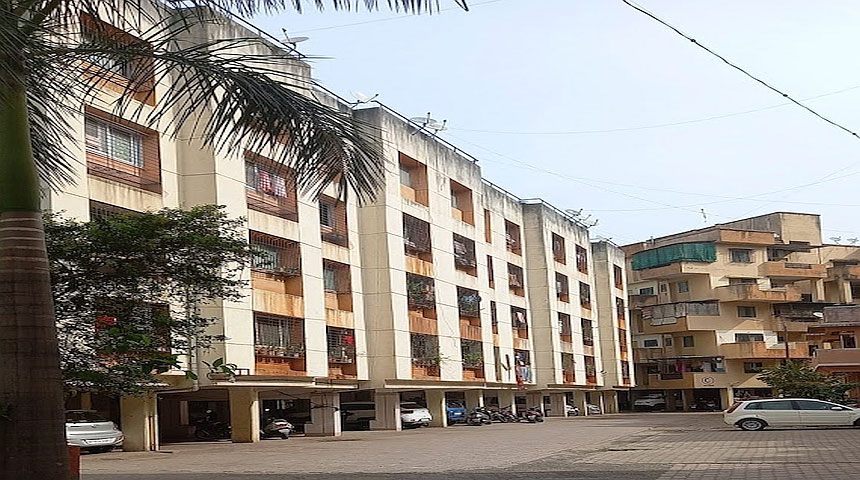
Each cooperative housing society (CHS/Society) is required to conduct an annual general meeting (AGM) in compliance with government-prescribed model bye-laws. These meetings are intended to review yearly activities, inform members about significant developments and financial status, and promote accountability, transparency, and the efficient operation of the Society.
Only members of the Society (usually the first owners of the concerned flat) are allowed to attend such meetings conducted in the presence of elected committee members. Elected committee members also cannot delegate or appoint a substitute to participate in the meeting on their behalf if they cannot attend.

This week, I will address one such problem that has been put forward on Moneylife Foundation's Legal Helpline, while also providing clarification on other matters with regards to passing a circular resolution for increasing maintenance charges and the process of recording minutes of society meetings.
Committee Member Fails to Attend Meetings But Sends Spouse Instead
Question: If a resident has become a member of the managing committee (MC) under the women's reserved category but does not attend any committee meetings and instead, these meetings are then attended by her husband, who is also possibly voting, can it be considered legal? Does it not mean that you are blocking a women's reserved category seat? Even if they are joint owners of the flat, can both be members of the committee?
Answer: Any elected member of the MC should personally attend all committee meetings. A proxy cannot participate in on his/her behalf, even for just one meeting. Please give a notice to the concerned female member that she should personally attend the committee meetings.
If she still does not attend the next committee meeting after you have given her a notice, then in the upcoming meeting, ask her husband to leave without putting his signature in the meeting minutes book. Committee members can then pass a resolution to make a complaint against the concerned member for sending her husband to attend meetings on her behalf to deputy registrar (DR) of cooperative societies.
Passing Resolution to Increase Maintenance Charges in Society
Question: Can a cooperative society make decisions by passing a circular resolution without holding a general body meeting, whether special or ordinary, to discuss and deliberate on the issue? In our case, the decision pertains to raising maintenance, increasing parking charges, and utilising reserve funds to pay fees of the project management consultant (PMC). If yes, then what is the majority of members that are required to approve such a resolution?
Answer: An increase in maintenance of the Society, parking charges, or otherwise cannot be finalised by simply passing a resolution without having a discussion at a general body meeting (GBM) of the Society.
If some member has an objection, then they should share their reasons in writing at least eight days before the GBM so that the managing committee can discuss the letter in the presence of other resident members during the GBM. The resolution can then be passed after deliberation with a simple majority of 51%.
Process of Recording Minutes of Society Meetings
Question: My housing society in Mumbai, while conducting management committee meetings, physically writes down the points discussed on a rough paper. Then, the secretary writes down the minutes in the Society's register later. Please advise whether this is allowed. Or should the minutes be written down in the register as the meeting is progressing? The MC members are not being informed (on the WhatsApp group or otherwise) as what was finally noted down in the register.
Answer: As a managing committee meeting starts, the date and time should be recorded in the minutes book, along with the names of the present committee members and their signatures to attest to the same.
As each agenda point of the meeting is discussed, it should be immediately written in the meeting minutes book, and at the end of the meeting, the proposer's and seconder's names should be recorded.
After the last point of the meeting is discussed and its minutes with proposer and seconder's names have been written, with thanks to the chairman of the meeting, the closing time of the meeting should be written, and all written points of the minutes should be read aloud by one committee member. Then all committee members should put their signatures, alongside their name and designation and close the writing of the minutes.
If this procedure is not followed by the managing committee of your Society, then you should give a written notice to the chairman and secretary of your Society to follow the same. You can then further make a complaint under bye-law no. 174(A)(xxii) to the DR of cooperative societies with a copy of your complaint letter, if the committee still fails to follow said procedure.
Disclaimer: The guidance provided in these columns and on our Legal Helpline is on the sole basis of the facts provided by the reader/questioner and does not amount to formal legal advice in any form whatsoever.
(Shirish Shanbhag has an MSc in Organic Chemistry, a Diploma in Higher Education, and a Diploma in French and has completed his LL.B. in first class in 2021. Before his retirement, he was a junior college teacher at Patkar College from July 1980 to May 2012, teaching theoretical and practical chemistry. Post-retirement in 2012, he started providing guidance and counselling to people on several issues, specifically focusing on cooperative housing society-related matters. He has over 30 years of hands-on experience in all matters about housing societies and can provide out-of-box solutions for any practical issue.)
NOTE
We will not be answering queries posted in the comments. Only questions sent through the Moneylife Foundation's Legal Helpline will be answered. If you want to seek guidance or ask questions to Mr Shanbhag, kindly send it through Moneylife Foundation's Free Legal Helpline. Here is the link: https://www.moneylife.in/lrc.html#ask-question