

Authority, Accountability and Society Governance
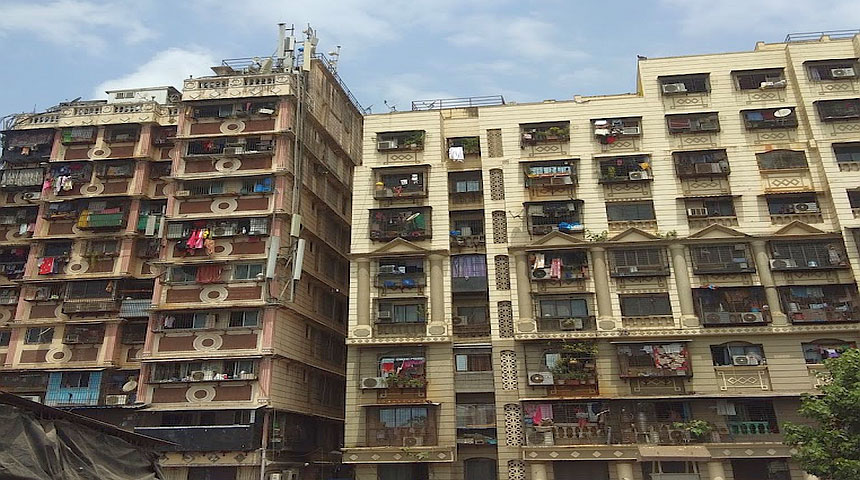
The smooth functioning of a cooperative housing society (CHS/the Society) depends as much on following due process as it does on maintaining harmony among its members. Whether a managing committee is dealing with redevelopment, regulating the use of common amenities or addressing complaints of unauthorised commercial activities, every decision must be backed by the Society's bye-laws and the applicable legal framework. Acting without authority or failing to follow prescribed procedures can often lead to avoidable disputes.
 This week's queries examine some of these recurring issues. They explore the CHS managing committee's response to alleged commercial misuse of residential premises and common areas, the legal remedies available when redevelopment procedures are allegedly ignored and whether a managing committee can introduce a new levy without the approval required under the society's bye-laws.
 Audit and Alleged Commercial Misuse Should Be Dealt with Separately
Question: We are a small housing society in Mumbai with 23 members and have recently elected a new managing committee. Some flats are being used for commercial purposes. One is operating a real estate agency, another is running a short-term lodging service, one has been given on rent for a beauty salon and another is engaged in buying and selling used cars. This member has also encroached on the Society's compound to park and display vehicles for sale, even though it is a common amenity available to all members.
Since our committee raised these issues, the concerned members have started making personal allegations against us. They have also complained to the deputy registrar of cooperative societies, alleging that the committee has not been transparent about the Society's redevelopment process and should be removed. We have now received a notice from the deputy registrar stating that an auditor has been appointed to inspect the Society's records.
What should we do? Can we take legal action against members carrying on unauthorised commercial activities, encroaching upon common areas, or using the Society's premises for business purposes?
Answer: The first step is to fully cooperate with the audit directed by the deputy registrar. Keep all the Society's records, accounts, minutes, redevelopment documents and correspondence ready for inspection, and provide whatever information is lawfully sought. An audit or inspection, by itself, does not imply that the committee has committed any wrongdoing.
As regards the commercial activities, not every professional or business activity carried on from a residential flat is necessarily prohibited. Certain home-based professional uses may be permissible, provided they comply with municipal regulations, applicable development control regulations (DCR), CHS bye-laws, and do not cause nuisance, excessive visitor traffic, security concerns or other inconvenience to residents.
However, activities such as operating a commercial guest house or short-term lodging business, running a car dealership or using the Society's compound to park or display vehicles for sale are generally inconsistent with the residential character of a housing society and may also require statutory permissions.
The committee may take appropriate action in accordance with the Society's bye-laws if any member misuses the premises or encroaches upon common areas. Where there is an alleged unauthorised change of user or violation of municipal regulations, the matter may also be reported to the municipal corporation. If common areas are being encroached upon or used for private commercial purposes, the Society may take appropriate legal steps in accordance with the law to protect its common property.
Before initiating any action, ensure that the committee has adequate evidence of the alleged violations and that all decisions are taken in accordance with the prescribed procedure under the Society's bye-laws and applicable law.
Document Procedural Lapses before Challenging Redevelopment
Question: Our CHS is not following the government of Maharashtra's prescribed redevelopment procedure. I am a member of the Society and want to take legal action to stop the redevelopment process. The Society has also adopted defective bye-laws, which I wish to challenge. What are my legal options?
Answer: If you believe the Society has not followed the prescribed redevelopment procedure, you should first identify and document the specific procedural violations. Redevelopment of cooperative housing societies in Maharashtra is required to comply with the applicable government directions issued under Section 79A of the Maharashtra Cooperative Societies Act, 1960, as well as other applicable laws.
Depending on the nature of the violations, you may file a complaint before the deputy registrar of cooperative societies or approach the appropriate court or other competent forum for suitable relief, including an injunction where warranted.
If the Society has adopted bye-laws that are inconsistent with the Maharashtra Cooperative Societies Act, the Rules, or binding government directions, those bye-laws may also be challenged before the competent authority. Since redevelopment disputes often involve both cooperative and property law issues, you should obtain legal advice before initiating proceedings.
Committee Should Have Authority before Imposing a New Levy
Question: I live in a CHS in Pune with over 200 flats that follows the Maharashtra Model Bye-laws. The managing committee has decided to charge personal gym trainers engaged by members 10% of the fees they pay, claiming that the trainers are carrying on a commercial activity. During training sessions, the gym remains open for other members to use. This charge has not been approved by the annual general meeting (AGM), but the managing committee has implemented it immediately, stating that it will seek approval at the next AGM. Is this valid?
Answer: Unless the Society's registered bye-laws or an existing general body meeting (GBM) resolution specifically authorise such a levy, the managing committee cannot ordinarily impose a new financial charge on members on its own. Such a decision generally requires the approval of the GBM.
Whether engaging a personal trainer amounts to a commercial activity depends on the Society's bye-laws and the nature of the activity. A member engaging a trainer for personal use in the Society's gym does not, by itself, necessarily constitute commercial use of the premises.
You may ask the managing committee to identify the specific bye-law or GBM resolution authorising the levy. If no such authority exists, implementing the charge before obtaining the GBM's approval may be open to challenge. If the issue remains unresolved, you may approach the deputy registrar of cooperative societies or any other competent forum for appropriate relief.
NOTE
We will not be answering queries posted in the comments. Only questions sent through the Moneylife Foundation's Legal Helpline will be answered. If you want to seek guidance or ask questions to Mr Shanbhag, kindly send it through Moneylife Foundation's Free Legal Helpline. Here is the link: https://www.moneylife.in/lrc.html#ask-questionDisclaimer: The guidance provided in these columns and on our Legal Helpline is on the sole basis of the facts provided by the reader/questioner and does not amount to formal legal advice in any form whatsoever.
(Shirish Shanbhag has an MSc in Organic Chemistry, a Diploma in Higher Education, and a Diploma in French and has completed his LL.B. in first class in 2021. Before his retirement, he was a junior college teacher at Patkar College from July 1980 to May 2012, teaching theoretical and practical chemistry. Post-retirement in 2012, he started providing guidance and counselling to people on several issues, specifically focusing on cooperative housing society-related matters. He has over 30 years of hands-on experience in all matters about housing societies and can provide out-of-box solutions for any practical issue.)