

Can a Society Operate Without a Committee?
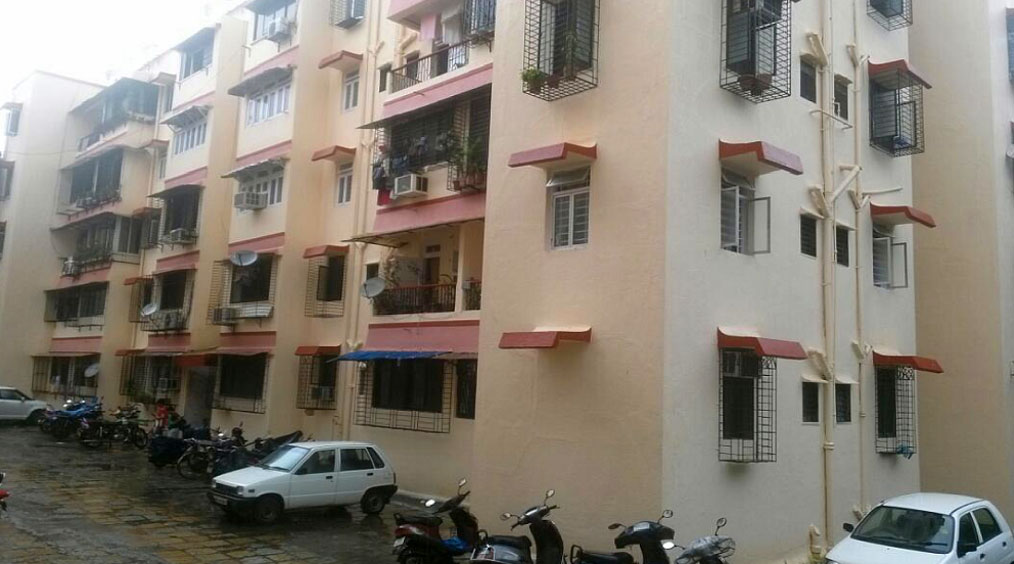
Navigating the maze of cooperative housing society (CHS/the Society) rules, builder obligations and cooperative laws can often feel overwhelming for residents. Whether it's disputes over parking, challenges in Society formation or questions around the rights and responsibilities of office-bearers, flat-owners are frequently left searching for clarity.

In this week’s column, we continue to address some of the more complex issues faced by housing society members—from the legality of managing society finances during committee transitions, to the implications of forming a society in the absence of occupancy certificates. Our goal remains to equip you with actionable guidance rooted in Maharashtra’s co-operative housing laws and bye-laws, helping you make informed decisions and assert your rights within your community.
Operating Society’s Bank Account, after Committee Members Resign
Question: Last year, our housing society held the annual general meeting (AGM) in October, which is not permitted as per the bye-laws, since there is no such provision. Therefore, I filed a suit against the Society. After a hearing in the office of the deputy district registrar (DDR), Pune-1, an order was passed dismissing the chairman, secretary and treasurer for six months. Can the Society operate the bank account in such a situation? I have the original order from DDR Pune City-1 — based on that, can the bank account be frozen?
Answer: Although the deputy registrar has dismissed the Society’s office-bearers, they have not appointed an authorised officer or administrator to manage the day-to-day affairs of the Society, including operation of the bank account. In such a situation, the dismissed office-bearers technically lose the authority to operate the account.
However, unless the bank receives an official instruction from the registrar, it may continue to allow the account to be operated. You should write to the DDR, Pune, requesting the immediate appointment of an authorised officer, so that the Society’s affairs, including its bank account, are managed legally and without interruption.
Allotment and Subsequent Withdrawal of Parking Spots
Question: I am staying in a housing society in Thane. I was allotted a car parking space, where I parked my car for the past two years. I was on a foreign deputation for the past three months, during which I gave my car to my father in Borivali for safekeeping. During this time, the Society, without any prior notice, allotted my parking space to one of the managing committee members. Now, I have been allotted another parking spot that was previously used by a member who the Society claims owns more than one car and, hence, needs to vacate the space. However, that member is refusing to do so. How can I get my original parking space back? We have an open parking system in the Society. Can the Society management arbitrarily change parking allotments?
Answer: Under bye-laws 78 to 84, parking must be allotted on the CHS land. If the available parking slots are not sufficient to allot more than one slot per member, then as per bye-law no. 80, additional slots should either not be allotted or, if allotted, should be given on a yearly rotation basis, depending on availability and demand.
By withdrawing your parking slot when you were away for only three months, the Society has acted unfairly. Under bye-law no. 172, you should write a complaint to the secretary of your society, stating that the deprivation of your original parking slot is a violation of bye-laws 78 to 84. If the Society does not respond or take corrective action within 15 days of your written complaint, you may:
1. File a complaint under bye-law no. 174(B)(iv) in the cooperative court of your area. You do not need a lawyer, as these matters can be handled without formal arguments. Refer to bye-laws 78 to 84 in the 2014 Model Bye-laws while preparing your case; OR
2. File a complaint under bye-law no. 174(E)(i) with your local police station against the Society.
Registration of Society in the Absence of Completion or Occupancy Certificate
Question: We have a newly-built complex under Thane municipal corporation jurisdiction. The complex is over two years old and includes three buildings (each with two wings and eight floors) and one 20-floor tower. The builder is now asking us to register the Society, but none of the buildings has received a completion certificate (CC) or occupancy certificate (OC).
The builder is assuring us that the OC will be obtained soon and is insisting that we go ahead with the Society formation. However, we have learned that even the completion certificates have not yet been obtained. Given this situation, would forming the Society be an advantage or a disadvantage?
Answer: The registration of your CHS and obtaining the CC/OC are two separate issues. Let us look at both aspects individually:
1) Formation of Cooperative Housing Society (CHS)
Once 60% of the flats in the project are sold, you are eligible to form a CHS—even if the flats are under construction. In your case, if the builder is willing to cooperate in forming the Society, that is a positive sign.
Forming a CHS gives flat-owners independence. For example, if a member wishes to sell his/her flat, they would not need a no-objection certificate (NOC) from the builder (often issued after paying a fee). The Society can also take over building maintenance which is, typically, more economical and transparent than having the builder continue to do it.
2) Completion Certificate (CC) and Occupancy Certificate (OC)
To verify the status of the CC and OC, you can file a query under the Right to Information (RTI) Act with the town planning department (TPD) of the Thane municipal corporation. Address your RTI application to the public information officer (PIO) at the TPD’s head office. You should receive a reply within 30 days. If not, you may file a first appeal with the first appellate officer at the same department.
If the RTI reply reveals deficiencies in the builder’s services, you may consider filing a complaint with the consumer court in Thane, located in the collector’s office premises. Each flat-owner must file the complaint individually. However, if your CHS has already been registered, the Society can file a collective complaint with the state consumer forum in Mumbai.
NOTE
We will not be answering queries posted in the comments. Only questions sent through the Moneylife Foundation's Legal Helpline will be answered. If you want to seek guidance or ask questions to Mr Shanbhag, kindly send it through Moneylife Foundation's Free Legal Helpline. Here is the link: https://www.moneylife.in/lrc.html#ask-question Disclaimer: The guidance provided in these columns and on our Legal Helpline is on the sole basis of the facts provided by the reader/questioner and does not amount to formal legal advice in any form whatsoever.
(Shirish Shanbhag has an MSc in Organic Chemistry, a Diploma in Higher Education, and a Diploma in French and has completed his LL.B. in first class in 2021. Before his retirement, he was a junior college teacher at Patkar College from July 1980 to May 2012, teaching theoretical and practical chemistry. Post-retirement in 2012, he started providing guidance and counselling to people on several issues, specifically focusing on cooperative housing society-related matters. He has over 30 years of hands-on experience in all matters about housing societies and can provide out-of-box solutions for any practical issue.)