

Collecting Contribution for External Painting and Becoming an Associate Member
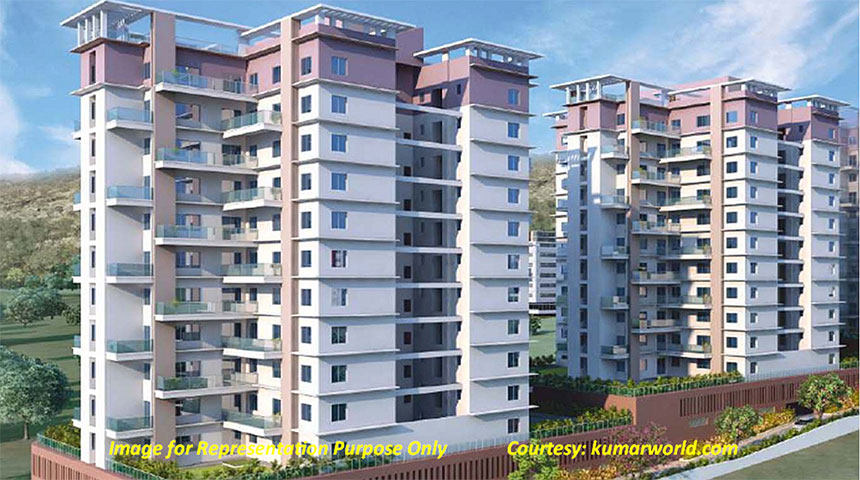
When a cooperative housing society (CHS) opts for structural repairs or external repainting of their building, they can choose to utilise the funds collected under the repair fund in the monthly maintenance bill. However, if the expenses are estimated to be higher than the accumulated repair funds, the Society is permitted to divide the additional charges proportional to the area of each flat.
This decision has to be taken collectively in a general body meeting (GBM) after following due process to acquire quotations and scrutinise them. Once the decision has been collectively approved, the Society can levy the agreed-upon additional charges in the maintenance bill of each flat or unit-holder. However, many CHSs fail to follow this process and disagreements about the costs are bound to happen among CHS members.
 This week, I will address one such problem where a Society has levied additional charges on the maintenance bill of each flat for repainting their buildings. I will also outline the process of becoming an associate member and the rights such membership confers upon the applicant. Finally, we will address a problem where the Society refuses to transfer the share certificate in the name of the new owner of a flat.
 Additional Charges & Contribution for External Painting in Society
Question: There are four buildings in our Society. At the annual general meeting (AGM), the Society approved the collection of an additional amount for painting buildings in the Society. Each member must pay an additional Rs45,000 towards this. It is over and above the periodic maintenance charges collected by the Society. However, no clear approach is shared by the managing committee (MC) about the painting.
What would be their approach if Society cannot collect the target amount of painting? Would that be returned to the member? Or would the contribution remain locked for how many years if the Society cannot collect the target amount from members for painting the buildings?
All such questions have been raised in the meeting, but it is in vain. The MC does not have an answer. Even they are not sure about their approach. They are focusing now only on collecting the fund. They have further said that if a member fails to contribute to the painting fund, they will levy a penalty on such a member. Please advise.
Answer: Additional contribution of Rs45,000 per flat of your Society just for painting looks very high.
The Society should carry out a structural audit of each of the Society's buildings, under Bye-law No. 76 and, after taking quotations for repairs and painting of the building, such quotations should be scrutinised by the project management consultant team (PMC), which the Society has contracted for management of this work. This PMC team usually comprises architects, civil engineers and legal advisers, though you may not need all the services in your particular case. Although a PMC team is only mandatory in a re-development project, it is advisable to appoint such a team for other large repair works, such as external repainting of your building.
The quotation details, after scrutiny, should be presented to the Society's members and passed for each of the Society's buildings.
The Society should collect the contributions from each flat in its building, proportional to the area of each flat, under the Bye-law No. 67(a)(iii). A GBM of the Society will decide within a minimum acceptable period this additional repair and painting fund should be collected from the members of the Society every month. If such GBM passed repair and painting fund is not given regularly, then under Bye-Law No. 71, a fine on the defaulted amount, a simple interest, up to a maximum 21% should be charged in this defaulted amount.
Your Society should pass this rate of fine at its GBM only once, and it holds good for any future defaulted dues by the members.
By looking at your query, it appears that the process mentioned above has not been followed in your Society. Therefore, under the Bye-law No. 174(A)(xxii) make a complaint against the Society to deputy registrar of cooperative societies of your area.
Process of Becoming an Associate Member
Question: In our Society, a woman owns a flat, and her husband wants to become an associate member. He has filled and submitted the form duly approved by the member (his wife). Does this complete the required formalities for the managing committee to add the husband's name in the share certificate? Does it mean the transfer of flat without a sale or gift deed? Please advise.
Answer: If the husband has become an associate member by filling out the form given in Appendix-5, and paying Rs100 as an entrance fee, then the Society will provide the original member (wife) a letter stating that her husband is admitted as an associate member for her flat, who can attend Society's GBMs or AGMs when she is not able to participate in them.
He can also contest Society's managing committee elections and if elected, he can also become an office-bearer such as a secretary, chairman and treasurer in the managing committee of the Society.
As he has not purchased the flat jointly with his wife, it is not possible to include his name in the share certificate of that flat. If he wants to add his name to the share certificate, then his wife (the original member) should do a gift deed, gifting at least 10% value of the flat to her husband.
NOTE
We will not be answering queries posted in the comments. Only questions sent through the Moneylife Foundation's Legal Helpline will be answered. If you want to seek guidance or ask questions to Mr Shanbhag, kindly send it through Moneylife Foundation's Free Legal Helpline. Here is the link: https://www.moneylife.in/lrc.html#ask-question Society Refusing To Transfer Share Certificate to New Owner
Question: In 2012, I bought a flat in the Society and got a receipt of clearance of dues till date in the name of the seller from whom I had purchased it. This seller had purchased it from an allottee. Now it has come to my knowledge that the seller from whom I bought the flat has, in reality, forcefully acquired a receipt of full and final dues from the managing committee.
The Society has warned me that they will not transfer the share certificate in my name. When they had already issued a no-objection certificate (NOC) to the first buyer, I do not understand what problem they have now in transferring the share certificate. Please guide.
Answer: Under Bye-law No. 174(A)(iii) for refusal of membership and not transferring the share certificate by the Society, with a copy of all the papers that you have, make a complaint against the Society to deputy registrar (DR) of cooperative societies.
After filing the complaint, with a photocopy of your complaint to the DR, you can file an RTI application to the public information officer (PIO) of DR office, seeking information about action taken by the DR on your complaint. The PIO has 30 days to reply to your RTI application. So you will get a reply from PIO informing you whether any action was taken on your complaint.
If you find from PIO that DR has not taken action on your complaint, then make a complaint against DR to district DR (DDR). Also, simultaneously make a Lokshahi Din complaint (LDC) against DR to district collector (DC).
The DC takes a hearing of LDC on the first Monday of the month in his office and passes an order to DR to take action on your complaint within a month. If the DR does not take action on your complaint, then directly go to the LDC hearing for a follow-up on the next month's first Monday.
In this way, you will get all the problems solved, including the membership of your flat in your Society.
(Shirish Shanbhag has an MSc in Organic Chemistry, Diploma in Higher Education, and a Diploma in French and has completed his LL.B. in first class in 2021. Before his retirement, he was a junior college teacher at Patkar College from July 1980 to May 2012, teaching theoretical and practical chemistry. Post-retirement in 2012, he started providing guidance and counselling to people on several issues, specifically focusing on cooperative housing society-related matters. He has over 30 years of hands-on experience in all matters about housing societies and can provide out-of-box solutions for any practical issue.)