

Complaints of Residents Causing Nuisance with Nightly Gatherings
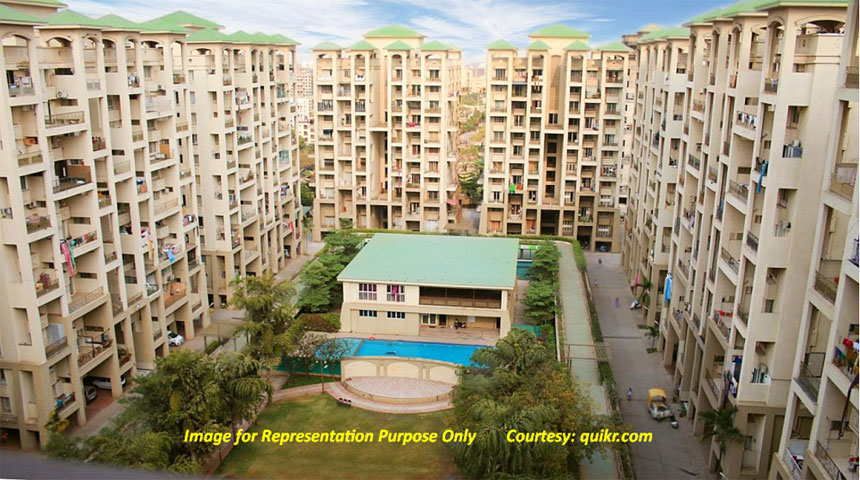
Residents of cooperative housing societies (CHS) face numerous problems that significantly affect their quality of life. One major issue is the scarcity of parking space due to the increasing number of vehicles in urban areas. Conflicts can arise among residents over the allocation and availability of parking spots. Additionally, some housing societies do not have covered parking due to space constraints, exposing parked vehicles to falling debris or adverse weather.
Another problem is the nuisance that some fellow residents may cause with issues such as waste disposal, noise pollution, unauthorised structural alterations, and disruptive activities at odd hours. Resolving such matters requires effective communication and cooperation among residents, as well as the enforcement of rules and regulations by the managing committee.
 This week, we are looking at one such case, where some residents of a housing society gather at odd hours, engaging in activities that disturb others. While the managing committee can easily solve this by enforcing appropriate rules, a resident needs to initiate action by filing a written complaint. We will also look at a case of maintenance charges in a commercial building, where an owner on the first floor, who does not use the elevator, wants the charges for the maintenance of this lift removed from his maintenance bill.
 Damage to Vehicles in Open Parking Area
Question: Our open car park is situated under kitchen windows, in a 21-storied building. Unfortunately, this parking area is subjected to falling objects from the kitchen windows, such as knives, utensils, and debris during repairs, threatening life and damaging the parked cars. Building separate covered parking has the support of 52 members out of the total 84. In spite of this, the managing committee has allowed only to put a shed of 2.5 feet in length and a closely perforated sheet, which does not serve the purpose. Request your suggestion to resolve this issue.
Answer: Kindly take the help of your municipality's town planning department's recognised architect to acquire the municipality's permission to install a proper shed in the open area car parking area.
This architect will get you proper design and permission from your municipality's town planning department.
If your Society is in Mumbai, then such permission is given by building proposal department of BrihanMumbai Municipal Corporation (BMC). You will still need BMC's recognised architect for the work.
Nuisance Caused by Late-night Gatherings in Society
Question: A few members and residents of our Society gather together during the evening hours, staying late until 9pm or on weekends much later. I have asked them to gather at a designated Gazebo sitting area to avoid disturbing others entering through the main gate. Children accompanied with these adults also play in the compound. They also bring friends from neighbouring societies to congregate, who refuse to sign on the visitor's register. I have suggested that non-related visitors must sign in and go to the respective sponsor's home rather than linger in the compound.
Can the managing committee lay down the rules for gathering in accordance with the byelaws? Or should new rules be adopted at the annual general meeting (AGM)?
Answer: All the points you have raised are valid. In this respect, causing a nuisance by gathering people near the residential flats, on the ground or first floor, and bringing outsiders to play inside open areas of the Society are all covered in the bye-laws of the Society.
As you have suggested, a rule should be implemented for such cases. Start by filing a written complaint with the managing committee and take it forward by ensuring a new rule is adopted in the AGM.
NOTE
We will not be answering queries posted in the comments. Only questions sent through the Moneylife Foundation's Legal Helpline will be answered. If you want to seek guidance or ask questions to Mr Shanbhag, kindly send it through Moneylife Foundation's Free Legal Helpline. Here is the link: https://www.moneylife.in/lrc.html#ask-question Transferring Deceased Husband's Share in a Jointly Owned Flat
Question: Flat is in the joint name of a couple in our Society. The husband has expired and there is no nomination in place. Can the wife claim membership of the Society automatically? What documents should our Society ask from the wife?
Answer: If a joint owner of a jointly bought flat expires, the deceased joint owner's near relatives such as spouse, children and grandchildren, who are called legatees, have equal right of claim on the property, i.e., on the 50% share of the flat, which the deceased joint owner owned.
If all these legatees of the deceased husband, along with the surviving wife, make a 'release deed' on Rs500 non-judicial stamp paper, releasing their right on the deceased joint owner's share, in favour of the wife, and register this deed with sub-registrar of assurances, giving the certified copy to the Society, then the flat can be fully transferred in the name of the wife.
All legatees of the deceased husband have equal rights in 50% share of the flat, and if all of them want to claim their right in the share, then along with the wife, they should make an appropriate 'release deed' on Rs500 non-judicial stamp paper. This will make them all joint owners in 50% share of the flat, jointly with the wife.
Among the legatees, if someone wants to relinquish their right to share the flat, then such legatees, along with the wife, should do a 'release deed' on Rs500 non-judicial stamp paper.
This method is the cheapest way of transferring the deceased husband's share in the jointly owned flat to either the wife or the legatees, as the case may be.
If the legatees and the wife do not agree to do above method, then all of them should make a testamentary petition in a competent civil court, which requires a Rs75,000 court fee, and about Rs1 lakh for the advocate's fees, and it takes six months to three years time to get a judgement.
Inclusion of Lift Charges in Maintenance Bill
Question: I have commercial property in a cooperative housing society. Property tax and water bill for my premises are paid directly by me. The commercial property is 2,650 sqft on the first floor of the CHS building. I do not use the lift as I have a separate staircase for the first floor.
Answer: By using Society's lift, if you can reach your commercial premises on the first floor, then even if you do not use the lift, you have to pay (even ground floor flats have to pay) lift charges, which is calculated to be the same for all flats and commercial property owners irrespective of the area.
Society's charges as calculated as per Bye-law Nos. 65 to 71. Kindly refer to the copy of the bye-laws book of the year 2014 to know the details as to how the Society's charges are levied.
Even if you are paying your municipal property tax and water bill, directly to the municipal ward office, the Society may levy you a small amount of municipal property tax in its maintenance bill, as applicable to common areas of the Society, like corridors, staircase, lift pit, terrace, open land around Society's building, within Society's campus.
(Shirish Shanbhag has an MSc in Organic Chemistry, Diploma in Higher Education, and a Diploma in French and has completed his LL.B. in first class in 2021. Before his retirement, he was a junior college teacher at Patkar College from July 1980 to May 2012, teaching theoretical and practical chemistry. Post-retirement in 2012, he started providing guidance and counselling to people on several issues, specifically focusing on cooperative housing society-related matters. He has over 30 years of hands-on experience in all matters about housing societies and can provide out-of-box solutions for any practical issue.)