

Elections, Noise Complaints & Transfer Charges Explained
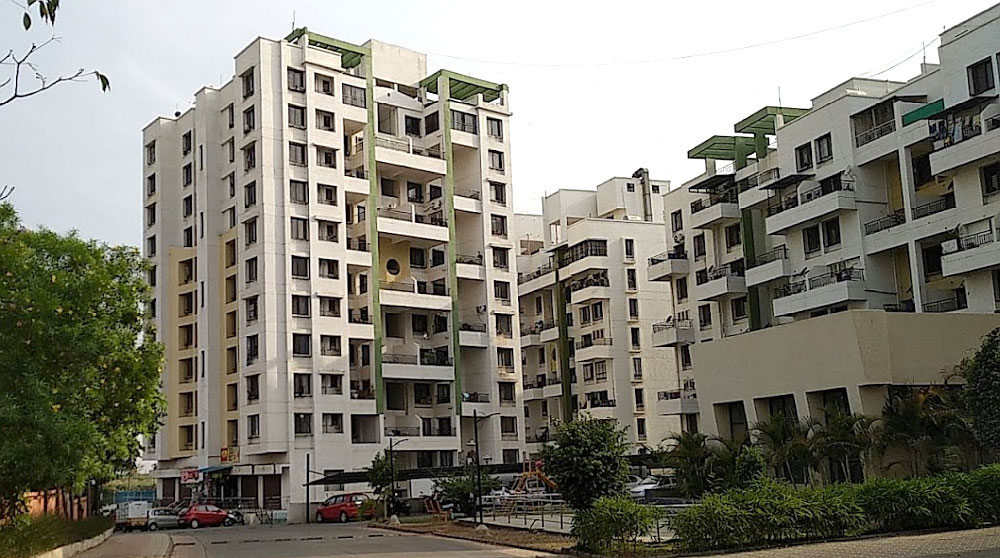
In a cooperative housing society (CHS/the Society), disputes often arise not from major financial decisions but from everyday governance issues such as how committee members are selected, whether common areas are being misused or whether CHS are demanding charges that may not be legally justified.
 This week’s queries address three very different but equally important concerns: the legality of selecting ‘advisers’ without following the prescribed election process; the rights of residents when common areas are used in a manner causing disturbance; and whether the Society can demand transfer charges when a property is being registered for the first time by the original purchaser.
 Validity of Selecting ‘Advisors’ by Draw of Lots and Their Responsibility
Question: Is it mandatory to accept posts in a CHS? In our Society, in addition to the chairman, secretary and treasurer, four persons have been selected as advisors by picking names from closed chits (closed pieces of paper). Are these persons responsible for the management of the Society as part of the managing committee? If not, can they refuse to sign the Society documents?
Answer: Posts in a cooperative housing society are not mandatory. A person cannot be forced to accept a post unless he or she has been properly elected and has given consent.
To elect the managing committee of a CHS, an election officer must be appointed and a ballot paper election should be held. Those who receive the highest votes are to be chosen as committee members. Among the elected managing committee members, they will elect from among themselves the chairman, secretary and treasurer.
Persons selected by picking names from chits cannot be treated as managing committee members, unless they have been duly elected as per the procedure laid down under the Act and Bye-laws. Such persons are not legally responsible for the management of the society and cannot be compelled to sign society documents.
If the proper election procedure has not been followed, you may make a complaint against the Society’s office-bearers to the deputy registrar (DR) of cooperative societies.
According to Maharashtra cooperative housing society Bye-laws (specifically Bye-law 110-140), a managing committee may co-opt up to two 'expert directors' to advise on specific activities. These experts have no voting rights in elections and cannot become office-bearers, with their tenure lasting as long as the committee.
Noise Disturbance by Child in Common Corridor
Question: I live in an apartment on the 4th floor. I finish work late and go to sleep at 4am. At 7:30am, I am often woken up by a 3-year-old girl crying or shouting in the corridor near the lift. Because the sound carries directly into my bedroom, I asked the parents to take her inside the flat to comfort her rather than letting her cry in the corridor and disturb the residents. Is it right to complain? What if the parent argues or denies?
Answer: Any disturbance should take place within an individual’s home and not in the common area. Common areas are meant for passage and not for activities that create inconvenience to other residents. Therefore, you may request the child’s parents to take the crying child inside their flat so that the loud noise does not disturb other neighbours.
If they do not cooperate, you may bring the matter to the notice of the managing committee of the Society and ask them to ensure that common areas are not used in a manner causing nuisance to residents.
Transfer Charges on First Sale from Builder to Original Purchaser
Question: My brother, who is a citizen of Canada, purchased an office premises in a commercial building in Navi Mumbai about six to eight years ago. He has paid the full amount to the developer. However, he has not yet paid the stamp duty or registered the office because the builder had left a lot of work incomplete.
The Society was also not formed by the builder at that time and, therefore the buyers joined together and formed the CHS about four months ago. During the formation of the Society, the developer included his company name against all unsold offices, including the one purchased by my brother (since it is still not registered). I assume this is normal.
Now my brother is coming to India to register the property. However, the secretary of the Society is demanding transfer charges. Can the Society demand transfer charges for the first sale? The builder has given a letter addressed to the Society stating that he has sold the office to my brother and has asked the Society to include his name. Please advise.
Answer: When your brother comes to India, he should first execute a sale deed with the builder for his office premises and register it with the sub-registrar of assurances.
With a photo copy of the registered sale deed and its Index-II, your brother has to apply for membership of the Society by filling the form as given in Appendix-2, along with an undertaking on ₹200 non-judicial stamp paper as per Appendix-3 of the 2014 bye-laws. He must also pay ₹100 and ₹500 by crossed cheques in the name of the Society towards the entrance fee and share capital for ten shares, respectively.
Since your brother is the original purchaser of the office from the builder, the Society cannot charge transfer charges. If the Society demands transfer charges, ask them to give the demand in writing after submission of all the above papers, or if the Society delays issuing the share certificate for more than 45 days, your brother should make a written complaint to the deputy registrar of cooperative societies of the area, with photo copies of all documents submitted to the Society, under bye-law no. 174(A)(ii) and (iii), after 45 days from submission of the papers.
NOTE
We will not be answering queries posted in the comments. Only questions sent through the Moneylife Foundation's Legal Helpline will be answered. If you want to seek guidance or ask questions to Mr Shanbhag, kindly send it through Moneylife Foundation's Free Legal Helpline. Here is the link: https://www.moneylife.in/lrc.html#ask-question Disclaimer: The guidance provided in these columns and on our Legal Helpline is on the sole basis of the facts provided by the reader/questioner and does not amount to formal legal advice in any form whatsoever.
(Shirish Shanbhag has an MSc in Organic Chemistry, a Diploma in Higher Education, and a Diploma in French and has completed his LL.B. in first class in 2021. Before his retirement, he was a junior college teacher at Patkar College from July 1980 to May 2012, teaching theoretical and practical chemistry. Post-retirement in 2012, he started providing guidance and counselling to people on several issues, specifically focusing on cooperative housing society-related matters. He has over 30 years of hands-on experience in all matters about housing societies and can provide out-of-box solutions for any practical issue.)