

Expedited Deemed Conveyance Orders and Self-redevelopment in Maharashtra
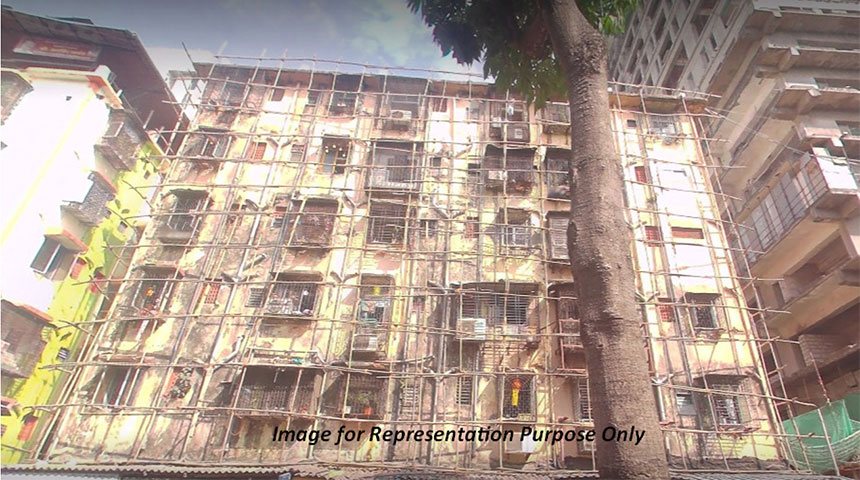
Conveyance of the land that Society buildings stand on is crucial for cooperative housing societies (CHSs) when they opt for redevelopment. Obtaining it has been a lengthy and convoluted process which usually takes a few months, delaying the self-redevelopment process further.
Recently, the Maharashtra state government issued a special government resolution (GR), binding officials to give deemed conveyance to self-redevelopment projects within 30 days. While the new GR is a welcome step that sharply cuts down the processing time for deemed conveyance orders, there is still some hesitancy and confusion about the applicability of the GR to Societies that do not opt for self-redevelopment.
 This week, I will address one such case where a CHS wanting to take advantage of the GR has opted for self-redevelopment but may decide to opt for development through a builder later, after the deemed conveyance process is complete. Here, I have shown the entire process that makes it possible for a deemed conveyance order to be granted within four to five weeks.
 We will also look at other cases, wherein a commercial premise has illegally denied a member overnight parking and another, where siblings wanting an equal share in their deceased mother's flat have decided to challenge her nomination in favour of her eldest son.
Deemed Conveyance and Self-redevelopment in Maharashtra
Question: Recently, the government of Maharashtra has come out with GR for deciding the applications for deemed conveyance within one month. However, for making an application, they have put in a condition of a special general meeting (SGM) resolution that the Society should go for self-redevelopment. What must be the intention of this condition? Societies want deemed conveyance. If they pass such a resolution to get deemed conveyance application, but later on they do not actually go for self-redevelopment and proceed with development through some builder following all due procedures, what will be the repercussions or the effect on deemed conveyance so obtained?
Answer: For the deemed conveyance, let your Society pass the resolution that after obtaining the same, the Society will go for self-redevelopment. There are following four steps for deemed conveyance:
(1) Deemed Conveyance Order from District Deputy Registrar: It takes about three months for the order and there will be three orders for one hearing once you submit your file for the deemed conveyance order.
Now with the new GR in effect, these hearings will take place in three hearings, one week apart. After the third hearing, your deemed conveyance order will be given to you the next day which means three months of work will be done in 15 days.
When you go for a second hearing, you give the deemed conveyance deed's draft to district deputy registrar for approval. The next day after the third hearing, the district deputy registrar will give you the deemed conveyance order, with his approved conveyance deed. You need to submit this deed with the conveyance order to the collector of stamps for his adjudication, with a copy of your Society's resolution that they are opting for self-redevelopment.
(2) Adjudication of Conveyance Deed with the Collector of Stamps: The collector of stamps takes 45 days to do the adjudication of your conveyance deed and to inform you of the stamp duty payment and registration charges.
As you have shown interest in going for self-redevelopment, the collector of stamps will do adjudication of your conveyance deed in just five days. Now you can pay the required stamp duty and registration charges on your Society's conveyance deed.
(3) Submission to District Deputy Registrar: You can now submit the stamp duty paid conveyance deed to district deputy registrar for his signature. After putting your Society's office-bearers' signature, submit this deed with Society's letter for registration with the office of sub-registrar of assurances. Usually, he takes 15 days to register your conveyance deed. With your Society's letter that it has opted for self-redevelopment, he will take only six days for this work. When you register your Society's conveyance deed, you should also ask for three certified copies of the conveyance deed and its Index-2 from the sub-registrar of assurances.
(4) Final process: After completion of these steps, you will need the certified copies to change the name on the land's 7/12 extract and the mutation entry in form-6 at the talathi office. One copy is to be given at the city survey office to change the property card in the Society's name. The third copy of the conveyance deed should be used to change the name in the property bill to the Society's name at the municipal ward office.
With your Society's letter at each respective office that you have opted for self-redevelopment, you will get the change of document in Society's name within six days, instead of an entire month that it would have usually taken.
This entire process will allow you to complete the deemed conveyance work in four to five weeks. After this is completed, if your Society does not go for self-redevelopment, then they should call a general body meeting (GBM), discuss and state the reason that they did not get the proper resource persons to opt for self-redevelopment, so you are now trying for redevelopment through a builder or developer.
NOTE
We will not be answering queries posted in the comments. Only questions sent through the Moneylife Foundation's Legal Helpline will be answered. If you want to seek guidance or ask questions to Mr Shanbhag, kindly send it through Moneylife Foundation's Free Legal Helpline. Here is the link: https://www.moneylife.in/lrc.html#ask-question Challenging Nomination in case Nominee Has Purchased Flat for Owner
Question: Our is a 2BHK flat bought by my elder brother in my mother's name and she has nominated her two sons on a 75% (elder son) and 25% (other son) basis. She recently expired. We are five siblings and legally all heirs to our mother's flat. However, our elder brother is claiming his 75% share in the property. Please advise.
Answer: If the elder brother has all the proof that he has paid full money for a flat bought in his mother's name, he can claim 100% right on his mother's flat by filing a suit in a competent civil court.
Let there be a testamentary petition in a competent civil court making your mother's all five siblings party to this suit, and your elder brother, who gave the total amount to buy the flat, as the 100% claimant for the same.
If he has no proof of giving 100% money to buy this flat and both of your parents are deceased, then all five siblings can claim 20% each share in your mother's flat.
Illegal Denial of Overnight Parking in Commercial Premises
Question: I own two office premises in a commercial building in Navi Mumbai. I park one of my cars every night in the open parking space on the premises. The managing committee is taking objection to this, citing security reasons. Are they justified in doing so?
There are security guards in the night as well as during the day time. I have also been given a sticker for my car by the Society, which I have affixed on the car.
Answer: When there is a security system in your Society and your car is given a sticker by the industrial premises society, claiming a security reason to disallow parking during the night is wrong.
If your Society still insists on not parking the car inside the industrial premises at night, then under Bye-law No. 174(B)(iv) take the matter to a cooperative court.
Here you will need a help of an experienced advocate, who has handled such parking cases in the cooperative Court.
(Shirish Shanbhag has an MSc in Organic Chemistry, Diploma in Higher Education, and a Diploma in French and has completed his LL.B. in first class in 2021. Before his retirement, he was a junior college teacher at Patkar College from July 1980 to May 2012, teaching theoretical and practical chemistry. Post-retirement in 2012, he started providing guidance and counselling to people on several issues, specifically focusing on cooperative housing society-related matters. He has over 30 years of hands-on experience in all matters about housing societies and can provide out-of-box solutions for any practical issue.)