

Flat Transfers, Society Posts and PG Accommodation Issues
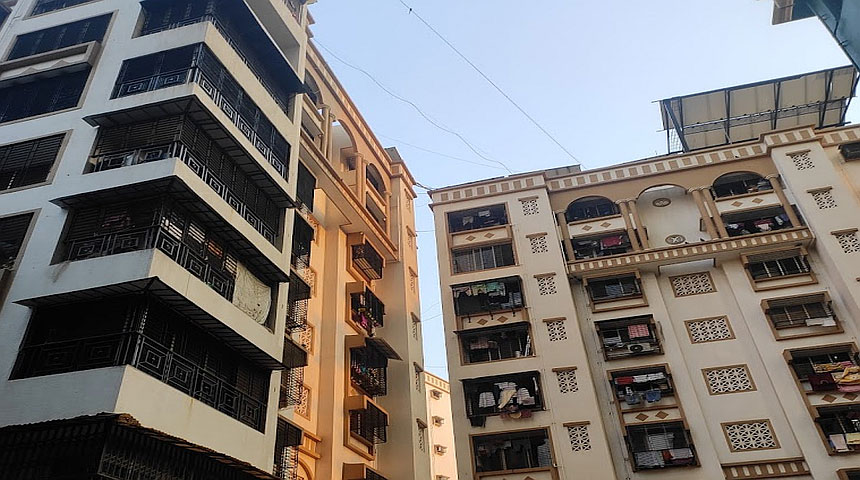
In a cooperative housing society (CHS/the Society), disputes rarely arise only from major redevelopment projects or financial irregularities. More often, everyday governance issues involving succession, membership eligibility and the use of residential premises become sources of uncertainty and friction among residents. Questions relating to the inheritance of flats, participation in society management and the increasing commercial use of residential units continue to test both the understanding and administration of society bye-laws.
Societies are also increasingly required to balance legal compliance with practical realities. Whether dealing with the transfer of a flat under a Will, the eligibility of an associate member to hold an office-bearing position, or concerns over flats being used for paying guest or hostel accommodation, managing committees are expected to act cautiously while safeguarding the interests, safety and harmony of all residents.
Transfer of Flat on the Basis of a Will
Question: The flat is in my father's name. My mother was the nominee and I was the alternate nominee. My father expired in 2024 and had executed a Will, but it was not acted upon after his death, as my mother was bedridden. The Society made my mother the primary member. My mother also passed away two months ago. As per my father’s Will, after his death, the flat was to be transferred in favour of my mother and, thereafter, in favour of my two sisters, excluding my brother, as he had already received his share in another property sold by my father about 20 years ago. Can the Society transfer the property in favour of myself and my two sisters on the basis of the Will without obtaining probate from a court of law and without taking consent from my brother, who may create difficulties in giving consent?
Answer: If your father had executed a valid Will witnessed by two persons, the Society may consider the transfer on the basis of the Will and the required documents. Since your mother was made the primary member after your father’s death and has also expired, the Society will have to examine the terms of your father’s Will carefully to determine whether your mother had only a limited right in the flat or became the absolute owner.
If the Will specifically provides that after your mother’s death the flat should pass to (you and) your two sisters, the Society may act upon the Will, subject to compliance with the applicable procedures and indemnities. Your brother’s consent may not be mandatory merely because he is a legal heir, especially where a valid Will exists excluding him.
However, if your brother disputes the validity of the Will or raises objections before the Society or court, the Society may insist upon appropriate legal orders before completing the transfer. In such circumstances, it would be advisable to consult a competent lawyer and take appropriate legal steps to avoid future disputes.
Eligibility of Associate Members To Become Society Secretary
Question: I would like to know whether a husband who is not a member, but who’s flat is in the name of his wife and son, can be eligible to become the secretary and handle the day-to-day work of the Society, as no other members are willing to take up the post. Please advise.
Answer: The husband may first become an associate member by filling the prescribed form in Appendix-5 of the Society’s bye-laws and obtaining the consent or no objection certificate (NOC) of the original member through the prescribed form in Appendix-10-A. Subject to the Society’s bye-laws and eligibility rules, he may then become a committee member through the managing committee election process and thereafter be appointed as secretary of the Society. Once duly elected or appointed, he can perform the duties and sign documents as authorised by the Society.
Commercial Use of Residential Flats for PG or Hostel Accommodation
Question: Our society at Vile Parle West, Mumbai, has 13 flats. Out of these, eight flats are owned by one family comprising two brothers and the son of one brother, who were the owners of the old bungalow. The father and son are the chairman and secretary respectively, while the brother is a committee member. The remaining five flats have been sold by the builder to five different buyers.
Out of these eight flats, two owners with six flats have given them to an entity running a paying guest accommodation. The occupants are changed frequently without our knowledge, creating serious safety concerns.
Please advise what action can be taken against the owners to stop the running of PG accommodation which amounts to commercial activity. We have also learnt that these owners are planning to run a hostel from these six residential flats. How can this commercialisation of residential premises be stopped and under which bye-laws or laws can such activity be prevented?
Answer: Flats in a cooperative housing society are normally meant for residential use and not for unauthorised commercial activity. If flats are being used extensively for paying guest (PG) accommodation or hostel purposes, the Society may issue notices to the concerned owners and seek details of the occupants for security purposes. If the activity creates a nuisance, raises security concerns, or amounts to unauthorised commercial use, the Society may also lodge a complaint with the local municipal authorities or police station.
NOTE
We will not be answering queries posted in the comments. Only questions sent through the Moneylife Foundation's Legal Helpline will be answered. If you want to seek guidance or ask questions to Mr Shanbhag, kindly send it through Moneylife Foundation's Free Legal Helpline. Here is the link: https://www.moneylife.in/lrc.html#ask-question Disclaimer: The guidance provided in these columns and on our Legal Helpline is on the sole basis of the facts provided by the reader/questioner and does not amount to formal legal advice in any form whatsoever.
(Shirish Shanbhag has an MSc in Organic Chemistry, a Diploma in Higher Education, and a Diploma in French and has completed his LL.B. in first class in 2021. Before his retirement, he was a junior college teacher at Patkar College from July 1980 to May 2012, teaching theoretical and practical chemistry. Post-retirement in 2012, he started providing guidance and counselling to people on several issues, specifically focusing on cooperative housing society-related matters. He has over 30 years of hands-on experience in all matters about housing societies and can provide out-of-box solutions for any practical issue.)