

Housing Society Problems and Solutions: Maintenance Disputes and the Transfer of Inherited Flats
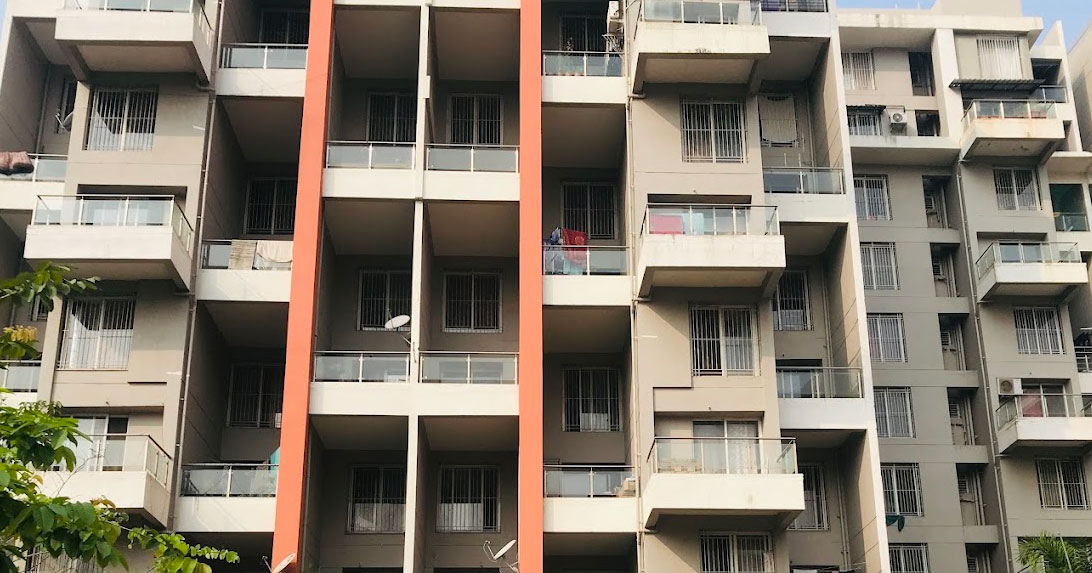
Living in a cooperative housing society (CHS/the Society) depends not only on the upkeep of buildings and shared facilities but also on fair decision-making, transparent procedures and respect for members’ rights. Disputes often arise when members question the basis of charges imposed by CHS managing committees or seek clarity on the rules governing their units (flats/shops, etc) and inherited property. Consistent application of society bye-laws and proper documentation are essential to resolving such concerns.
 This week’s questions highlight two situations in which members and committees need to understand their respective rights and responsibilities. One concerns additional maintenance and non-occupancy charges, including the need to establish their legal basis and ensure that they are applied in accordance with the applicable rules. The other examines the transfer of jointly owned flats following the deaths of family members, where inheritance rights, the consent of legal heirs and the documentation required by the Society must be carefully considered. In both cases, clarity on the applicable provisions and a fair, legally sound approach can help prevent unnecessary disputes.
Disputing Unfair Maintenance and Non-occupancy Charges in a Housing Society
Question: I live on the ground floor of a four-storey building in Mumbai. Our CHS managing committee is charging me heavy additional maintenance charges under a bye-law of the Maharashtra Cooperative Societies Act, merely because I extended my balcony by a few inches four months ago. However, two or three other members in the same building have made similar balcony extensions, but the Society has not charged them a single extra rupee. Is this ethical?
The managing committee members are also charging non-occupancy charges, which I believe are illegal under the Act. What can I do? Please advise.
Answer: It appears that you have two complaints. The first concerns the additional maintenance charges imposed on you for extending your balcony, while other members who have made similar extensions have not been charged extra. The second concerns the non-occupancy charges imposed by your Society.
For your first complaint, you should ask the Society to explain in writing the basis for imposing the additional charges and to provide the relevant bye-law or resolution authorising them. Under bye-law no. 45 of the 2014 Model Bye-laws, a member must obtain the committee’s prior written permission before making additions or alterations to a flat. Structural changes also require prior permission from the competent authority. However, this provision does not, by itself, establish that the Society can impose additional maintenance charges as a penalty.
If you believe that the Society is treating you unfairly, you can submit a written complaint to the managing committee, providing evidence of the additional charges and the similar extensions made by other members. If the Society does not resolve your complaint, you may approach the deputy registrar of cooperative societies or the appropriate authority, depending on the nature of the dispute. The authority will examine the matter under the applicable law and the Society’s registered bye-laws.
In a recent judgement, the Bombay High Court observed that bye-law 169(a) has been incorporated into the new bye-law to discourage CHS members from unauthorisedly encroaching upon the Society's common areas. Bye-law 169(a) provides for penalties equal to five times the monthly maintenance charges for each month of the violation when members encroach upon common areas such as staircases, landings, parking spaces, lifts and corridors.
Now coming to your second complaint. Under the Maharashtra government resolution (GR) dated 1 August 2001, non-occupancy charges cannot exceed 10% of the Society’s service charges, excluding municipal taxes. For example, if your monthly maintenance bill is ₹2,500, including maintenance charges of ₹1,000 and service charges of ₹1,500, then the non-occupancy charges will be ₹150 and not ₹250. The order also provides exemptions when flats are given to specified close relatives and certain other relatives recognised by the Society. A supplementary order dated 25 February 2011 also addresses paying guests.
If your Society is charging non-occupancy charges above the prescribed limit, or is imposing them contrary to the applicable rules, you can submit a complaint to the deputy registrar of cooperative societies, along with copies of your maintenance bills and details of the charges levied. The authority can examine the complaint and take appropriate action in accordance with the applicable provisions.
However, whether non-occupancy charges are payable in your particular circumstances depends on the facts and the applicable bye-laws. You should not assume that every such charge is illegal, or that merely keeping a flat locked automatically makes the charge unlawful.
Transferring Inherited Flats to a Son
Question: I am a member of a cooperative housing society and am writing on behalf of the Society. There are two flats in our CHS. The first flat was jointly owned by a father and son, and the second by a mother and son. Both the father and mother have passed away and the son is asking the Society to transfer both flats in his name.
The parents had three children: one son and two daughters. The Society has asked the son to obtain indemnities from his sisters and/or a release deed. The son and his lawyers claim that this is not necessary. The family is Muslim. Under Muslim personal law, the daughters are also entitled to inherit their parents’ property. Is the Society justified in asking for these documents?
Answer: Whether the family is Muslim or belongs to another religion, the documents required will depend on the ownership of each flat, the applicable succession law and the procedure prescribed under the Maharashtra Cooperative Societies Act and Rules.
Under Rule 106C-6(2) of the Maharashtra Cooperative Societies Rules, 1961, as amended in 2026, where the legal heirs agree on the distribution of a deceased member’s interest in a flat, they may execute a duly registered deed of family arrangement. They must submit form Y-5, along with the registered deed and an indemnity bond, to the Society. The Society must then publish a public notice inviting claims or objections before proceeding with the transfer, in accordance with the prescribed procedure.
If the legal heirs do not agree on the proposed transfer, or an objection is received, the Society must follow the procedure prescribed under the Rules. It cannot resolve a disputed inheritance claim merely by deciding which family member should own the flat.
In your case, the father and son jointly owned one flat, while the mother and son jointly owned the other. Therefore, the son’s existing ownership interest in each flat must be distinguished from the interest inherited from his deceased parent.
Under Muslim personal law, the daughters may also be entitled to inherit their parents’ interests. The precise shares must be determined after establishing the ownership shares, the order in which the parents died and the other relevant succession facts.
If both sisters agree to relinquish their inherited interests in favour of their brother, the appropriate registered instrument and other documents should be prepared in accordance with the applicable law. The Society should not insist on a particular release deed or stamp-paper value without verifying the applicable legal requirements.
The Society should, therefore, examine the ownership documents and the applicable succession procedure before deciding the transfer application. If the sisters’ rights are disputed, the family should obtain appropriate legal advice and the necessary succession documents from the competent authority or court, as applicable.
NOTE
We will not be answering queries posted in the comments. Only questions sent through the Moneylife Foundation's Legal Helpline will be answered. If you want to seek guidance or ask questions to Mr Shanbhag, kindly send it through Moneylife Foundation's Free Legal Helpline. Here is the link: https://www.moneylife.in/lrc.html#ask-questionDisclaimer: The guidance provided in these columns and on our Legal Helpline is on the sole basis of the facts provided by the reader/questioner and does not amount to formal legal advice in any form whatsoever.
(Shirish Shanbhag has an MSc in Organic Chemistry, Diploma in Higher Education, and a Diploma in French and has completed his LL.B. in first class in 2021. Before his retirement, he was a junior college teacher at Patkar College from July 1980 to May 2012, teaching theoretical and practical chemistry. Post-retirement in 2012, he started providing guidance and counselling to people on several issues, specifically focusing on cooperative housing society-related matters. He has over 30 years of hands-on experience in all matters about housing societies and can provide out-of-box solutions for any practical issue.)