

Illegal Non-occupancy Charges and Expenses for Leakage Repair
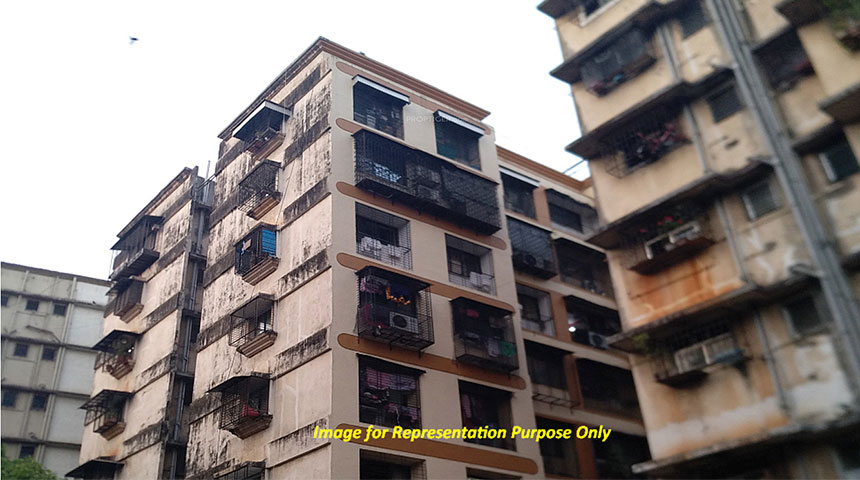
Among the various charges that are payable by a member of a cooperative housing society (CHS) are non-occupancy charges. These charges apply to properties not occupied by the owners or their family members. The basis for calculating these charges are costs such as maintenance, lift, electricity charges for common areas, security and other common amenities.
Usually, if a tenant occupies a flat, a non-occupancy charge is applicable and paid by the flat's owner as part of the regular maintenance charges. However, managing committee members of the CHS often misunderstand the rule and levy these charges incorrectly on the flat rented out by a member. Unless one is aware of the rules, it becomes difficult to challenge such charges.
 This week, we will look at one such case where a Society has been charging non-occupancy charges for a flat that is being occupied by the owner's son. Not only is the Society at fault, they are obliged to refund the charges already paid by the owner. I shall also address the matter of expenses for the repair of a leakage that occurred from a neighbouring flat and a possible solution for a misplaced sale deed of a flat.
 Misplaced or Lost Original Sale Deed
Question: My father is the owner of a flat in 45-year-old building. We are staying since inception and are the first owners. Since the past 30 years or more, our original agreement with the developer has not been not traceable and is perhaps lost.
However, we have the share certificate which has my father's name. Last year, my father transferred the flat to my name through a gift deed. We submitted all relevant documents for transfer in my name. However, the Society insists on seeing the original agreement or a copy to ascertain my father's name on the sale deed and have not yet done the transfer. Please advise.
Answer: If your father's original agreement of his flat is registered with sub-registrar of assurances, then from this office you can get a certified copy of the flat's sale deed.
If that agreement is not registered, then since the flat's share certificate is in your father's name, your Society cannot insist on the original sale deed.
In that case, you should make a complaint against the Society to the deputy registrar of cooperative societies, under the Bye-law No. 174(A)(iii), with copies of the share certificate and Index-2 of your gift deed.
Illegal Non-occupancy Charges
Question: Our Society in Mumbai purposefully charges non-occupancy charges even to the owner's son staying in the flat. What is the process for filing a complaint?
Answer: Bye-Law No 3 (xxv) has defined 'family' in which few relatives are considered as family. In this, a son is within the definition of family, and Society cannot ask you to pay non-occupancy charges if your son resides with you or independently stays in your flat.
Under bye-law no. 172, write to your Society explaining why the non-occupancy charges for your flat are illegal as stated under Bye-law No. 3(xxv). In this complaint, you should state that if Society does not refund you the already paid non-occupancy charges, or continues to send bills to pay the illegal charges, then under bye-law no. 174(A)(v), you will write a complaint against the Society to the deputy registrar (DR) of cooperative societies.
When you write a complaint against the Society to the DR, you have to give sufficient proof, including photocopies of bills and receipts showing the non-occupancy charges. Also share a copy of the PAN or Aadhaar of your son to prove that he is your son. More importantly, state all facts in your complaint to the DR and mention the violation of rules under bye-law 3 (xxv) as explained above.
After you make a complaint to the DR, with a copy of your complaint's covering letter, file a right to information (RTI) application to the public information officer (PIO) of the DR, asking the PIO to give you the information regarding the action taken against your complaint. The PIO of DR should reply to your letter in 30 days. This period is enough for taking action by DR on your complaint.
If you get a reply from PIO that DR has not taken any action on your complaint, then with a copy of your complaint and its enclosures, and with the PIO letter's copy, make a complaint to district deputy registrar (DDR). You can also simultaneously make a Lokshahi Din Complaint (LDC) to district collector (DC), who takes a hearing of LDC in his office on the first Monday of every month.
This way, your complaint should be redressed within two months.
NOTE
We will not be answering queries posted in the comments. Only questions sent through the Moneylife Foundation's Legal Helpline will be answered. If you want to seek guidance or ask questions to Mr Shanbhag, kindly send it through Moneylife Foundation's Free Legal Helpline. Here is the link: https://www.moneylife.in/lrc.html#ask-question Unfair Complaint of Society to Change Design of Safety Door
Question: Our Society needs our safety door to be made according to the design given by the developer with a metal grill. But our Vaastu consultant had informed us to use only wood on the safety door, which is why we had done the necessary modifications before the Society was formed.
It has been over a year since the developer helped form the Society and completed all formalities. The Society has now sent a letter stating that the safety door should be changed according to their specified design or we will face penalty until it is not rectified. Please help.
Answer: This is a really flimsy complaint of your Society against the flat-owner.
Contact the builder who has fitted the wooden safety door of your flat while doing the development work. Ask them to give you a passing certificate from their architect regarding the wooden safety door. With this certificate, the Society cannot take any action against you.
By chance, if the Society applies a fine, then under bye-law No. 174(B)(iii) make a civil suit against the Society for levying the penalty, in a cooperative court. Please find an honest, competent advocate who is handling such types of complaints.
Leakage from Upstairs Flat and Expenses for Repair
Question: We have faced a water leakage problem in our bathroom twice, from the second-floor bathroom. I have done the repair work and borne the expenses both times. The son of the member staying in the flat above me refuses to cooperate and behaves poorly with the managing committee as well. He uses abusive language and yells unnecessarily during meetings. I have managed to keep the recordings of these incidents.
I have informed the father (the owner of the flat and a retired government employee) about this and he assured us that his son will pay the small amount for the repairs. I am yet to receive anything from him. Please advise on the way forward.
Answer: For not paying the bathroom leakage repair expenses, under Bye-Law No. 172, make a written complaint against the flat-owner to the managing committee of the Society if you have not already done so.
In this complaint, mention that within 15 days of your complaint to the Society, if they do not take any action against that flat-owner to get you the bathroom leakage repair expenses, then under Bye-law No. 174(B)(iii) you will make a civil suit in the cooperative court and you will make the Society party to that civil suit.
After 15 days of your complaint to the Society, if you do not get any reply or the amount that you spent on repairs from the erring flat-owner, then find some honest and intelligent advocate working for cooperative court in such type of matters, and make a civil suit in the cooperative court against that flat-owner, by making your Society a party to that suit.
(Shirish Shanbhag has an MSc in Organic Chemistry, Diploma in Higher Education, and a Diploma in French and has completed his LL.B. in first class in 2021. Before his retirement, he was a junior college teacher at Patkar College from July 1980 to May 2012, teaching theoretical and practical chemistry. Post-retirement in 2012, he started providing guidance and counselling to people on several issues, specifically focusing on cooperative housing society-related matters. He has over 30 years of hands-on experience in all matters about housing societies and can provide out-of-box solutions for any practical issue.)