

Language for Minutes & Repair Contributions
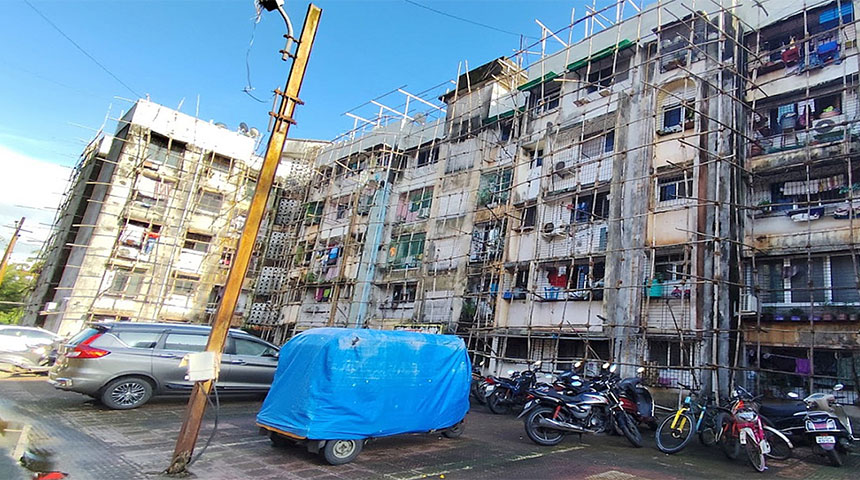
Members of cooperative housing societies and apartment associations often face various administrative and operational challenges. From disputes over procedural matters like recording minutes of meetings to complications arising from discrepancies in official documents, these issues require a clear understanding of cooperative housing society (CHS/Society) rules and effective communication. This week, we address some frequently encountered concerns, including how to resolve disputes over maintenance contributions, manage document-related challenges and navigate conflicts arising from the Society's decisions.
Language for Recording Minutes of Meeting
Question: The secretary of our Society records minutes of committee meetings digitally in English using MS Word and then shares a PDF version on the managing committee's WhatsApp group for comments. However, most committee members disapprove and insist the minutes should be handwritten and in Hindi. The secretary contends that Bye-law No136 does not specify the language or mode for recording minutes and claims the choice of language and format (digital or handwritten) lies with him as the responsibility of recording the minutes rests on the secretary. Please advise.
Answer: Bye-law No. 136 does not specifically govern the language or mode of recording minutes as per the model bylaws of 2015, amended up to December 2019. Typically, the language for recording minutes is determined during the registration of the Society, as mentioned by the chief promoter in Form A under Section 9 of the Maharashtra Cooperative Societies (MCS) Act.
If members wish to change the language or format for recording minutes, they can propose the change in the annual general meeting (AGM) and pass a resolution to that effect. Until such a resolution is adopted, the secretary can continue using the current method.
Society Objections over Name Discrepancy in Aadhaar Card Preventing PAAA Registration
Question: My mother remarried after my father passed away and the flat was purchased in her second husband's name. After his passing, the Society raised objections, but she resolved the matter through a letter of administration from the Bombay High Court. Her voter card and ration card reflect her new name as Mrs J, but her Aadhaar and PAN cards still carry her old name as Mrs K. Despite the builder and Society having signed and registered the development agreement (DA) with her voter card reflecting Mrs J, the Society is now creating issues, claiming that the Aadhaar card mismatch prevents the permanent alternate accommodation agreement (PAAA) from being signed and registered. Please advise.
Answer: In this case, your mother should submit a fresh application to the Society with all relevant details. This application should:
1. Include the letter of administration from the Bombay High Court.
2. Highlight that the discrepancy in Aadhaar and PAN names is being rectified through online applications (if initiated), even though this may not be strictly required at this stage.
3. Clearly state her request for permission to sign the PAAA based on the documents already accepted during the DA registration.
If the Society continues to create hurdles, she can escalate the matter by:
1. Writing to CREDAI (Confederation of Real Estate Developers' Associations of India) for assistance, if the builder is uncooperative.
2. Filing a suitable application in the High Court to seek relief, including an order compelling the Society to allow PAAA registration and claiming damages for mental distress caused by the Society's repeated objections.
These steps should help resolve the matter efficiently.
Contributing for External Repairs and Painting
Question: My apartment association is asking for an extra fund of Rs65,000 for exterior and common area painting. I have already spent Rs35,000 from my funds on crack fixing and damp-proofing my flat's exterior wall due to a persistent water seepage issue that the association has failed to address for four years. Since my flat doesn't need further crack fixing, what can I do?
Answer: As a general principle, the maintenance and repair of the exterior walls fall under the responsibility of the apartment owners' association. However, since you have already borne the cost for repairs specific to your flat, you may raise the following points with the association:
1. Seek Clarification: Submit a formal letter or email to the association explaining your situation, including receipts for the expenses incurred and request clarity on why you should contribute to additional repairs for work already completed.
2. Request Reimbursement: Depending on the association's bye-laws and policies, you could ask for reimbursement of the amount you spent since the issue arose from a lack of action on their part.
3. Participation in General Body Meetings: If the decision for the extra fund was made without proper consultation, raise the matter during the next general body meeting and seek a resolution.
If the association remains uncooperative, you may consult a lawyer specialising in property or housing matters to explore your legal options. Ensure you retain documentation of all communications and expenses related to the issue.
NOTE
We will not be answering queries posted in the comments. Only questions sent through the Moneylife Foundation's Legal Helpline will be answered. If you want to seek guidance or ask questions to Mr Shanbhag, kindly send it through Moneylife Foundation's Free Legal Helpline. Here is the link: https://www.moneylife.in/lrc.html#ask-question Disclaimer: The guidance provided in these columns and on our Legal Helpline is on the sole basis of the facts provided by the reader/questioner and does not amount to formal legal advice in any form whatsoever.
(Shirish Shanbhag has an MSc in Organic Chemistry, a Diploma in Higher Education, and a Diploma in French and has completed his LL.B. in first class in 2021. Before his retirement, he was a junior college teacher at Patkar College from July 1980 to May 2012, teaching theoretical and practical chemistry. Post-retirement in 2012, he started providing guidance and counselling to people on several issues, specifically focusing on cooperative housing society-related matters. He has over 30 years of hands-on experience in all matters about housing societies and can provide out-of-box solutions for any practical issue.)