

Maintenance, Redevelopment and Parking Rights
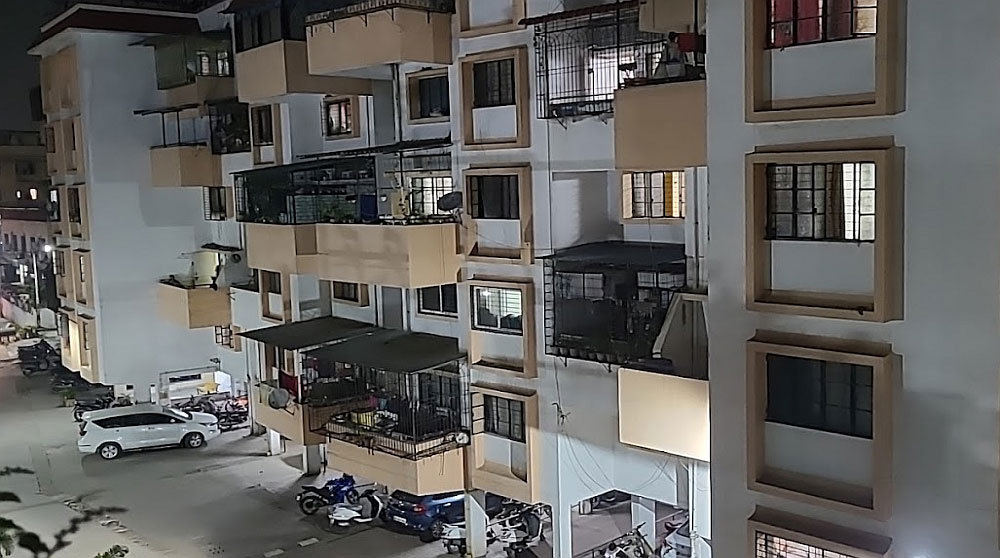
Clear records and a proper understanding of the law are the foundation of good housing society governance. Whether it is the recovery of maintenance charges, determining members’ entitlements during redevelopment or resolving disputes over parking spaces, many conflicts in a cooperative housing society (CHS/the Society) arise not because the law or bye-laws are unclear, but because Societies and members rely on long-standing practices, incomplete documentation or incorrect assumptions.
 This week, we address queries on the revised framework for recovering maintenance charges in Maharashtra’s cooperative housing societies, the importance of approved records in redevelopment, and the legal remedies available to a flat purchaser who has been denied the use of an allotted parking space. Each case highlights the need for Societies and home-owners alike to ensure that their rights and obligations are guided by the applicable law, supported by proper records and resolved through the appropriate legal process.
Maintenance for Shops and Residential Units in a Cooperative Housing Society
Question: In our CHS, we have about 250 flats ranging from 2BHK units to penthouses, six row houses and a shopping centre with 25 shops measuring between 150sqft (square feet) and 250sqft. The shopping centre is located within the Society premises and not along the boundary wall. The entire Society is enclosed by a compound wall, with access only through the main gate.
For the past 20 years, maintenance charges for the flats and row houses have been collected on a per-unit basis, whereas the shops have been charged on a per-square-foot basis. Several members of the managing committee own both flats and shops.
The shops do not use a lift, as the shopping centre comprises only a basement, ground floor and first floor. However, they share the same gardens, housekeeping, office staff, internal roads, water supply and common lighting as the flats and row houses. Since the shop-owners are also members of the Society, should they also pay the same maintenance charges for these common services?
Answer: The method of recovering maintenance charges is now governed by the Maharashtra Cooperative Societies Rules, particularly the provisions introduced under Rule 106C (12), and not merely by the model bye-laws.
As a general rule, charges for common services and Society administration are to be recovered equally from all members, irrespective of whether the unit is a flat, row house or shop. However, certain components must be recovered on the basis prescribed under the Rules, such as carpet area, actual usage or other specified criteria.
Accordingly, the Society cannot levy all maintenance charges on shops solely on a per-square-foot basis if the Rules require a different method. Likewise, not every component of maintenance is payable equally by all units. Basically, service charges need to be collected on a per-unit basis, while maintenance charges, including repairs and funds, should be collected on an area-wise basis.
Items such as repair and maintenance funds, sinking fund, insurance, property tax, lease rent, non-agricultural tax and certain other charges should be recovered in the manner prescribed under Rule 106C(12) and the applicable statutory provisions.
Approved Records Determine Redevelopment Entitlements
Question: Ours is a small CHS with nine flats and four shops. Two shop-owners are using almost twice the area mentioned in the municipal corporation records.
1.The Society is planning to go for redevelopment. Can these shop-owners insist on getting additional area in the redeveloped building based on the extra area they are presently using?
2.Our Society's record-keeping is very poor, but all the members have agreed to redevelopment. What procedure should the Society follow?
Answer: Kindly obtain the municipal corporation-approved building plan of your existing building from the town planning department or the local planning authority. The approved plan, along with the title documents and the Society records, will ordinarily be the basis for determining the area of each flat and shop for redevelopment purposes.
Merely using additional area beyond what is shown in the approved records does not automatically entitle a shop-owner or any member of the CHS to claim additional area in the redeveloped building.
Before proceeding with redevelopment, the Society should also verify and reconcile its records, including the approved building plans, members' ownership documents and other relevant records, so that the redevelopment agreement correctly reflects the entitlement of each member.
Remedies for Denial of an Allotted Parking Space
Question: I live in Mumbai and purchased a 3BHK flat in Vadodara (Gujarat) in 2021. At the time of registration, the builder allotted me a parking space linked to my flat. However, when I visited in 2022, I found that the parking number had been removed and another resident was using it. The watchman refused to allow my car into the Society premises, saying he was acting on the instructions of the Society members.
Since then, I have repeatedly requested the residents and the builder to resolve the issue, but without success. I am also not sure whether the Society has been registered, as there is no office-bearer and maintenance contributions are being collected in an individual’s personal account. The builder has also failed to rectify construction defects despite earlier assurances.
What legal action can I take:
1.To recover my allotted parking space?
2.Against those preventing me from using it?
3.For the inconvenience and loss caused?
4.Against the builder for the parking dispute and construction defects?
Answer: First, ascertain who is legally managing the building—whether it is the builder, a registered Society, an apartment association or any other authorised body. Obtain copies of your registered sale deed, the parking allotment letter, payment receipts and any correspondence with the builder.
If the builder has allotted a specific parking space as part of your purchase and you are being wrongly prevented from using it, you may initiate appropriate legal proceedings against the builder and any person or body unlawfully denying you its use. You may also seek appropriate relief in respect of construction defects and any breach of the builder's contractual obligations.
If your efforts to resolve the matter amicably fail, consult an advocate experienced in property and consumer matters in Vadodara. Based on your documents and the facts of the case, you may pursue the appropriate legal remedy against the builder and, where warranted, against the persons or body responsible for denying you access to your allotted parking space.
NOTE
We will not be answering queries posted in the comments. Only questions sent through the Moneylife Foundation's Legal Helpline will be answered. If you want to seek guidance or ask questions to Mr Shanbhag, kindly send it through Moneylife Foundation's Free Legal Helpline. Here is the link: https://www.moneylife.in/lrc.html#ask-questionDisclaimer: The guidance provided in these columns and on our Legal Helpline is on the sole basis of the facts provided by the reader/questioner and does not amount to formal legal advice in any form whatsoever.
(Shirish Shanbhag has an MSc in Organic Chemistry, a Diploma in Higher Education, and a Diploma in French and has completed his LL.B. in first class in 2021. Before his retirement, he was a junior college teacher at Patkar College from July 1980 to May 2012, teaching theoretical and practical chemistry. Post-retirement in 2012, he started providing guidance and counselling to people on several issues, specifically focusing on cooperative housing society-related matters. He has over 30 years of hands-on experience in all matters about housing societies and can provide out-of-box solutions for any practical issue.)