

Member Rights, Tenant Policies and Fair Governance
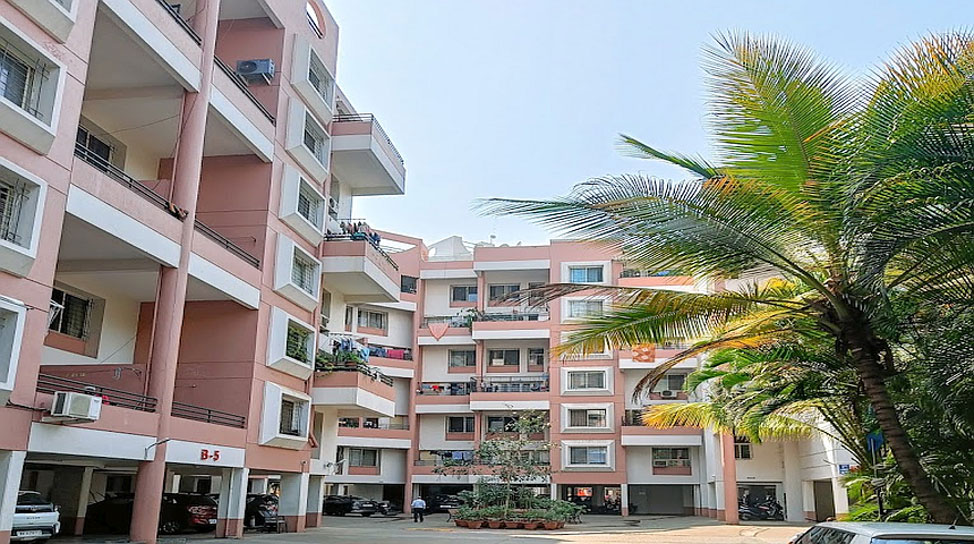
Life in a cooperative housing society (CHS/the Society) comes with its own set of rules, rights and responsibilities. However, conflicts can arise when these are not clearly understood or followed. This week's Q&A addresses issues such as discriminatory policies toward tenants, the extent of member access to financial records and the application of transfer fees. Each answer is designed to help you navigate the nuances of housing society governance and take appropriate action when needed.
Discriminatory Charges for Tenants
Question: Our newly registered CHS has implemented illegal charges against the bye-laws for owners who have rented their flats.

We pay the standard 10% non-occupancy charges, but for parking, the Society asks for 50% more than what is charged to flat-owners who occupy their flats. This is not mentioned in the bye-laws, as parking charges should be equal for all, but the managing committee (MC) decided otherwise.
The MC also wanted to charge Rs2,000–Rs3,000 based on flat size for tenants to use the gym and sports activities area within the building. These facilities were included when purchasing the flats and provided by the builder for all owners. Since owners did not agree to pay the additional charges for rented premises, the MC put up a notice prohibiting tenants from using the gym and sports activities area.
We raised this issue with the K Ward's deputy registrar, but they have not provided a proper legal solution for these illegal actions imposed by the MC on owners who have rented out their flats.
Answer: If the Society's managing committee has implemented such policies, it must be based on a resolution approved by the annual general meeting (AGM). You should first verify whether such a policy exists and whether it was legally adopted.
If these policies were implemented without AGM approval or are inconsistent with the Society's bye-laws, you can escalate the matter to the deputy registrar of cooperative societies with documented proof of these actions. While relief is only granted in exceptional cases, following the proper grievance process is essential to address the issue.
Providing Documents and Data to Members on Request
Question: We are a CHS under the MCS Act. Some members who have regularly attended all AGMs, approved all business transactions over the years and received and acknowledged all notices, minutes and financials have been writing letters asking for all these documents for the past 10 years.
How many years of financial data can a member request? If the member has attended all AGMs and approved all financial data through the years (with proof held by the Society), does the Society have to provide the same again? Some members were penalised for obstructing the AGM as per the prescribed procedure. They pay their dues minus the penalty amount. Can the Society charge interest on such unpaid penalties, and what are the rights of such a member?
Answer: Below are responses to your queries pointwise:
1. A member has the right to request financial data, but there is no specific time frame for which records can be accessed. While the period is not specifically stipulated in the bye-laws, according to bye-law 170, a member needs to pay Rs10 per page for a copy of the last audited balance sheet of the Society.
2. Yes, the Society is obligated to provide the requested documents even if the member has attended AGMs and approved the financial data in the past. The member must pay copying fees and other charges at the rates stipulated under bye-law 170, ranging from Rs5 per page to Rs100 per document.

3. The bye-laws of your Society will determine whether interest can be charged on unpaid penalties and the rights of such members. I recommend reviewing the relevant provisions in the bye-laws adopted by your Society to make an informed decision.
Applicability of Transfer Charges
Question: Our Society is asking for transfer fees for the flat I purchased through resale in 2020. The flat was not purchased directly from the builder.
The Society was registered in January 2020. The builder operated it until 2023 and, after the handover to the Society, the committee introduced transfer fees in a 2023 general meeting and started collecting them from then onwards.
Now they are asking for transfer fees for the flat I purchased in 2020. Should I have to pay transfer fees for this transaction?
Answer: If the Society was registered at the time of your purchase and the transaction between you and the outgoing member was a sale transaction for the residential unit, you are required to pay the transfer fee as per the bylaws. However, this fee cannot exceed Rs25,000.
NOTE
We will not be answering queries posted in the comments. Only questions sent through the Moneylife Foundation's Legal Helpline will be answered. If you want to seek guidance or ask questions to Mr Shanbhag, kindly send it through Moneylife Foundation's Free Legal Helpline. Here is the link: https://www.moneylife.in/lrc.html#ask-question Disclaimer: The guidance provided in these columns and on our Legal Helpline is on the sole basis of the facts provided by the reader/questioner and does not amount to formal legal advice in any form whatsoever.
(Shirish Shanbhag has an MSc in Organic Chemistry, a Diploma in Higher Education, and a Diploma in French and has completed his LL.B. in first class in 2021. Before his retirement, he was a junior college teacher at Patkar College from July 1980 to May 2012, teaching theoretical and practical chemistry. Post-retirement in 2012, he started providing guidance and counselling to people on several issues, specifically focusing on cooperative housing society-related matters. He has over 30 years of hands-on experience in all matters about housing societies and can provide out-of-box solutions for any practical issue.)