

Misplaced Allotment Letter; Major Issues Remain Unresolved after Possession
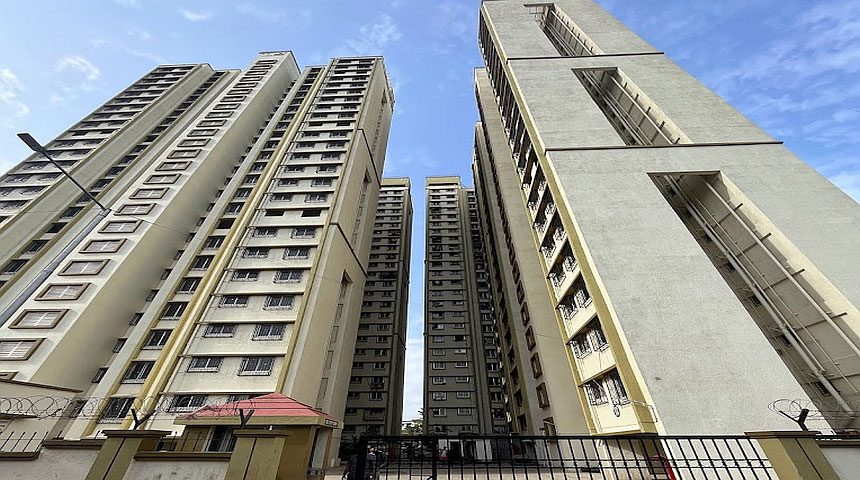
The process of buying a home is rewarding but a lengthy one, where documentation plays a crucial role in various phases. For instance, when applying for a home loan, there are several documents which have to be submitted as originals. The bank or financial institution would keep these documents in their storage and safekeeping until the home loan is paid in full. If the bank misplaces such documents, they are liable to pay compensation for the damage caused.
An allotment letter is one such document issued by either the builder or the cooperative housing society (CHS/Society), to the first buyer of a home, stating all relevant information about the property, such as the physical description and details of the payment. There might be cases where an allotment letter was misplaced by the owner or the financial institution that had disbursed the loan. In such cases, it is possible to acquire an equally valid certified copy.
 This week, I will address one such problem where the financial institution has misplaced the allotment letter and other critical documents. I will also address a problem where leakage issues persist after taking possession of a new flat and a case where the Society has wrongfully charged legal expenses to a single resident member.
 Misplaced Allotment Letter
Question: My building is on an MHADA plot, which was part of a World Bank project. The secretary of our CHS issued the allotment letter and I am the first owner of my flat. I took a loan from LIC Housing Finance Ltd (LIC HFL) which has been fully repaid. The file containing the original documents was destroyed in a fire at the branch office of LIC HFL. LIC HFL has issued necessary legal letters, no objection certificate or no lien letter.
The stamp duty was not paid at that time, so no other copy is available either at the registrar's office or in our Society. As per my understanding of the model bye-laws, the housing society has to make a new allotment letter. However, the committee is refusing to do so and asking me to go to MHADA. All the payments are paid to the Society for the purchase of the flat.
On inquiring from MHADA, they say they have no role to play in this. Please guide me in the matter as to who will give me another allotment letter. I have already filed a case in the consumer court against LIC HFL and the Society.
Answer: Do you not have a photocopy of the allotment letter given by your Society? On this allotment letter, did you not pay the stamp duty and register it with the sub-registrar of assurances office?
If this has been done, then you can get the sub-registrar of assurances certified copy of your allotment letter which has the same value as an original allotment letter.
Alternatively, has the Society not issued you a share certificate? A share certificate is also sufficient proof of ownership. If this also has not been done, then you should make a complaint against the Society to the deputy registrar of cooperative societies.
Most importantly, your Society can certainly give you a duplicate allotment letter. Please write to your Society regarding this. If the Society refuses to provide you with a duplicate and you have a share certificate in your name, then with the photocopy of your share certificate, make a complaint to the deputy registrar of cooperative societies in the MHADA Building, located in Bandra East.
Problems Persist after Possession and Formation of Society
Question: Our building is six years old (possession was received in 2018). We created a cooperative housing society in 2022. There are now two pertinent issues in our Society. One is that there is a leakage in the flats on the top floor. Should the responsibility for repairs lie with the builder or the Society?
Secondly, the builder had unsold flats and shops which he had rented out. He never paid maintenance for those flats after the formation of the Society. He later sold one flat and a shop. The Society's committee has decided to charge the new owner with past dues (calculated from the date of formation of the Society), as owners have failed to do any due diligence. Please clarify whether the Society is correct in recovering dues from the new owner. What is the legal way to collect pending maintenance in such a situation?
Answer: Each and every top-floor flat-owner should separately or collectively make a complaint against the builder in a consumer court for your building's defective roof. In this complaint, Society should be the joint complaining party representing all flat-owners.
The Society can certainly appoint an advocate who is competent in handling such cases. It can also claim the advocate's fees and charges as due compensation for the harassment and mental stress caused to the resident flat-owners.
For your second concern, to any buyer of the flat or shop, Society should not only charge the maintenance but also non-occupancy charges and any delayed payment interest charges. Only when such dues are cleared should the Society proceed to make the new owners members of the Society.
NOTE
We will not be answering queries posted in the comments. Only questions sent through the Moneylife Foundation's Legal Helpline will be answered. If you want to seek guidance or ask questions to Mr Shanbhag, kindly send it through Moneylife Foundation's Free Legal Helpline. Here is the link: https://www.moneylife.in/lrc.html#ask-question Managing Committee Illegally Charging Legal Fees to Single Member
Question: My Society is billing me for the legal expenses incurred in filing futile cases in the high court against the BrihanMumbai municipal corporation (BMC) in a property tax evasion matter. I became the scapegoat as I brought to attention the managing committee's corrupt actions of siphoning the Society funds for personal issues and forced them to refund a huge amount of money back to the Society.
Perhaps as an act of vengeance, they called an extraordinary general meeting (EGM), passed a resolution and billed all their court expenses (amounting to Rs3.70 lakh) to me which I have rightfully refused to pay. What is the remedy against such illegal actions of the Society?
Answer: In order to appoint an advocate for Society's legal issues, a general body meeting (GBM) should be called, and the need for legal consultancy should be appropriately explained to the members. The charges to be incurred should then accordingly be passed in the meeting, in which 75% of the Society's members should support the resolution to bear such charges. For instance, if the Society has 100 members, then 75 members should agree about this expenditure.
All members should share these expenses equally over a defined period of time if the amount is large. Indeed, such an amount cannot be charged disproportionately to only a few select members, as has been done by your Society.
I would urge you to make a complaint to the deputy registrar of cooperative societies against your Society for these huge legal expenses (it is undoubtedly very high by any standard). Proceed to complain against the managing committee of the Society and ask the deputy registrar of cooperative societies to recover the amount from the concerned committee members.
The deputy registrar will certainly recover the huge sum from committee members and perhaps even dissolve the committee by appointing an administrator who would then call for a fresh election.
Disclaimer: The guidance provided in these columns and on our Legal Helpline is on the sole basis of the facts provided by the reader/questioner and does not amount to formal legal advice in any form whatsoever.
(Shirish Shanbhag has an MSc in Organic Chemistry, a Diploma in Higher Education, and a Diploma in French and has completed his LL.B. in first class in 2021. Before his retirement, he was a junior college teacher at Patkar College from July 1980 to May 2012, teaching theoretical and practical chemistry. Post-retirement in 2012, he started providing guidance and counselling to people on several issues, specifically focusing on cooperative housing society-related matters. He has over 30 years of hands-on experience in all matters about housing societies and can provide out-of-box solutions for any practical issue.)