

Misuse of Residential Flats for Commercial Purposes and Encroachment
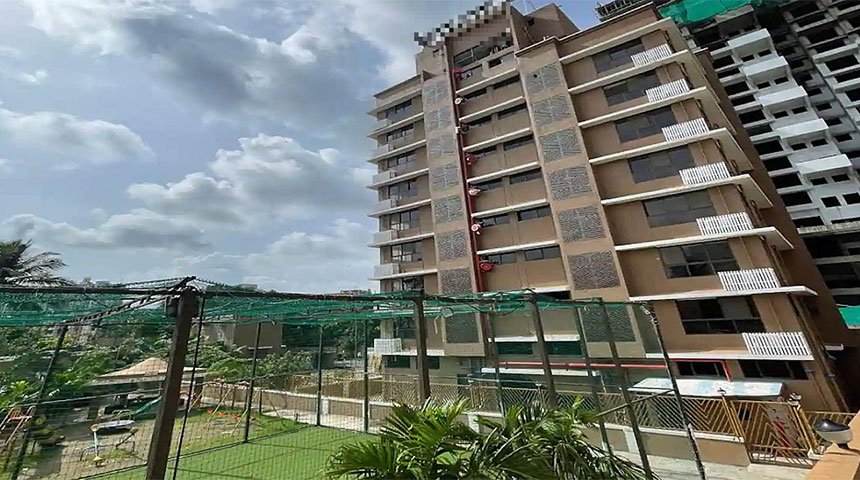
Using a residential property for commercial purposes has become a common practice for earning additional income. For some, converting a residential flat into an office space is also an excellent way to boost business. However, you can only use your flat for commercial purposes if your Society management and local municipality zoning rules permit you.
Some states have more lenient laws and allow a portion of the residential premises to be used for commercial purposes by professionals; but, as a general rule, prior permission has to be taken from the municipal authorities. Misusing residential premises for commercial purposes can draw a hefty fine from the managing committee of the cooperative housing society (CHS) and, in case the Society has been complicit in the matter, the deputy registrar of cooperative societies may get involved.
 This week, we are looking at two such cases, where a residential premise has been misused for commercial purposes and has even encroached in the open space of the Society.
 Misuse of Residential Flat for Commercial Purposes and Encroachment of Open Space
Question: We are a 10-member housing society and one of our members is misusing his flat and the garden area for commercial purposes. While the flat is being used to pack food items in plastic bags, the garden area has been converted into a shed, rented, and used to store seasonal items. Please advise whether it is legal to use the residential area for such work?
Answer: Kindly make a complaint to the deputy registrar of cooperative societies of your area, under bye-law No. 169(a), for encroaching on the open space of the Society. The member can be fined by the Society at a rate five times the monthly maintenance of his flat from the date since which the open space of the Society was misused til the encroachment is removed.
Also, for using his residential flat for commercial use, by violating the bye-laws of the Society, under bye-law No. 165(a), a Rs5,000 penalty can be levied per financial year till the commercial use is discontinued.
A complaint for the above-mentioned two wrongs by that member can be made by the Society to the deputy registrar of cooperative societies, under bye-law No 174(A)(xxii). Further, under the bye-law No174(B)(x), complaint can also be made by the Society to a cooperative court. However, if the Society chooses to take this route, it should appoint an excellent advocate to present the case when it comes up for hearing in the cooperative court. Under the bye-law No174(D)(v) a complaint can also be made to the local municipal ward office.
The Society can make complaints at all three offices simultaneously, without waiting for a response from one office.
Misuse of CHS Clubhouse for Commercial Purposes
Question: Can a clubhouse of a cooperative housing society be used for dance classes attended by children and adults of perhaps three to four families? The teacher is an outsider and charges high fees for his services. He is not paying any charges to the Society for conducting business on our premises. Other than this, who will bear the electricity charges or additional expenses due to these classes?
Answer: Use of open public places in the Society's premises for commercial purposes is a violation of bye-law no169 of CHS. Therefore, with proof of violation by the managing committee (MC) of your CHS, kindly make a complaint to the deputy registrar of cooperative societies of your area under bye-law No. 174 (A)(xxii).
You can also make a complaint against the MC of your CHS to cooperative court, under bye-law no174(B)(x), for misusing the residential premises for commercial purposes. If you make a complaint in the cooperative court, you will require an experienced advocate to present your case when it comes up for hearing. You can also complain against MC of your CHS at the municipal ward office, under bye-law No. 174(D)(i).
You can simultaneously make complaints to all three places, do at least with the deputy registrar and municipal ward office, where you can directly make the complaint, with no need to have the services of an advocate.
NOTE
We will not be answering queries posted in the comments. Only questions sent through the Moneylife Foundation's Legal Helpline will be answered. If you want to seek guidance or ask questions to Mr Shanbhag, kindly send it through Moneylife Foundation's Free Legal Helpline. Here is the link: https://www.moneylife.in/lrc.html#ask-question Managing Committee's Failures Affecting Smooth Functioning of Society
Question: Since our CHS was registered in 2011, the managing committee has not taken any insurance for our building's 'B Wing'. There are other problems, such as the 7th-floor construction is incomplete in our wing, commercial shops on the building's premises are not members of the CHS and the building does not have an occupation certificate (OC). The building was constructed a while ago between the years 2005 - 2008. Please advise.
Answer: For not adding commercial shops as members to your housing society, under bye-law no174(A)(iii), make a complaint against the managing committee of the Society to the deputy registrar of cooperative societies of your area.
For not taking building insurance for one wing of your Society's building, under bye-law no174(A)(xxii), make a separate complaint against your managing committee members to the deputy registrar.
Kindly file an application under the Right to Information (RTI) Act with the public information officer (PIO) of the local municipal ward office to get information regarding your building's OC. You will get a response stating the compliance requirements your building needs to complete for issuance of the OC. You can fulfil these requirements by appointing a municipality-approved architect.
Disclaimer: The guidance provided in these columns and on our Legal Helpline is on the sole basis of the facts provided by the reader/questioner and does not amount to formal legal advice in any form whatsoever.
(Shirish Shanbhag has an MSc in Organic Chemistry, a Diploma in Higher Education, and a Diploma in French and has completed his LL.B. in first class in 2021. Before his retirement, he was a junior college teacher at Patkar College from July 1980 to May 2012, teaching theoretical and practical chemistry. Post-retirement in 2012, he started providing guidance and counselling to people on several issues, specifically focusing on cooperative housing society-related matters. He has over 30 years of hands-on experience in all matters about housing societies and can provide out-of-box solutions for any practical issue.)