

Nomination, Property Succession and Persistent Leakage
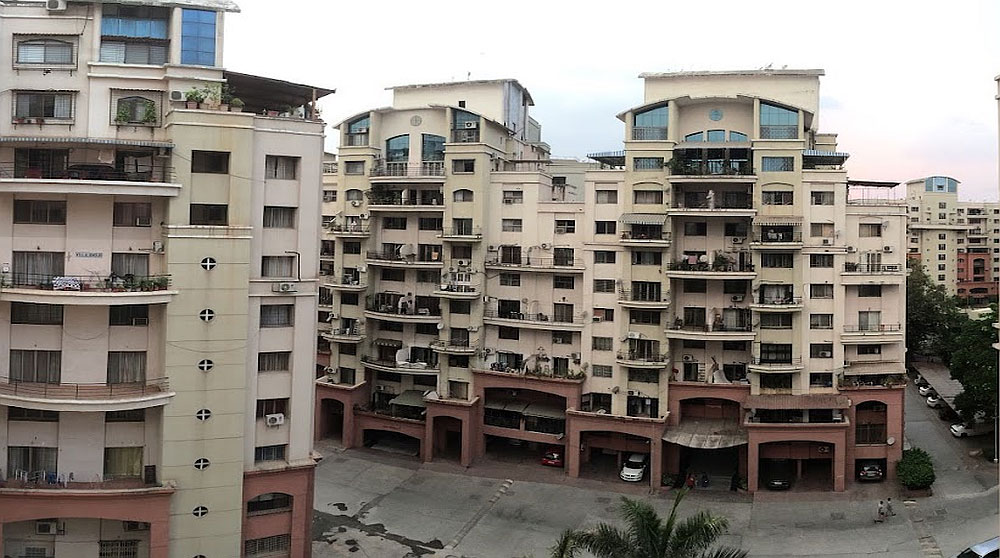
Disputes in a cooperative housing society (CHS/the Society), especially in urban areas, often begin with seemingly straightforward questions of ownership, responsibility, and everyday maintenance, but can become complicated when Society records, succession rights, and municipal responsibilities overlap. A nomination in a Society’s records, for instance, may help the Society deal with a deceased member’s interest, but it does not by itself settle who ultimately owns the property. Similarly, a persistent leakage problem can require clarity on whether the responsibility lies with the Society or an individual member before the appropriate remedy is pursued.
Questions of succession also arise in less conventional family circumstances. A home-owner may wish to provide for a close friend who has shared the home and provided support, while others may want their property to pass to a sibling or another relative. In such cases, clear estate planning can help avoid uncertainty later. This week’s queries look at these issues, from the effect of nomination on a proposed sale and the resolution of long-standing terrace leakage to making arrangements for a property to pass to a chosen beneficiary.
Nomination Is Not the Same as Ownership When a Flat Is Sold after the Member's Death
Question: My deceased mother was the sole owner of a flat in our CHS. She had nominated all three of her children in the nomination form, with proportionate shares, and the names of all three nominees have also been added to the share certificate. I am living in the same Society, while my two brothers do not.
We are now at an advanced stage of selling the flat. The Society has issued a no objection certificate (NOC) recognising only me as a member, as I reside in the Society, although the NOC covers the proposed sale of the flat by all three of us.
Please clarify whether the three nominees can jointly sell the flat and whether the sale consideration can be divided between us according to the proportions mentioned in the nomination form. Can the purchaser issue separate cheques to each of us for our respective shares of the sale proceeds?
Answer: I believe your mother had nominated all three of her children in respect of her flat. However, nomination alone does not make the nominees the flat's final legal owners. The ultimate ownership, after the death of the member, must be established under the Will, if any, or under the applicable succession law.
Therefore, before completing the sale, the three of you should ensure that the Society and the purchaser's advocate are satisfied that all three of you are legally entitled to your deceased mother's interest in the flat. If there is no Will and all three of you are the only persons legally entitled to the flat, the necessary succession or family-arrangement documents should be completed as advised by the Society's lawyer and all three can then join in the sale of the flat.
The fact that you reside in the Society while your two brothers do not, by itself, determines their ownership rights. The Society's NOC and membership records should also clearly reflect the position of all persons who are legally entitled to join in the sale.
If all three of you are legally established as joint owners in equal shares, the purchaser can pay the sale consideration to all three in accordance with your respective shares. For example, if the total sale consideration is ₹1.50 crore and each of the three sellers is entitled to one-third, the purchaser may issue three separate cheques of ₹50 lakh each and the manner of payment can be recorded in the agreement for sale and sale deed.
However, the proportions mentioned in the nomination form should not, by themselves, be treated as the ownership or sale-consideration proportions. The respective entitlement should first be established from the succession and title documents.
Persistent Terrace Leakage: Follow the Society and Municipal Complaint Process
Question: I own a flat in a CHS in Seawoods, Navi Mumbai, since 2003. After the monsoon, I noticed leakage from the private terrace of the upper-floor terrace flat. Since then, I have repeatedly requested the upper-floor flat owner, both verbally and via WhatsApp messages with photographs, to have the leak repaired. However, I have not received a positive response from him, and he has not responded to my complaints. Please guide me on what options I have to get the leakage problem resolved peacefully.
Answer: First, write a letter to the secretary of your CHS, requesting the Society to inspect the leakage and ascertain its source and to ask the upper-floor flat-owner to carry out the necessary repairs if the leakage is found to be due to any defect or alteration for which he is responsible.
It is important that the Society first establishes the actual cause of the leakage. If the leakage is due to defective waterproofing of the terrace, the roof, rainwater drainage, or any other part for which the Society is responsible under the applicable bye-laws, the Society should arrange for the necessary repairs. If the leakage is due to an alteration, plumbing defect or other work attributable to the upper-floor flat-owner, the Society can direct him to carry out the repairs.
If the Society does not take appropriate action, you can make a written complaint to the concerned officer of the Navi Mumbai Municipal Corporation (NMMC), enclosing copies of your complaint to the Society, photographs of the leakage and the correspondence with the upper-floor owner.
If you do not receive any response regarding the action taken on your complaint, you may also file a right to information (RTI) application with the concerned public information officer from NMMC, asking for information about the action taken on your complaint, including copies of any inspection report, correspondence or other records relating to it. The RTI application is for obtaining information about the action taken by the authority and can also help in following up on the matter.
If the municipal authority still does not take appropriate action, you may consider approaching the municipal commissioner through the applicable grievance or Lokshahi Din procedure of NMMC, along with copies of your earlier complaints and the information received under RTI.
Throughout the process, keep copies of all letters, photographs, WhatsApp messages, inspection reports and replies. Since the leakage has continued for a long period, it would also be useful to obtain a report from a competent civil/structural professional identifying the source of the leakage. This will help determine whether responsibility for the repair lies with the Society or the upper-floor flat-owner.
How To Leave a Property to a Friend or Relative after Death
Question: I own a rented property in the BrihanMumbai Municipal Corporation (BMC) area. Initially, the property was in my father's name and he transferred it to my name about 25 years ago. A close friend lives with me and takes care of me. She does not have a home in Mumbai. We are both senior citizens, although she is younger than me. I would like her to be able to continue living in the property after my death. Can the property be transferred to her after my death? If this is not possible, can I instead leave the property to my elder brother or sister?
Answer: If the property is owned by you and you want your close friend to receive it after your death, you should make a properly executed Will that clearly states the property is to go to her. You can also, if applicable, make a nomination in her name with the Society for the Society's records. However, nomination by itself does not make the nominee the final owner of the property. Under the Maharashtra Cooperative Societies Act, a nominee is admitted as a provisional member after the death of a member until the legal heir or person entitled to the property under succession law or a Will is admitted in place of the deceased member.
If you want your elder brother or sister to receive the property instead, you can similarly make a Will in favour of that person. You can also specify in your Will that your friend should have a right to reside in the property for her lifetime, if that is what you wish.
It is, therefore, important to have the Will properly prepared and executed, clearly identifying the property and the person or persons to whom you want it to pass. Registration of a Will is not generally compulsory, although you may consider registering it as an additional precaution.
The earlier requirement under Section 213 of the Indian Succession Act, under which probate was required in certain circumstances, has been removed with effect from 20 December 2025. Therefore, it should not now be stated that every beneficiary of a Will concerning property in Mumbai must necessarily obtain probate from the testamentary division of the Bombay High Court. The formalities after your death will depend on the Will, the applicable succession law and the circumstances of the property.
NOTE
We will not be answering queries posted in the comments. Only questions sent through the Moneylife Foundation's Legal Helpline will be answered. If you want to seek guidance or ask questions to Mr Shanbhag, kindly send it through Moneylife Foundation's Free Legal Helpline. Here is the link: https://www.moneylife.in/lrc.html#ask-questionDisclaimer: The guidance provided in these columns and on our Legal Helpline is on the sole basis of the facts provided by the reader/questioner and does not amount to formal legal advice in any form whatsoever.
(Shirish Shanbhag has an MSc in Organic Chemistry, a Diploma in Higher Education, and a Diploma in French and has completed his LL.B. in first class in 2021. Before his retirement, he was a junior college teacher at Patkar College from July 1980 to May 2012, teaching theoretical and practical chemistry. Post-retirement in 2012, he started providing guidance and counselling to people on several issues, specifically focusing on cooperative housing society-related matters. He has over 30 years of hands-on experience in all matters about housing societies and can provide out-of-box solutions for any practical issue.)