

Parking Rules, Maintenance Dues and AGM Participation
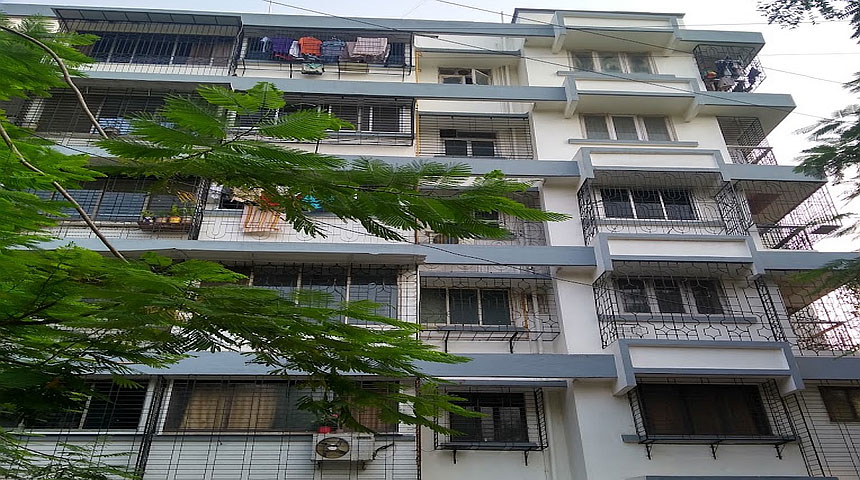
A cooperative housing society (CHS/the Society) is often governed as much by the practical realities of shared living as by its formal rules. Parking is a recurring source of friction, particularly where limited spaces must be allocated fairly among members, while long-pending maintenance dues can add another layer of dispute and strain relations among residents of CHS. A clear distinction between a member’s individual entitlement and the Society’s collective rights is therefore essential when such disagreements arise.
The same need for clarity applies to the functioning of the Society’s general body meeting (GBM) and managing committee. Questions about who may attend an annual general body meeting (AGM) and in what capacity can easily create unnecessary conflict when the roles of primary members, associate members, and committee members are misunderstood. This week’s questions examine how Societies can address these everyday governance issues while adhering to applicable rules and preventing disputes from escalating unnecessarily.
Parking Dispute and Recovery of Long-pending Society Dues
Question: Our CHS has 45 members, with flats ranging from one to three bedrooms. The building was redeveloped and the developer allotted parking spaces to members through the sale agreements. Subsequently, the Society allotted parking spaces to the original members through a lottery.
One original member, who was also allotted a parking space, is illegally parking three vehicles even though he has been allotted only one parking space. He has also been a defaulter and has not paid his maintenance charges since 2016.
We have complained to the deputy registrar of cooperative societies, divisional deputy registrar (DDR), local police station and other government authorities, but have not received any response. Please advise whom we should approach and what action the Society can take to prevent this member from using more parking spaces than those allotted to him.
We understand that under the BrihanMumbai Municipal Corporation (BMC) rules, 5% of parking must be designated for guests. Due to unauthorised parking, the Society is unable to accommodate vehicles properly. Please guide us on how to resolve this matter amicably.
Answer: You have two problems, for which I am giving you the solution.
1. Parking Problem’s Solution
First, the Society should check its redevelopment documents, the parking allotment made by the developer, the Society’s parking allotment registers and the parking rules adopted by the GBM.
Under the model bye-laws, the Society has to frame parking rules and allot the available parking spaces in accordance with those rules. Bye-laws nos. 77 to 84 deal with parking. If this member has been allotted only one parking space by the Society, he cannot use additional parking spaces merely because he owns three vehicles.
The managing committee should first issue him a written notice requiring him to remove the vehicles parked in spaces not allotted to him. The Society should maintain proper records of the allotment and, where necessary, photographs or other evidence of the unauthorised parking.
If he does not comply, the Society can take appropriate action in accordance with its parking rules and the applicable bye-laws. A dispute relating to parking between a member and the Society can be taken to the cooperative court under Section 91 of the Maharashtra Cooperative Societies Act, as contemplated by bye-law no. 174(B)(iv).
The Society should also verify the exact terms of the redevelopment and sale agreements before taking any action, particularly because the question states that the developer had allotted parking through the sale agreements.
2. Recovery of Society’s Dues
If the member has not paid his maintenance and other lawful dues since 2016, the Society should prepare a complete statement of account and issue a proper written demand for the outstanding amount to the defaulting member.
For recovery of qualifying Society dues, including maintenance and service charges, the Society can approach the deputy registrar of cooperative societies for a recovery certificate under Section 154B-29 of the Maharashtra Cooperative Societies Act, 1960, subject to following the prescribed procedure and submitting the necessary records.
The Society should, therefore, address the parking issue and the recovery of maintenance dues as two separate matters. Merely being a defaulter does not, by itself, permit the Society to arbitrarily cancel his parking allotment. The Society should act in accordance with its registered documents, adopted parking rules, bye-laws and the Maharashtra Cooperative Societies Act.
If the member continues to park more vehicles than are allotted to him despite written notices, the Society should take appropriate legal action to enforce its parking rules rather than allowing unauthorised parking to continue.
Can Both Spouses Attend the Society's AGM?
Question: I am the primary member of my CHS, and my wife is an associate member as well as a member of the managing committee. My question is: Can the annual general meeting (AGM) or the managing committee restrict me or my wife from attending the AGM? Can we both attend the AGM — I as the primary member and my wife as a managing committee member, so that she can fulfil her responsibilities as a committee member?
Answer: Assuming the Society is located in the state of Maharashtra, both of you can attend the AGM of the Society.
As the primary member, you have the right to attend the GBM or AGM of the Society. Your wife, being an associate member and also a member of the managing committee, can also attend the AGM in her capacity as a committee member and participate in carrying out her responsibilities.
However, attendance and voting are two different matters. Under Section 154B-11 of the Maharashtra Cooperative Societies Act, an associate member has the right to vote with the prior written consent of the original member. The Act also provides that a member cannot have more than one vote in the affairs of the Society. Therefore, the question of who can exercise the vote should be dealt with separately in accordance with the Act and the Society’s registered bye-laws.
The AGM or managing committee cannot simply prevent the primary member from attending the AGM merely because his wife is an associate member and is serving on the managing committee. Similarly, her position as a committee member does not by itself prevent her from attending the AGM.
If the Society is proposing to restrict either of you from attending the AGM, you should ask the Society to give you the specific provision of the Maharashtra Cooperative Societies Act, Rules or the Society’s registered bye-laws under which such restriction is being imposed.
NOTE
We will not be answering queries posted in the comments. Only questions sent through the Moneylife Foundation's Legal Helpline will be answered. If you want to seek guidance or ask questions to Mr Shanbhag, kindly send it through Moneylife Foundation's Free Legal Helpline. Here is the link: https://www.moneylife.in/lrc.html#ask-questionDisclaimer: The guidance provided in these columns and on our Legal Helpline is on the sole basis of the facts provided by the reader/questioner and does not amount to formal legal advice in any form whatsoever.
(Shirish Shanbhag has an MSc in Organic Chemistry, a Diploma in Higher Education, and a Diploma in French and has completed his LL.B. in first class in 2021. Before his retirement, he was a junior college teacher at Patkar College from July 1980 to May 2012, teaching theoretical and practical chemistry. Post-retirement in 2012, he started providing guidance and counselling to people on several issues, specifically focusing on cooperative housing society-related matters. He has over 30 years of hands-on experience in all matters about housing societies and can provide out-of-box solutions for any practical issue.)