

Property Sale Without Complete Ownership Papers and Fire Damage Costs
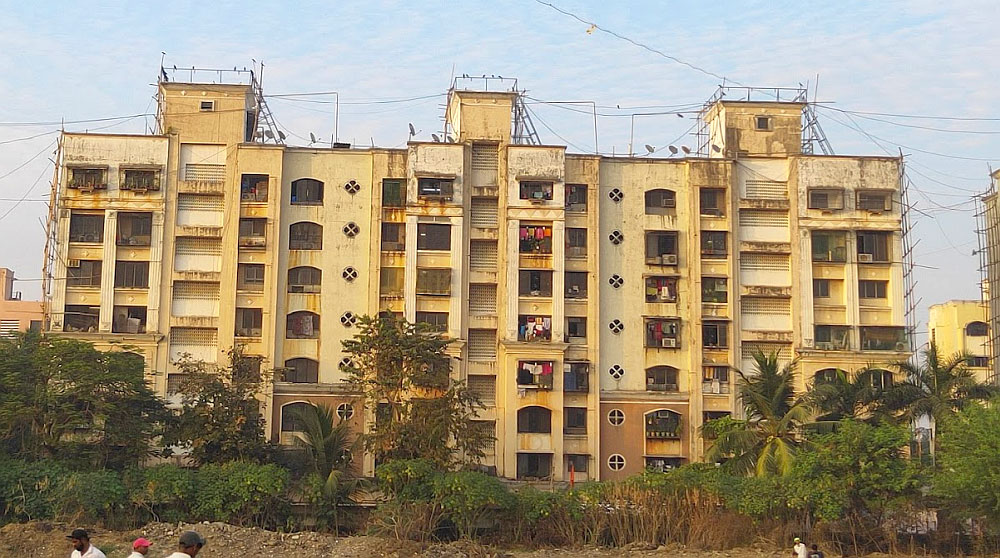
Cooperative housing societies (CHS/the Society) often become the stage for complex disputes—some rooted in legal technicalities of ownership, others in the allocation of costs for unforeseen damages. In such situations, members are frequently caught between what the managing committee believes is fair, what they want it to be and what the law actually says or permits. Without clarity on legal rights and obligations, it is easy for these issues to escalate into prolonged and stressful conflicts.
This week’s column addresses two such matters - one involving the sale of a property where ownership documentation is incomplete, and another concerning a society’s demand for repair costs following an accident that damaged common facilities. Both cases underline the importance of proper documentation, adherence to cooperative housing laws and a firm understanding that fairness must be grounded in legality.
Purchasing A Bungalow from the Second Owner
Question: I am interested in a bungalow in Thane, and I have found one. The owner is the second owner of this bungalow; the first owner was her mother-in-law. Before her death, the mother-in-law filled out a nomination form mentioning the current owner and her two sons. The current owner has utility bills, property tax receipts and the housing society’s share certificates in her name. However, she does not have the allotment letter from the first owner, a Will or the property plan. In the 7/12 extract and mutation papers, only the housing society’s name is mentioned. She has the death certificates of her father-in-law, mother-in-law, and her husband. Currently, she has two sons and one married sister-in-law living in Kerala. According to the current owner, she is ready to give a release deed at any time. Kindly opine.
Answer: Based on the facts provided, the current owner does not appear to have a clear, marketable title to the bungalow. A nomination in the housing society records is not equivalent to ownership — it only gives the nominee the right to hold the property on behalf of all legal heirs. Since the first owner (mother-in-law) died without leaving a Will, the property would devolve upon all her legal heirs.
In this case:
- The housing society records, utility bills, and share certificate in the current owner’s name show possession and recognition by the society, but they do not override the legal rights of other heirs.
- The absence of an allotment letter, Will, or registered gift/sale deed from the first owner means the chain of title is incomplete.
- The married sister-in-law (daughter of the first owner) may have a legal share in the property, and her consent (through a registered release deed or relinquishment deed) is required, along with the consent of both sons of the current owner if they are also legal heirs of the first owner’s estate.
Recommendation:
Obtain a legal heir certificate for the first owner to identify all heirs.
Get a registered release deed from all legal heirs (including the sister-in-law) in favour of the current owner.
Ensure the property is transferred in the revenue records (7/12 extract and mutation entry) in the current owner’s name.
Only after completing this process and verifying the documents with a qualified property lawyer should you proceed with the purchase.
Until then, the title is not clear, and buying the property carries legal risk.
Penalty Levied for Damage to Elevator Due to Fire Caused by Electrical Short Circuit
Question: I live on the 10th floor of a CHS in Mumbai. There was a fire in our home due to an electrical short circuit. The fire brigade came and doused the fire using their water hoses, which they brought up from the ground floor to the tenth floor. During the process, their hose burst on the 3rd floor, flooding the elevator shaft and damaging the electrical circuit and motors of both elevators. The cost of repairs and replacement of the damaged elevator parts amounts to over Rs1 lakh. The CHS has a fire insurance policy that only covers structural damage and will not pay for elevator damage. Hence, the CHS committee has asked us to bear 100% of the repair and replacement cost.
Answer: Since the damage to the Society’s lifts was neither directly nor indirectly caused by you, the CHS cannot ask you to pay for the repairs. You should obtain the fire brigade’s report for the fire in your flat by writing to the chief fire officer (CFO). If you are staying in Mumbai city, the CFO’s office is in Byculla. If you are in the Mumbai suburbs, the CFO’s office is in Marol. You can call the toll-free number 101 to get the relevant CFO office address for your area.
In your letter to the CFO, also ask:
- Whether they filed an FIR for the fire incident in your flat.
- Whether the fire brigade noted any deficiencies in the Society’s fire system.
- Whether the fire brigade advised the Society not to use the lifts until they were inspected by the lift company’s service personnel.
- If the fire brigade did not raise these points or file an FIR, ask the CFO why these steps were not taken.
You should also write to your Society and ask why it has not taken insurance for common facilities such as lifts, water pumps, intercom systems, CCTV (if present) and common area lighting. These are essential to safeguard the interests of residents and the building itself.
Additionally, question why the Society did not maintain proper fire-fighting equipment up to the 10th floor. If it had been functional, the fire brigade would not have needed to stretch their hose from the ground floor to your flat, which ultimately led to the hose bursting on the third floor. Request that the Society conduct a fire safety audit of the building. In fact, such an audit should have been recommended by the CFO during the firefighting process.
Lifts are supposed to be shut down during a fire. After the fire is doused, lifts should not be operated unless inspected by authorised lift technicians. These service persons usually come the next working day and complete the inspection in a couple of hours. Ask the Society whether such an inspection was done after the lift shaft was flooded. Just because a majority agrees on something does not mean a member can be unfairly penalised.
Also, any fine or charge exceeding Rs5,000 per flat in a year must be approved by the deputy registrar of cooperative societies. In such a case, the deputy registrar will call both, you and the Society's secretary, for a hearing before deciding if the CHS is justified in recovering the cost from you. You have strong grounds to defend yourself, as explained above. Raising these questions will likely prompt the society office bearers to reconsider their decision and withdraw the demand for lift repair costs.
NOTE
We will not be answering queries posted in the comments. Only questions sent through the Moneylife Foundation's Legal Helpline will be answered. If you want to seek guidance or ask questions to Mr Shanbhag, kindly send it through Moneylife Foundation's Free Legal Helpline. Here is the link: https://www.moneylife.in/lrc.html#ask-question Disclaimer: The guidance provided in these columns and on our Legal Helpline is on the sole basis of the facts provided by the reader/questioner and does not amount to formal legal advice in any form whatsoever.
(Shirish Shanbhag has an MSc in Organic Chemistry, Diploma in Higher Education, and a Diploma in French and has completed his LL.B. in first class in 2021. Before his retirement, he was a junior college teacher at Patkar College from July 1980 to May 2012, teaching theoretical and practical chemistry. Post-retirement in 2012, he started providing guidance and counselling to people on several issues, specifically focusing on cooperative housing society-related matters. He has over 30 years of hands-on experience in all matters about housing societies and can provide out-of-box solutions for any practical issue.)