

Redevelopment Burdens and Parking Woes
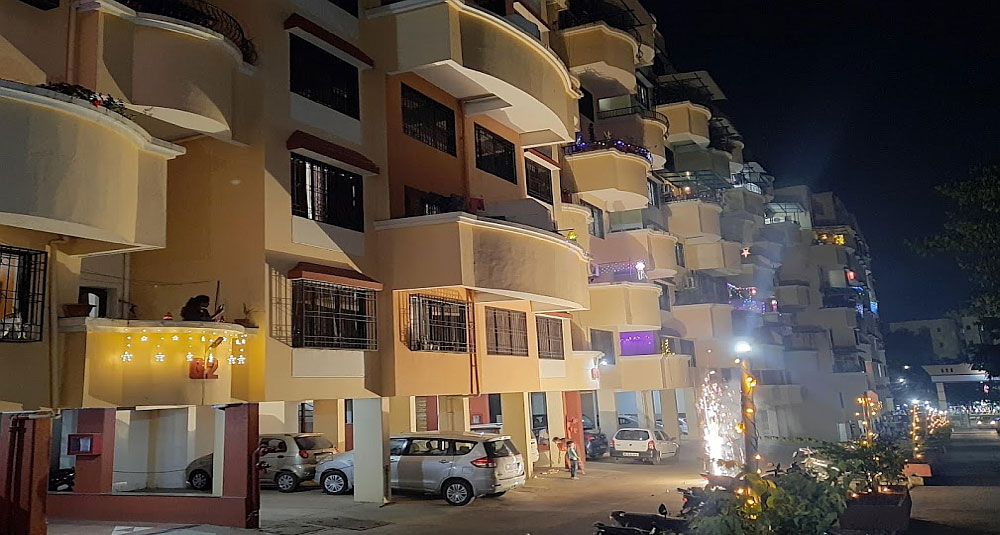
Cooperative housing societies often struggle to strike a balance between collective decisions and members' individual concerns. Redevelopment can promise better homes and improved amenities, but it can also raise questions about the financial burden on a cooperative housing society (CHS/the Society) members who may not be able to meet substantial additional costs. For senior citizens in particular, clarity on the proposed project, its costs and the implications of dissenting from the decision is essential.
 Parking, meanwhile, remains a persistent source of friction in many housing societies, especially where available spaces are limited. Disputes can become more complicated when unauthorised parking is accompanied by long-pending maintenance dues. The following questions examine these two practical concerns and the steps societies and members can consider to address them within the applicable rules and bye-laws.
Self-redevelopment: Can Majority Members Impose a Heavy Financial Burden?
Question: Building of 13 flats, considering self-redevelopment with self-financing, which may be around ₹6 crores per flat. Can the majority approve it and compel unwilling members to pay such a large amount? My family members and I are senior citizens.
Answer: Before redevelopment, a conveyance of the Society’s building and its land should be done in favour of the CHS.
If the landowner and the builder who constructed the building are not ready to give conveyance, then the Society should go for deemed conveyance of the land and its building. With the certified copy of the conveyance deed and its Index-II, the Society should apply in the prescribed form to the city survey office to transfer the Society’s land in the name of the Society. The Society should then obtain a land map from the same office, showing the Society's building on the land. Then the Society can go for the redevelopment of its old building.
If your Society is going for self-redevelopment without adding additional flats to its building and is proposing to give the original flat-owners a bigger flat free of charge, along with a corpus fund, then ask a local municipality-recognised architect to find out how much additional free area each flat can get in the self-redeveloped building. If your Society’s land area is very small, you may get only a small additional area.
However, the proposed cost of ₹6 crore per flat should not be accepted without checking the detailed project estimate. The Society should obtain a proper estimate from qualified professionals and satisfy the members that the proposed contribution has been calculated correctly. It cannot simply be assumed that the cost will be ₹6 crore per flat.
If such a high contribution is being asked, you should first obtain the detailed redevelopment proposal, cost estimate and the Society’s resolutions and have them examined by a competent advocate. The rights of members who do not agree with the redevelopment or the proposed contribution will depend on the applicable cooperative housing society rules, bye-laws and the facts of the particular case.
Your status as senior citizens should also be brought to the Society’s attention while considering the proposed financial burden and redevelopment arrangements.
Parking Disputes and Recovery of Long-pending Society Dues
Question: Ours is a redeveloped CHS. The developer allotted parking spaces to members through the sale agreements and the Society allotted parking spaces to original members by lottery. One original member, who was also allotted a parking space, illegally parks more than one vehicle (three vehicles). He is a defaulter and has not paid any maintenance charges since 2016. We have complained to the deputy registrar, district deputy registrar (DDR), police station and government bodies, but we have not been able to get any response from these authorities. Whom should we approach and what action must be taken by the Society to stop the use of more vehicles than allotted? As per the BrihanMumbai Municipal Corporation (BMC) rules, 5% of parking must be for guests. Due to illegal parking, the Society is not able to accommodate its vehicles. We are a Society of 45 members with one to three-BHK flats. Please guide and help us get an amicable solution.
Answer: You have two problems, to which I am giving you the solution.
1. Parking problem’s solution
Parking spaces cannot ordinarily be treated as independent premises and sold separately by the builder or the Society. The position, however, may depend on the type of parking space, the sanctioned building plan, the sale agreements and the applicable rules.
Parking is to be allotted and regulated in accordance with the applicable Society bye-laws. If a member has been allotted only one parking space but is parking additional vehicles on the Society premises without permission, the managing committee should take action under the bye-laws, the Society’s parking rules, and the resolutions.
If there is a dispute regarding the allotment or use of parking spaces, the Society should obtain proper legal advice and, where appropriate, approach the competent cooperative authority or cooperative court under the applicable provisions. The Society should also verify the applicable municipal rules regarding guest parking and ensure that the parking spaces reserved for guests are not being occupied by members’ additional vehicles.
2. Recovery of the Society’s dues
Here are the steps you need to follow to recover dues from the defaulting member.
- Send a formal demand notice or bill that shows principal and interest separately, and specify a specific timeframe to clear the dues.
- Pass a formal resolution in a committee meeting to initiate recovery proceedings under Section 154B-29 of the MCS Act, 1960.
- File the prescribed recovery application with the assistant/deputy registrar of cooperative societies along with certified ledger extracts, copies of notices, and relevant bye-laws.
- The registrar conducts a summary inquiry and issues a recovery certificate, which acts as conclusive proof of arrears.
- A designated officer from the office of the registrar can seize the property or auction the defaulter’s movable/immovable property to satisfy the outstanding dues.
The managing committee may want to hire the services of a good practising lawyer who is familiar with the CHS recovery process and procedure.
The Society should maintain proper records of the parking allotment, notices issued to the member, photographs or other evidence of unauthorised parking, and the outstanding maintenance dues before taking further action.
NOTE
We will not be answering queries posted in the comments. Only questions sent through the Moneylife Foundation's Legal Helpline will be answered. If you want to seek guidance or ask questions to Mr Shanbhag, kindly send it through Moneylife Foundation's Free Legal Helpline. Here is the link: https://www.moneylife.in/lrc.html#ask-questionDisclaimer: The guidance provided in these columns and on our Legal Helpline is on the sole basis of the facts provided by the reader/questioner and does not amount to formal legal advice in any form whatsoever.
(Shirish Shanbhag has an MSc in Organic Chemistry, Diploma in Higher Education, and a Diploma in French and has completed his LL.B. in first class in 2021. Before his retirement, he was a junior college teacher at Patkar College from July 1980 to May 2012, teaching theoretical and practical chemistry. Post-retirement in 2012, he started providing guidance and counselling to people on several issues, specifically focusing on cooperative housing society-related matters. He has over 30 years of hands-on experience in all matters about housing societies and can provide out-of-box solutions for any practical issue.)