

Redevelopment, Penalties and Share Certificates
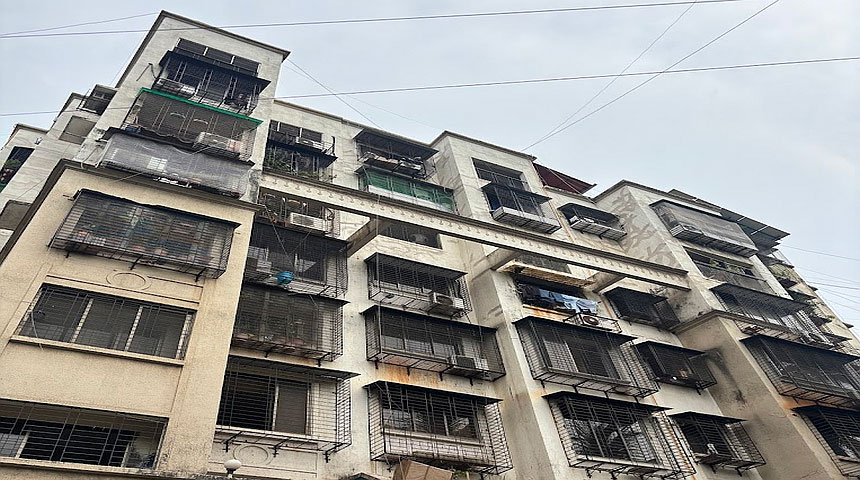
Cooperative housing societies function smoothly when their records are in order, their bye-laws are followed, and members understand both their rights and responsibilities. Many disputes arise not because the law is unclear, but because the cooperative housing society (CHS/the Society) or more particularly, its managing committee, overlooks approved plans, ignore prescribed procedures, or act beyond the powers conferred upon them under the cooperative housing laws.
 This week's queries touch upon three common yet important issues faced by cooperative housing societies: determining members’ entitlements during redevelopment, dealing with unauthorised commercial use of residential premises and the limits on a society’s power to levy penalties, and the proper issuance of share certificates where a member owns more than one flat. Each highlights the importance of adhering to statutory provisions, model bye-laws and proper documentation to avoid unnecessary disputes.
Redevelopment Rights Depend on Approved Records
Question: Ours is a small CHS with nine flats and four shops. Two shop-owners are using nearly twice the area shown in the municipal records.
1.The Society is planning to undertake redevelopment. Can these shop-owners insist on getting additional area in the redeveloped building based on the area they are presently occupying?
2.The Society’s record-keeping is very poor, although all members are in agreement regarding redevelopment. What procedure should the Society follow?
Answer: Kindly obtain the municipality-approved building plan of the existing building from the town planning department of your local municipal authority. As a general rule, the area shown on the sanctioned building plan and the members’ title documents will be considered when determining their entitlements in the redeveloped building.
If any shop-owner is occupying additional area that is not reflected in the approved plans or supported by valid documents, such occupation alone will not ordinarily entitle them to claim equivalent additional area in the redeveloped building.
Before proceeding with redevelopment, the Society should first verify and reconcile its records, including the approved building plans, title documents, and members’ area details and then undertake the redevelopment process in accordance with the applicable laws and guidelines governing CHS in the state.
Action against Unauthorised Commercial Use by a Tenant
Question: A member has rented out his flat and the tenant has been using it for commercial purposes without informing the Society, despite a resolution passed in the annual general meeting (AGM) prohibiting commercial activities. The owner has also failed to submit a copy of the leave and licence (L&L) agreement to the Society, claiming that the occupant is like his daughter. However, the Society has found no evidence to support this claim. The flat has been used in this manner since the COVID-19 period.
The Society has directed the owner to remove the tenant and has imposed a penalty of ₹15,000. The owner has refused to pay, claiming that, under cooperative housing society law, the Society cannot levy a penalty exceeding ₹5,000 in a year. Neither the L&L agreement nor the police verification has been submitted, and the flat is allegedly being used in violation of the Society’s rules. Is the penalty legal, and what action can the Society take?
Answer: If a flat has been given on L&L without informing the Society, the managing committee may issue a notice to the flat-owner calling upon him to submit a copy of the registered L&L agreement and the police verification, if required under the applicable rules. If the flat-owner refuses to submit a copy of the L&L agreement and police verification, the Society can send a notice to the member and if he again fails to submit the documents within the stipulated time, then write a formal complaint to the local police station.
If the owner has not paid the applicable non-occupancy charges, the Society may recover the same in accordance with the bye-laws and, if necessary, approach the deputy registrar of cooperative societies for appropriate relief.
If the residential flat is being used for commercial purposes in violation of the approved use of the premises or the Society’s bye-laws, the Society may call upon the owner to stop such use and, if the violation continues, make a complaint to the competent municipal authority.
The Society may levy penalties only if they are authorised under the applicable model bye-laws and have been duly approved by the general body. Under bye-law 165(a) of the Maharashtra Model Bye-laws, the general body may impose a consolidated penalty of not more than ₹5,000 in any one financial year for breaches of the bye-laws, after giving the member an opportunity of being heard. Accordingly, a penalty of ₹15,000 for such breaches would not be sustainable under bye-law 165(a), unless the amount represents some other lawful charge specifically authorised under the Act or the bye-laws.
If the owner continues to disregard the Society’s notices or persists in using the flat in breach of the bye-laws, the Society may initiate appropriate proceedings before the competent authority under the Maharashtra Cooperative Societies Act. However, it cannot impose penalties beyond those permitted under the model bye-laws.
Separate Share Certificates for Separate Flats
Question: We are a newly-formed cooperative housing society with 16 flats.
Flat numbers 3 and 4, which are adjacent to each other, are both owned by Ms XYZ. At the time the Society was formed, she submitted two separate registered purchase agreements, one for each flat. There is no joint owner for either flat.
Each share certificate issued by the Society states that the holder owns 10 shares of ₹50 each.
My queries are:
1.Should the Society issue two separate share certificates or a single share certificate to Ms XYZ?
2.If two share certificates are to be issued, how many shares should each certificate contain?
3.Alternatively, should the Society issue a single share certificate for both flats? If so, how many shares should it contain?
4.Is there any other clarification or guidance on this issue?
Answer: Since the two flats were purchased under separate registered agreements and continue to be separate units, the Society should issue two separate share certificates—one for each flat. Under the Maharashtra Model Bye-laws, each share certificate should ordinarily represent 10 shares of ₹50 each. Accordingly, Ms XYZ should receive two share certificates, each containing 10 shares of ₹50, one relating to flat no. 3 and the other to flat no. 4.
NOTE
We will not be answering queries posted in the comments. Only questions sent through the Moneylife Foundation's Legal Helpline will be answered. If you want to seek guidance or ask questions to Mr Shanbhag, kindly send it through Moneylife Foundation's Free Legal Helpline. Here is the link: https://www.moneylife.in/lrc.html#ask-questionDisclaimer: The guidance provided in these columns and on our Legal Helpline is on the sole basis of the facts provided by the reader/questioner and does not amount to formal legal advice in any form whatsoever.
(Shirish Shanbhag has an MSc in Organic Chemistry, a Diploma in Higher Education, and a Diploma in French and has completed his LL.B. in first class in 2021. Before his retirement, he was a junior college teacher at Patkar College from July 1980 to May 2012, teaching theoretical and practical chemistry. Post-retirement in 2012, he started providing guidance and counselling to people on several issues, specifically focusing on cooperative housing society-related matters. He has over 30 years of hands-on experience in all matters about housing societies and can provide out-of-box solutions for any practical issue.)