

Registration of Flats in a Redeveloped Building and Filling Committee Positions for Resigned Members
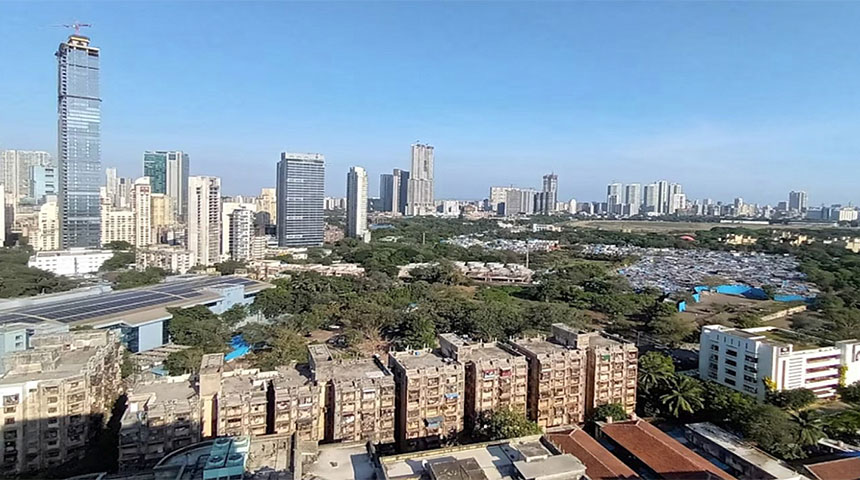
Certain procedures and compliance requirements must be met for a building under construction before documents such as an intimation of disapproval (IOD) or commencement certificate (CC) are issued by the municipal corporation.
An IOD and CC are critical documents on which further construction of the building can be completed in a phased manner. Applicable fees need to be paid to the municipal corporation from time to time. This procedure is standard for buildings that are being redeveloped and those that have been newly constructed on an available plot.
While such construction is ongoing, registration of flats can continue following the normal process, and a society under redevelopment can also register saleable flats with partial IOD or CC.
 This week, I will address one such case, where a building under redevelopment has received its IOD and partial CC and wants to take up registration of the flats allotted to their existing members and those sold to new members. In another case, I will also explain how vacant seats for resigned committee members can be replaced through co-option or election.
 Registration of Flats in a Building Undergoing Redevelopment
Question: Is taking full IOD and/or CC in a self-redevelopment project necessary to register existing flats-owners' new flats with the registrar? Or can this process be done with partial IOD/CC as well? Should the sale component flats be registered after receiving the full IOD/CC?
Answer: You have not understood the concept of IOD and CC of a new building. When you submit your new building's plan through an architect to the building proposal department, and once this plan is approved, an IOD is issued by the local municipality.
In this IOD, your building plan shall be approved, subject to certain conditions, which your building's architect should observe and submit to get its CC and thereby start construction of the foundation of the new building. Usually, fees to get CC for the foundation are paid first.
If you are going for self-redevelopment, first get the CC for laying foundation work, by paying needful fees to the municipality through your building's architect. Once the foundation is laid, a sub-engineer from the Building Proposal Department shall visit the premises to ensure due process has been followed. You can then apply for further CC for the construction of higher floors of, say, up to the 5th floor, by paying the needful fees.
After seeing the construction progress of your building, buyers of saleable flats will start booking the apartments and you will begin receiving money to pay applicable fees for CC to construct further floors. You can follow this process until the construction of all floors of your building is complete.
You must have appointed a project management consultants (PMC) team for your building's redevelopment, or at least an architect, who will inform you how to proceed with constructing your self-redevelopment building.
Once the municipal corporation approves the building plan of your Society for its redevelopment, existing flat-owners should get their new flat's permanent alternate accommodation agreement (PAAA) registered from Society's office-bearers with the sub-registrar of assurances office. For this PAAA, as per the new rule, irrespective of the free-of-charge area of the flat, stamp duty is only Rs1,000 and registration fees are Rs500. However, if any original member of the Society buys an additional area to their flat, then on the additional area, he will pay stamp duty as per market value.
Any saleable flat-owners in your new building, as per MahaRERA rules, if they pay 10% of the flat's market value, Society should register their sale deed by putting the schedule of the balance amount to be paid by the flat-buyer, till the flat's possession is given to the buyer.
Electing Committee Members for Resigned Positions
Question: We have eight elected committee members: six general members and two women. One of the general members (chairman) has resigned from his post. The committee has adopted one general member out of the committee as a chairman, without co-opting or electing someone in the resigned member's place.
Can the committee do so, or do they have to co-opt, adopt or elect one member to complete the committee of eight members? Is there any compulsion to co-opt, adopt or elect one member to complete the committee of eight members?
Answer: If any office-bearers like the chairman, secretary and treasurer resigns, such posts can be filled in among the other committee members. However, to elect or co-opt one member, there is a rule.
If your present committee has completed less than 30 months (half term), then for one post, a by-election should be called by appointing a government-approved election officer. If the present committee has completed 30 months of its existence, then the co-option of one member is allowed. However, if two or more persons apply for co-opted posts, then a regular election should be held.
NOTE
We will not be answering queries posted in the comments. Only questions sent through the Moneylife Foundation's Legal Helpline will be answered. If you want to seek guidance or ask questions to Mr Shanbhag, kindly send it through Moneylife Foundation's Free Legal Helpline. Here is the link: https://www.moneylife.in/lrc.html#ask-question Fraudulent Use of Society Chequebook and Funds
Question: Our secretary has given Rs10 lakh without obtaining permission of Society members to someone. Even the chairman and treasurer do not know this. He has threatened members when the issue is brought up in a meeting. Please advise.
Answer: For issuing a cheque from the Society, there must be at least three signatories. These signatories have to put their signature on the cheque, where the amount and name of the person to whom it is issued are mentioned.
To issue a cheque with such a large amount, the person's name and the purpose for which the cheque is issued must be made clear to the other two signatories, and it should also be passed in the Society's general body meeting (GBM).
It would be advisable for the chairman, treasurer and any other managing committee member who are signatories to write a complaint to deputy registrar, for endorsing such a large amount on the Society's cheque without permission or sanction in a GBM.
Disclaimer: The guidance provided in these columns and on our Legal Helpline is on the sole basis of the facts provided by the reader/questioner and does not amount to formal legal advice in any form whatsoever.
(Shirish Shanbhag has an MSc in Organic Chemistry, a Diploma in Higher Education, and a Diploma in French and has completed his LL.B. in first class in 2021. Before his retirement, he was a junior college teacher at Patkar College from July 1980 to May 2012, teaching theoretical and practical chemistry. Post-retirement in 2012, he started providing guidance and counselling to people on several issues, specifically focusing on cooperative housing society-related matters. He has over 30 years of hands-on experience in all matters about housing societies and can provide out-of-box solutions for any practical issue.)