

Resolving Access Disputes and Nomination Issues
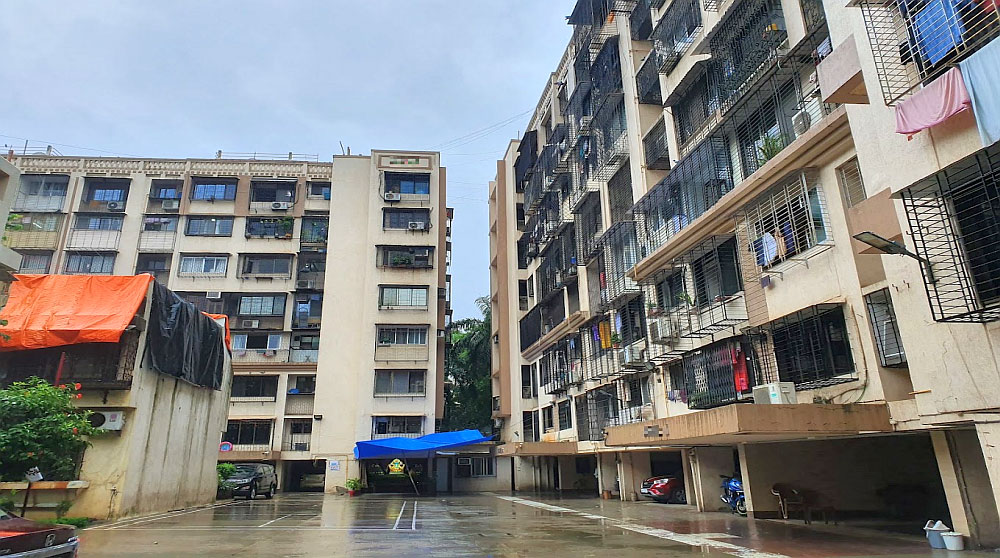
Disputes in a cooperative housing society (CHS/the Society) often begin with what appears to be a straightforward question of ownership or convenience, but the underlying issue is frequently one of access, boundaries and documentary rights. Where common areas or access routes in a CHS are concerned, assumptions can quickly lead to disputes unless the registered conveyance, approved plans and property records are examined carefully.
This is particularly important when an existing arrangement is being considered for restructuring. In one case, the question is whether a condominium needs to be converted into a cooperative housing society when its access appears to have been obstructed. In another, a family disagreement has arisen over a member's nomination of his flat, raising the separate question of whether other family members have any role in the nomination process.
Establish the Condominium’s Access Rights before Considering CHS Conversion
Question: Ours is a condominium by deed of conveyance, with 24 members.
The builder has taken a 2,500sqft (square feet) apartment with land and constructed a gate, blocking the other 23 members from using the road running around the building.
Can we convert it into a cooperative housing society and connect the perimeter road to the road along his apartment?
Answer: Your problem is that the builder has blocked the access road to the 24-flat condominium. In your letter, you also state that the builder has executed a conveyance deed for the condominium. I hope that the said ‘conveyance deed’ has been registered with the sub-registrar of assurances after payment of the proper stamp duty. To this conveyance deed, all the flat-holders of the condominium should be signatories. Whether the conveyance deed of your condominium was done in this manner needs to be verified.
Every flat-holder in the condominium should have a certified copy of the conveyance deed. Along with the certified copy of the conveyance deed, they will also have the Index II of the conveyance deed. On the Index II, the names of the condominium flat owners at the time of registration will appear.
With the conveyance deed and Index II, the association of condominium owners can approach the city survey office to have the names of the condominium's flat-owners entered on the property card. The city survey office may hold a hearing with the condominium flat owners or their authorised representatives before making the necessary entries. Similarly, the relevant revenue records, including the 7/12 extract and mutation entries, should be checked. Whether all these formalities have been completed should be verified.
Since the conveyance deed of the condominium has already been executed by the builder, in my opinion, it is not necessary to convert the condominium into a cooperative housing society merely to solve the problem of the access road being blocked by the builder. For this purpose, first obtain the land and boundary plans of the condominium from the city survey office and the relevant revenue authorities and ascertain the exact measurements, boundaries and access road. You may also engage a qualified surveyor for this work.
Similarly, obtain the relevant plan and land records relating to the builder’s property, on which he has constructed his bungalow in front of the condominium's access road. From the town planning department of the municipal corporation, obtain the sanctioned building plan and approved layout, wherever applicable.
From these documents, find out the following:
- Whether the builder has encroached upon the land belonging to the condominium; and
- If the builder has constructed his bungalow on his own land, whether the condominium has a legally enforceable right of access through or over that land.
If the builder has encroached upon the condominium’s land, the condominium owners can consult a competent lawyer regarding appropriate civil proceedings to remove the encroachment and restore access.
If the builder has constructed on his own land but has obstructed a legally established right-of-way or other easementary right of the condominium, the owners can consult a competent civil lawyer regarding appropriate proceedings under applicable law, including the Indian Easements Act, 1882, wherever applicable.
If both situations exist — namely, encroachment on the condominium’s land as well as obstruction of a legally established access right — appropriate relief can be sought on both grounds.
Before taking any legal action, the registered conveyance deed, the condominium's declaration/bye-laws, the approved layout and building plan, the property records, and the exact position of the access road should be examined by a competent civil lawyer with experience in property matters.
It is not necessary for all 24 flat-holders to personally conduct the proceedings together, but the authority of the condominium association or its office-bearers to institute proceedings on behalf of the owners should be properly established in accordance with the applicable documents and law.
Nomination Does Not Require Consent of Other Family Members
Question: My father owns a flat in Bandra, Mumbai. He wants the flat to be nominated in my name. We completed the nomination form and submitted it to the society, but the secretary is not ready to accept the nomination form and wants all the members of the family to agree to the nomination. Kindly advise what we should do.
Answer: Only the owner or member of the flat in a CHS can make a nomination for his share in the flat. If the flat is owned by two or more persons, as mentioned in the registered sale deed, each owner/member may nominate the share corresponding to their ownership. They may nominate the same person or different persons for their respective shares.
The nomination must be made using the form provided in Appendix 14 of the 2014 Model Bye-laws. The nomination form must be signed in the presence of two witnesses who must not be the nominee. The nomination form has to be submitted to the Society in three copies.
On receiving the nomination form, the secretary of the Society should give an acknowledgement for its receipt. The nomination should then be placed before the next managing committee meeting and recorded in the minutes. It should thereafter be entered in the nomination register of the Society, and the nomination registration number should be recorded on the copy of the nomination form.
If your father is the sole member/owner recorded with the Society, the secretary should not insist that other members of the family give their consent merely for making the nomination. However, nomination does not, by itself, determine the ultimate inheritance or ownership of the flat after the member's death. It is a nomination for the purposes of the Society, and the rights of legal heirs may still arise under the applicable succession law.
Therefore, if the secretary refuses to accept the nomination form, your father should first give the nomination in writing to the Society and obtain an acknowledgement. If the Society still refuses to accept or record the nomination, he may make a written complaint to the concerned deputy registrar of cooperative societies, along with a copy of the nomination form and the Society's refusal, for appropriate action under the applicable provisions.
NOTE
We will not be answering queries posted in the comments. Only questions sent through the Moneylife Foundation's Legal Helpline will be answered. If you want to seek guidance or ask questions to Mr Shanbhag, kindly send it through Moneylife Foundation's Free Legal Helpline. Here is the link: https://www.moneylife.in/lrc.html#ask-questionDisclaimer: The guidance provided in these columns and on our Legal Helpline is on the sole basis of the facts provided by the reader/questioner and does not amount to formal legal advice in any form whatsoever.
(Shirish Shanbhag has an MSc in Organic Chemistry, a Diploma in Higher Education, and a Diploma in French and has completed his LL.B. in first class in 2021. Before his retirement, he was a junior college teacher at Patkar College from July 1980 to May 2012, teaching theoretical and practical chemistry. Post-retirement in 2012, he started providing guidance and counselling to people on several issues, specifically focusing on cooperative housing society-related matters. He has over 30 years of hands-on experience in all matters about housing societies and can provide out-of-box solutions for any practical issue.)