

Rights of Legatees in Building Undergoing Redevelopment; Conveyance Deed and Property Tax
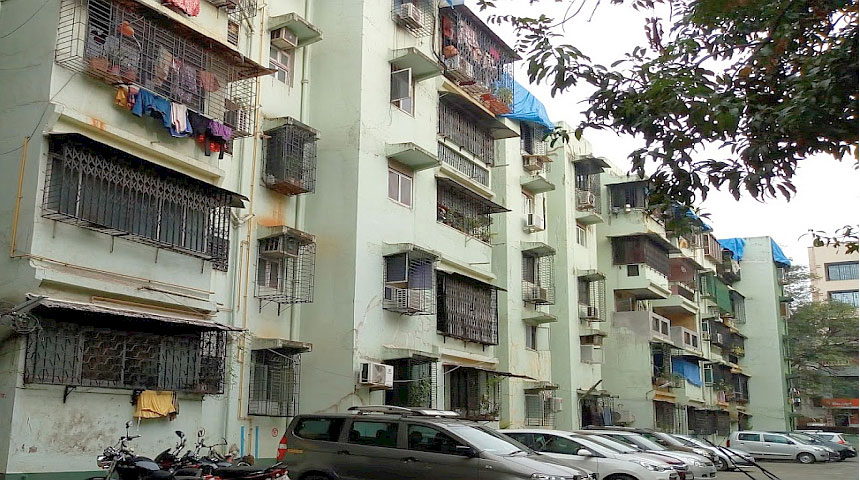
Guidelines under Section 79(A) of the Maharashtra Cooperative Societies Act state that if 75% of society members agree to redevelopment in writing, the proposal can be implemented. In such a case, even those few who have opposed redevelopment have a right to a new flat in the redeveloped building. If the original flat-owner is deceased, efforts should be made to trace the legal heirs and transfer the existing or redeveloped flat in their name after submission of necessary documents.
This week, I shall address one such case, where the cooperative housing societies (CHS/ Society) has denied the flat transfer to the legal heirs. We will also take a look at another case, where the Society has refused to provide a no objection certificate for sale of flat, in the absence of a succession certificate. Finally, I will also clarify the meaning of a conveyance deed and the process of transferring property tax bill in the flat-owner's name.
Society Denying Flat to Legal Heirs in Redeveloped Building
Question: The Society has not made heirs of a deceased resident as a member and is showing his flat as an 'estate of late member'. The Society plans to undergo redevelopment and denies the heirs any new flat in the redeveloped building. Please advise whether the Society can legally do so and whether they can proceed with redevelopment without the consent of the heirs?
Answer: The Society can transfer the concerned flat in the name of the heirs after the submission of proper documents as under.
If the Society knows who the legatees (legal heirs) of the flat-owner are, and if among such heirs there is no dispute in sharing the flat of the deceased owner, then either with a release deed or a confirmation deed on Rs500 non-judicial stamp paper, the Society can transfer said flat in the name/s of legatee/s.
Let me give you an example here. Let us say that the flat is in the name of the father, who has expired. He is survived by his wife, one daughter and two sons. In this case they are all legatees, i.e., the wife and three children are legal heirs and want to share the deceased owner's flat fully and equally amongst themselves. So, all four legatees (wife and three children) should make a confirmation deed on Rs500 non-judicial stamp paper and register it with the sub-registrar of assurances office. A copy of this would be submitted to the Society, to make all four legatees as co-members of said flat.
In another instance, using the same example, suppose that the mother does not want to be a legatee of her husband's flat. Then, all four legatees will make a release deed on Rs500 non-judicial stamp paper and register it with the sub-registrar of assurances office to transfer the flat in the joint names of the three children with equal rights.
Remember if all legatees want equal ownership of the flat, then a confirmation deed should be made and if even one legatee intends to give up their rights in the flat, then a release deed should be made. In either case, it should be done on an Rs500 non-judicial stamp paper, with all the legatees together on the same stamp paper, and said deed should be registered with the sub-registrar of assurances office. Registration fee for any deed is Rs1,000.
In case there is a dispute with legatees, or legatees want to share the deceased owner's property unequally, then such a matter needs to be taken to a competent civil court under a testamentary petition by all the legatees, which will allow them to acquire a succession certificate.
With the minimal information you provided in your case, I believe your Society can go ahead with redevelopment, but the deceased flat-owner's redeveloped flat should be transferred to the legatees, as stated above. They cannot indefinitely keep any flat as an 'estate of late member'.
NOTE
We will not be answering queries posted in the comments. Only questions sent through the Moneylife Foundation's Legal Helpline will be answered. If you want to seek guidance or ask questions to Mr Shanbhag, kindly send it through Moneylife Foundation's Free Legal Helpline. Here is the link: https://www.moneylife.in/lrc.html#ask-question Society Delaying Sale of Flat with a Demand for Succession Certificate
Question: My father purchased a flat in 2011. The saleable agreement is in my father's name, with him being the single owner. He made a 100% nomination to my mother for this same flat. In 2014, he expired without making a Will, and the Society has transferred the share certificate to my mother's name.
I am the only son with no other siblings. Now my mother wants to sell this flat, but the Society is denying it with the reason that a no objection certificate (NOC) for the sale deed and name transfer to the purchaser requires a succession certificate. Please advise on the correct steps so my mother can sell the flat without any hassles.
Answer: Make a release deed on Rs500 non-judicial stamp paper jointly with your mother, releasing your right on your late father's flat in favour of your mother. Then register this release deed with the sub-registrar of assurances office.
If you do this, there is no need to get a succession certificate to transfer your father's flat to your mother's name as its sole owner. With copy of said release deed and its Index-2, your father's flat can be transferred in your mother's name and then she can sell it as its sole owner.
Conveyance Deed and Property Tax Bills
Question: I purchased a flat from the developer and have possession. The Society has not completed the conveyance deed process and is now compelling home-owners to pay property tax to the Thane municipal corporation (TMC). The name on the tax bill is still that of the developer, with my name as a holder. Please advise on the following -
1. At present, who has to pay the property tax of my flat, whether the developer is liable or would I have to pay?
2. Can the developer complete the conveyance deed with the home-buyer and transfer ownership of flat and part of land to his name to make him the owner?
3. After conveyance to the CHS, would my name appear as the owner?
4. Will CHS become owner of my flat and part of the land under it, and I will continue to remain a 'holder', even after paying more than crore rupees for the property?
Answer: I am replying to your queries below –
1. You are liable to pay property tax on your flat. To transfer the property tax bill of your flat in your name, you have to make an application at assistant assessor and collector's office in your TMC ward office.
2. Conveyance is the transfer of ownership of the building in the name of the Society by the builder and the land by the land owner, respectively. It has nothing to do with the transfer of the property tax bill in the name of the respective flat-owner. If the builder and land owner are not giving the conveyance to the Society, then the Society can opt for a deemed conveyance.
3. The TMC property tax bill for your flat will come in your name before Society's conveyance, as stated in point 1 above.
4. When conveyance is done, Society becomes owner of the building and its land. In that case, Society gets full right on its building and land to go for 'redevelopment' in the future.
Disclaimer: The guidance provided in these columns and on our Legal Helpline is on the sole basis of the facts provided by the reader/questioner and does not amount to formal legal advice in any form whatsoever.
(Shirish Shanbhag has an MSc in Organic Chemistry, a Diploma in Higher Education, and a Diploma in French and has completed his LL.B. in first class in 2021. Before his retirement, he was a junior college teacher at Patkar College from July 1980 to May 2012, teaching theoretical and practical chemistry. Post-retirement in 2012, he started providing guidance and counselling to people on several issues, specifically focusing on cooperative housing society-related matters. He has over 30 years of hands-on experience in all matters about housing societies and can provide out-of-box solutions for any practical issue.)