

Rights of Shop Tenants & Fixing Faulty Water Supply
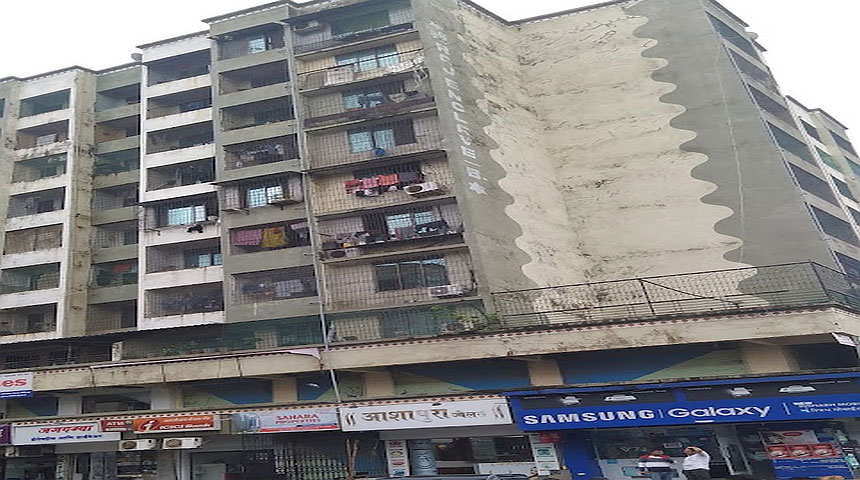
Living in a cooperative housing society (CHS/the Society) brings with it a mix of community living, shared responsibilities and collective decision-making. While these arrangements are meant to ensure smooth functioning, they also give rise to a variety of disputes and grey areas that need clarity under law and society bye-laws.
From redevelopment projects and rights of tenants to everyday issues like water supply, residents often find themselves grappling with questions that require not just practical solutions but also legal understanding. This weekly collection of concerns and solutions addresses some of the most common problems faced by members and residents of housing societies, providing guidance to help resolve disputes fairly and within the framework of the law.
Can Residents Challenge an SRA Redevelopment?
Question: We have been living in a self-contained ground plus one structure housing unit built on private land for over 50 years. The owner now wants to implement the slum rehabilitation authority (SRA) scheme. Our city title survey (CTS) area has been declared a slum area. Can we challenge this? Who is supposed to pay property tax on this land?
Answer: If your building fulfils all the conditions of the SRA, the owner of the building will develop it under the scheme which you cannot challenge. Once you get your free-of-charge flat, a CHS will be formed and each flat-owner will then pay their flat's property tax to the municipality.
Redevelopment Rights of Shop Tenants
Question: We are tenants of seven shops of a Society for the past 50 years, while all the flat-owners are CHS members. Now the Society is going for redevelopment and has signed a development agreement. The developer has offered us some additional square feet. My query is: Since the Society has benefited by using our commercial shop area, I want to know how much area the developer has gained? Should we not also get the benefit of ownership or more area—I feel at least 35% more? The Society says we will all remain tenants of the CHS after redevelopment. Please help me understand our status.
Answer: The Society should make you seven shop owners members as well and issue a share certificate to each of the shops. Then, as per the law, you will be given some additional area free of charge. However, this will not be 35% of the carpet area of your shop, as is offered to the flats.
Deficiency in Water Supply to Top Floor
Question: I stay on the top floor of a four-storey building. The water supply connection from the overhead tank is common. Water pressure for the top floor is very low and, in case of shortage, we do not get water at all. Ground floor members are not allowing a separate water outlet for the top floor. Please guide me — does the law allow a separate water pipe connection for the top floor? If yes, and if the Society does not agree, where should I raise this issue?
Answer: In old four-storey buildings, the standard water supply arrangement is as follows:
- One pipe from the overhead tank supplies water to the ground and first floors.
- A second pipe supplies the second and third floors.
- A third pipe supplies the fourth (top) floor.
- A separate connection is usually provided for bathroom purposes for all floors.
The pipe width also decreases floor by floor: 1 inch for the 3rd and 4th floors, 0.75 inch for the 2nd and 1st floors and 0.5 inch for the ground floor.
In your case, the piping appears to be faulty which is why you face water pressure problems. You should first complain to the Society. If no action is taken, approach the BMC ward office under bye-law no. 174(D)(ii). If the BMC also fails to act, you can escalate the matter on 'Lokshahi Din' to the deputy municipal commissioner of your zone.
Before filing a complaint, get a certificate from a BMC-approved plumber (list available at the ward office) stating that the piping system is defective and needs to be re-fitted as per the proper arrangement above. Such a certificate will strengthen your case with the BMC.
NOTE
We will not be answering queries posted in the comments. Only questions sent through the Moneylife Foundation's Legal Helpline will be answered. If you want to seek guidance or ask questions to Mr Shanbhag, kindly send it through Moneylife Foundation's Free Legal Helpline. Here is the link: https://www.moneylife.in/lrc.html#ask-question Disclaimer: The guidance provided in these columns and on our Legal Helpline is on the sole basis of the facts provided by the reader/questioner and does not amount to formal legal advice in any form whatsoever.
(Shirish Shanbhag has an MSc in Organic Chemistry, a Diploma in Higher Education, and a Diploma in French and has completed his LL.B. in first class in 2021. Before his retirement, he was a junior college teacher at Patkar College from July 1980 to May 2012, teaching theoretical and practical chemistry. Post-retirement in 2012, he started providing guidance and counselling to people on several issues, specifically focusing on cooperative housing society-related matters. He has over 30 years of hands-on experience in all matters about housing societies and can provide out-of-box solutions for any practical issue.)