

Roof Repairs, Reimbursement and Missing Share Certificates
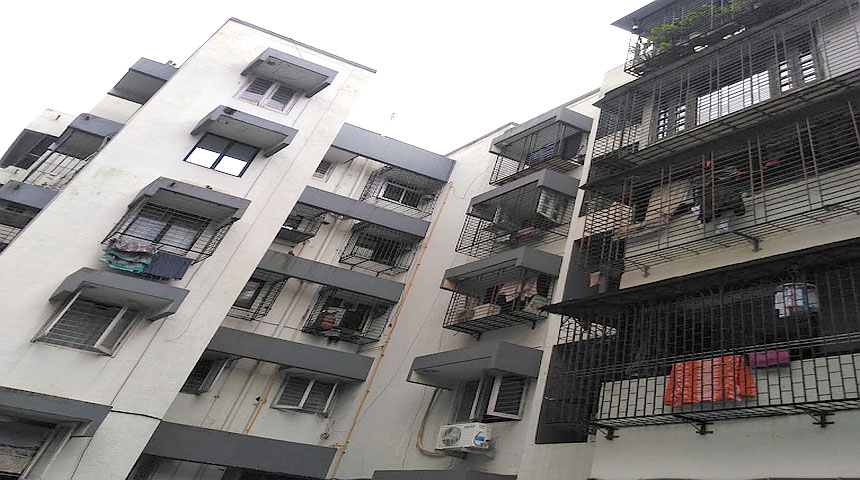
In a cooperative housing society (CHS/the Society), many disputes that appear straightforward can become complicated if not addressed responsibly in a timely manner or when essential records are missing. Whether it is the Society’s obligation to address damage to a common part of the building or a member’s difficulty in tracing records of an old property transaction, timely communication and proper documentation can make a significant difference.
 This week’s questions highlight both situations. One concerns a top-floor resident who had to undertake roof repairs after repeated complaints about leakage went unattended and is now seeking reimbursement from the CHS. The other involves a much older problem: a property acquired through a Society decades ago, where the share certificate was never issued and the Society itself was subsequently dissolved. In both cases, the paper trail — from complaints and repair bills to membership and society records — becomes crucial in determining the next steps.
Roof Leakage in Top-floor Flat and Recovery of Repair Expenses
Question: I am the owner of a flat in Mumbai, on the 5th floor, which is the top floor of our building and there is a roof above us. We have leakage issues in our flat due to damage to the roof. When we approached the managing committee, it said the leakage repair is not urgent and that they would take care of it after the monsoon. They also said that, if we wanted, we could get it repaired at our own expense.
We sent an email to the Society informing them about the roof damage and water leakage in our flat, but the committee members did not take any action. So, we had to get the roof repaired ourselves. Before starting the repair, I emailed the managing committee to inform them that I was undertaking it and would share the bill. We subsequently submitted the bill to the Society, but they have not replied. What are my options now?
Answer: Under the applicable Maharashtra Cooperative Housing Society bye-laws, repairs to the terrace and parapet walls, structural repairs to the roof and repairs arising from rainwater leakage from the terrace are generally the responsibility of the Society. The bye-laws also cover damage to the ceiling or plaster of a top-floor flat caused by leakage from the terrace.
Since you had already informed the Society in writing about the roof damage and leakage, and also informed the managing committee before starting the repair, you can submit a formal claim to the Society for reimbursement of the reasonable expenses incurred for the repairs that were the CHS’s responsibility. Attach copies of your earlier complaints, photographs of the damage and leakage, your repair estimate or invoice and proof of payment.
However, reimbursement is not necessarily automatic merely because you carried out the repair yourself. The Society may examine whether the work was necessary, whether it related to the Society’s responsibility and whether the expenses were reasonable.
If the Society does not respond to your written claim or rejects your claim, you should first make a formal written complaint to the managing committee and obtain a written decision. If the dispute remains unresolved, a dispute between a member and the Society relating to repairs or leakage, including a claim for the expenses incurred for such repairs, can be referred to the cooperative court under Section 91 of the Maharashtra Cooperative Societies Act, 1960. The model bye-laws specifically include repairs and leakages among the disputes falling under Section 91.
You should keep copies of all your emails and complaints, photographs of the roof damage and leakage, the repair quotation and bill, proof of payment and any communication from the Society. These documents will be important if you have to approach the cooperative court to recover the repair expenses.
Share Certificate Not Issued and Society Dissolved
Question: My father purchased a house in 1980 through the Society and received all the money receipts for the payments he made, clearly mentioning the amount paid towards the share certificate. However, the share certificate was never given to him. He has since passed away and the Society was also dissolved in 2011 due to a dispute. Now, how can I get the share certificate and from whom?
Answer: You have not given all the details of the matter. However, I can give you some guidance.
If your father had paid the full amount for the house and the Society’s records show his membership/share interest, the fact that the share certificate was not physically handed over to him does not by itself mean that he had no rights in the Society.
Since the Society was dissolved in 2011, first find out from the jurisdictional deputy registrar/assistant registrar of cooperative societies how and why the Society was dissolved, and obtain a copy of the order relating to its winding-up or dissolution. Also find out whether a liquidator was appointed and who is presently responsible for the Society’s records.
Take all the documents available to you, particularly your father’s original payment receipts, purchase and allotment documents, correspondence with the Society and your father’s death certificate. The receipts mentioning payment towards the share certificate will be important evidence.
You should also find out what happened to the Society's share register and other records after its dissolution. If the Society's records are available with the liquidator or another authority, you can make your claim on the basis of those records and the documents available to you.
As your father is no more, you will also have to establish your right as his legal heir or beneficiary before the membership or share interest can be transferred into your name. The exact documents required for this will depend on whether your father left a Will and on the other legal heirs.
Therefore, your first step should be to approach the deputy registrar or assistant registrar having jurisdiction over the society and obtain the complete details of the society's dissolution and the person or authority holding its records. Once that is established, you can take the necessary steps to establish your father’s share interest and have the records transferred to the person legally entitled to it.
NOTE
We will not be answering queries posted in the comments. Only questions sent through the Moneylife Foundation's Legal Helpline will be answered. If you want to seek guidance or ask questions to Mr Shanbhag, kindly send it through Moneylife Foundation's Free Legal Helpline. Here is the link: https://www.moneylife.in/lrc.html#ask-questionDisclaimer: The guidance provided in these columns and on our Legal Helpline is on the sole basis of the facts provided by the reader/questioner and does not amount to formal legal advice in any form whatsoever.
(Shirish Shanbhag has an MSc in Organic Chemistry, a Diploma in Higher Education, and a Diploma in French and has completed his LL.B. in first class in 2021. Before his retirement, he was a junior college teacher at Patkar College from July 1980 to May 2012, teaching theoretical and practical chemistry. Post-retirement in 2012, he started providing guidance and counselling to people on several issues, specifically focusing on cooperative housing society-related matters. He has over 30 years of hands-on experience in all matters about housing societies and can provide out-of-box solutions for any practical issue.)