

Safety Concerns and Financial Transparency in Housing Societies
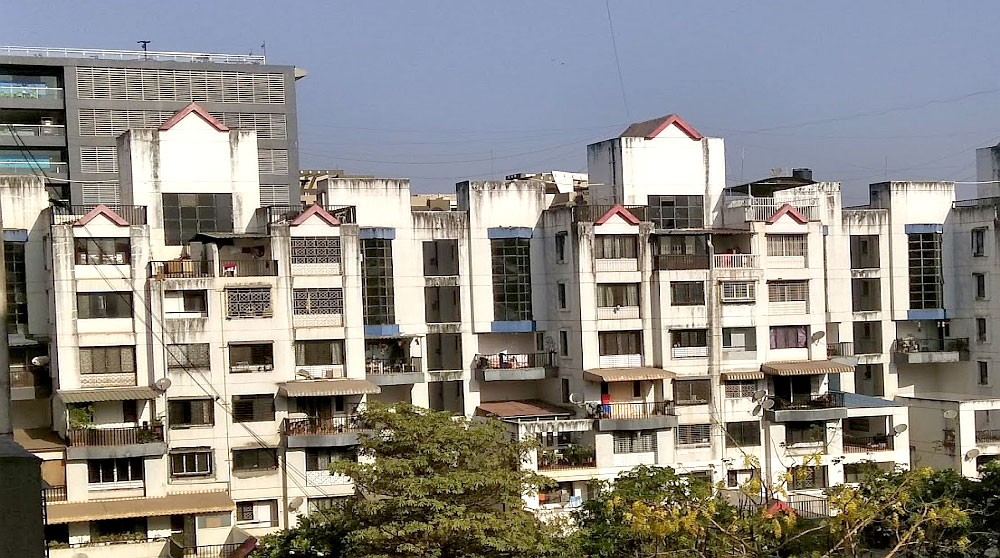
In rapidly growing urban housing complexes, residents are increasingly caught between legitimate personal concerns and rigid administrative controls. Questions that appear simple on the surface — whether relating to child safety measures inside a flat or the handling of cooperative housing society (CHS/the Society) maintenance funds — often expose deeper issues involving governance, accountability, transparency and the limits of authority exercised by builders and managing committees.
Questions relating to ownership rights, Society funds and transfer procedures continue to generate confusion among cooperative housing society (CHS/the Society) members. Whether it is the extent of the Society’s authority over privately owned premises, concerns over the handling of maintenance corpus funds, or the documents required for the transfer of shares after the death of a member, many disputes arise from a lack of clarity on legal and procedural requirements. This week’s queries examine such situations and explain the remedies and processes available to members under the cooperative framework.
The balance between individual rights and collective regulation remains one of the most sensitive aspects of apartment living. While builders and CHS are expected to maintain structural uniformity, financial discipline and regulatory compliance, residents are equally entitled to demand clarity, lawful decision-making and basic safeguards affecting their homes and families. This week’s queries examine disputes over balcony safety installations in a high-rise building and the legality of collecting Society dues through a committee member’s personal bank account.
Delay in Issuing Maintenance Payment Receipts
Question: Our 40-year-old CHS in Kolkata had always issued receipts for quarterly maintenance charges within four to five days of receiving members’ cheques. However, the new managing committee now states that receipts will be issued only after the monthly bank statement is received and reconciled by the part-time accountant.
As a result, for a cheque cleared on 2nd March, the receipt was issued only on 23 April 2026— nearly 50 days later. Until then, members receive no confirmation that their payment has been credited to the Society. The committee also refuses to acknowledge receipt of the cheque on the basis of a photocopy submitted by the member.
Is such a delay acceptable? What remedy is available to members? Which authority should be approached for quicker resolution — the registrar of cooperative Societies or the consumer court?
Answer: You may raise a written complaint before the registrar of cooperative societies regarding the prolonged delay in issuance of maintenance payment receipts by the managing committee.
Ordinarily, when a member submits a crossed cheque towards Society dues, the Society should at least acknowledge receipt of the cheque, even if the final receipt is made subject to realisation of the cheque amount in the Society’s bank account.
A delay of nearly 50 days after the cheque is cleared appears excessive, particularly when no interim acknowledgement is provided to members. You should first submit a written representation to the managing committee seeking: prompt acknowledgement of cheque receipt, timely issuance of payment receipts and clarification of the Society’s accounting procedure.
If the issue remains unresolved, you may approach the registrar of cooperative societies with jurisdiction over the Society.
The maintainability of a complaint before a consumer forum may depend on the specific facts and applicable legal position, so the registrar would generally be the more appropriate first remedy in such matters.
Balcony Safety Nets and Builder Restrictions
Question: I recently purchased a flat on the 14th floor of a residential building where the apartment association has not yet been formed. For child safety, I want to install safety nets on the balconies.
However, the builder is refusing permission, claiming that the fire department prohibits such installations. When I requested a copy of the relevant fire department rule or communication, the builder was unable to provide any document.
The builder also claims that the balcony forms part of the common area, whereas my understanding is that if the safety net is installed from inside the balcony, it falls within my personal area.
The builder is strongly opposing the installation, but I am concerned about my child’s safety. What is the appropriate legal way to approach this issue? Can I insist on installing balcony safety nets?
Answer: Your concern regarding child safety is entirely understandable. However, whether balcony safety nets can be installed depends on several factors, including approved building plans, fire safety norms, municipal regulations, façade and elevation restrictions and the terms of the builder-buyer agreement.
Builders sometimes restrict external alterations before the formation of the association or Society in order to maintain uniformity of the building façade or comply with approved plans. At the same time, any restriction based on alleged fire department objections should ideally be supported by a specific rule, circular, or approval condition.
You may therefore:
- ask the builder to provide written reasons and the specific fire safety or municipal provision relied upon,
- verify the position with the local municipal authority or fire department, and
- check whether the proposed safety net materially obstructs emergency access, ventilation or fire safety systems.
In many residential buildings, removable or non-invasive child safety nets are permitted where they do not alter the structural façade or violate fire safety norms. However, the position may vary depending on local municipal regulations and building approvals.
Until the apartment association is formed, it is advisable to proceed cautiously and avoid unilateral structural alterations that may later lead to disputes. If the builder continues to impose arbitrary restrictions without any supporting legal basis, you may consider approaching the consumer forum or the competent real estate regulatory authority for clarification or appropriate relief.
Society Maintenance Funds Being Collected in a Personal Bank Account
Question: My housing society has allegedly been operating for the past two years without a bank account in the Society’s name. Instead, the chairman asks residents to deposit maintenance and management charges into her personal bank account. Despite repeated requests from members to open a proper Society bank account, no action appears to have been taken.
Whom should I approach to complain about this issue? What consequences could follow from such a complaint? Also, could there be any serious repercussions for a member who raises such concerns before the authorities?
Answer: If a registered cooperative housing society is collecting maintenance or society charges in the personal bank account of an office-bearer, it may amount to a serious financial and governance irregularity and should be examined by the competent cooperative authorities.
You should first verify whether the Society is formally registered and request the Society's registration certificate, details of the Society’s bank account, and, if available, audited financial statements.
If no satisfactory explanation is provided, you may submit a written complaint to the deputy registrar or assistant registrar of cooperative societies having jurisdiction over the area in which the Society is situated.
Your complaint should include:
- details of the Society,
- copies of payment instructions directing members to deposit money into a personal account, and
- any supporting documents or communications available with you.
The registrar’s office may call for records, conduct an inquiry, direct compliance, or initiate action if financial irregularities are found.
Ordinarily, a member making a bona fide complaint to the competent authority should not face adverse legal consequences merely for raising genuine governance concerns. However, it is advisable to keep the complaint factual, documented and free from personal allegations that cannot be substantiated.
NOTE
We will not be answering queries posted in the comments. Only questions sent through the Moneylife Foundation's Legal Helpline will be answered. If you want to seek guidance or ask questions to Mr Shanbhag, kindly send it through Moneylife Foundation's Free Legal Helpline. Here is the link: https://www.moneylife.in/lrc.html#ask-question Disclaimer: The guidance provided in these columns and on our Legal Helpline is on the sole basis of the facts provided by the reader/questioner and does not amount to formal legal advice in any form whatsoever.
(Shirish Shanbhag has an MSc in Organic Chemistry, a Diploma in Higher Education, and a Diploma in French and has completed his LL.B. in first class in 2021. Before his retirement, he was a junior college teacher at Patkar College from July 1980 to May 2012, teaching theoretical and practical chemistry. Post-retirement in 2012, he started providing guidance and counselling to people on several issues, specifically focusing on cooperative housing society-related matters. He has over 30 years of hands-on experience in all matters about housing societies and can provide out-of-box solutions for any practical issue.)