

Sharing Legal Expenses for Deemed Conveyance & Process of Changing Name on Property Tax Bill
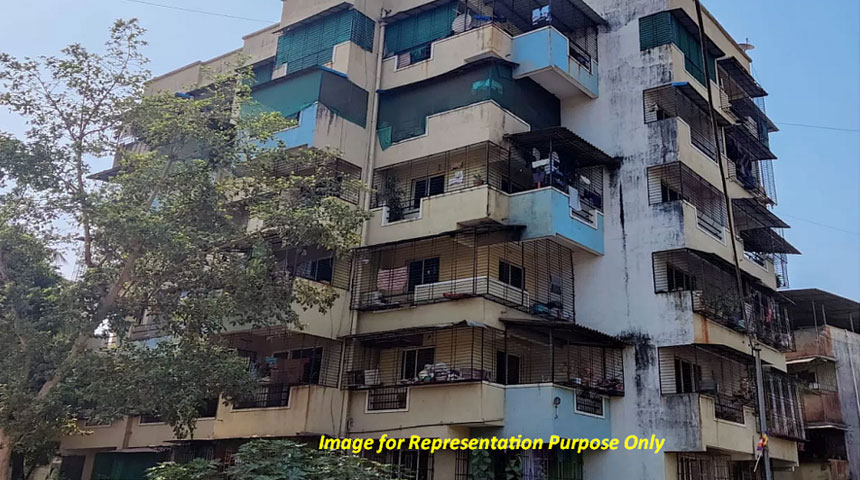
A conveyance deed is a vital legal document that transfers land ownership to a cooperative housing society from a developer or the previous landowner. Obtaining the conveyance of land is a challenge for cooperative housing societies (CHS) in cities like Mumbai, and problems usually arise during redevelopment when conveyance becomes a prerequisite condition.
In order to simplify the process, the Maharashtra government has introduced a concept of deemed conveyance, where a CHS that has not received its conveyance is entitled to apply to the deputy district registrar (DDR) of cooperative societies for the same. Provided the submitted documentation is sufficient and up to the mark, after hearing both the Society and the developer, the DDR will pass an order of deemed conveyance in favour of the Society.
Due to the legal nature of the work involved in this process, societies often prefer to seek assistance from an advocate or legal consultancy firm which specialises in such matters. Although the legal fees that such firms charge are then divided amongst the members of the Society, some confusion as to how those charges are to be divided remains.
 This week, we will look at one such predicament, where a Society has incorrectly divided the legal fees for deemed conveyance equally amongst all flat and shop owners. I will also provide a process for changing the name on the property tax bill and a solution for disputing excess maintenance charges for rented flats in a housing society.
 Sharing Legal Expenses for Deemed Conveyance
Question: My building is 46 years old and in very good condition. There are 16 flats and 5 shops. Now our society members are going for deemed conveyance. Estimated expenses for the same is around Rs6 lakh. Committee members are saying as it is the expense of a legal service, it should be divided equally among members i.e. unit-wise. My flat size is 135sqft which is smallest and the biggest size flat size is in our CHS is 735sqft. Now committee members (most of them have big size flats) are pressurising me to pay Rs50,000, non-compliance of which will carry an interest charge at 21%pa (per annum). I am ready to pay the cost if the calculation is done based on area, but they are totally against me. What should I do? Please advise. Is it possible to get deemed conveyance without members' consent?
Answer: For deemed conveyance, expenses are to be shared by area of the flat and shop in a Society, under Bye-Law No. 67(a) read and interpreted with (iii) (xi), (xxi) and (xiii).
If the Society asks for equal charges from all the flats and shops, then affected members can make a complaint against the managing committee of the Society to deputy registrar of cooperative societies of your area, under the Bye-law No. 174(a)(xxii).
You can also take up the matter with the cooperative court against these incorrect charges under Bye-law No. 174(B)(x). If you decide to take up the matter at the cooperative court, you should have a good, honest and experienced advocate to lodge the case and argue against your Society in Court.
Also, I have realised that if the estimated expenses of the deemed conveyance is Rs6 lakh and the same is to be equally shared by 15 flats and six shops, then it works out to be Rs28,571 per unit. How has the Society then asked you to pay Rs50,000?
Transferring Name on Property Tax Bill
Question: I own a flat in CBD Belapur, Navi Mumbai, since 2007. The property tax bill by Navi Mumbai Municipal Corp (NMMC) is in the name of the lessor CIDCO and lessee, a private company. What is the process to get this property tax bill in my name? Also, is there any legal advantage or disadvantage to getting the bill in my name?
Answer: With a copy of the property tax bill of your flat (which is not in your name now), with a copy of the share certificate of your flat, a copy of Index-2 of your flat's sale deed, and an original no objection certificate (NOC) from the Society, you have to make an application to assistant assessor and collector's office, in your local ward office of NMMC. This will start the process of transferring the property tax bill of your flat in your name.
By getting the municipal property tax bill in the flat owner's name, the owner gets a positive ownership right of his flat. Like the property tax bill, you should also transfer your electricity bill and piped gas bill (if you have it), in your name from respective companies.
NOTE
We will not be answering queries posted in the comments. Only questions sent through the Moneylife Foundation's Legal Helpline will be answered. If you want to seek guidance or ask questions to Mr Shanbhag, kindly send it through Moneylife Foundation's Free Legal Helpline. Here is the link: https://www.moneylife.in/lrc.html#ask-question Excess Charges on Maintenance for Rented Flats
Question: I am staying in Mumbai and have rented my flat in a housing society. The Society is charging extra amenities charge at Rs3 per sqft on the leased flat, over and above the regular quarterly maintenance charges. The said charges were approved and passed in an annual general meeting (AGM) in August 2013. Please advise whether these charges are legal.
Answer: Your Society can charge only 10% of the monthly maintenance charges (excluding municipal property taxes), as non-occupancy charges on your flat, which has been given to others to reside on a leave license basis.
In case your Society charges extra by passing a resolution in the general body meeting of the Society, such charges are completely illegal. Against these charges, you can file a complaint to your Society under bye-law No. 172, explaining that they are not to charge higher non-occupancy charges.
In this complaint, you should also mention that if the Society is not going to charge 10% of the flat's maintenance as non-occupancy charges and will continue with the illegal amenities charges, then within 15 days of your complaint to the Society, under bye-law No. 174(A)(v) you will make a complaint to the deputy registrar of cooperative societies.
After 15 days of your complaint to the Society, if Society has not rectified the charges, please make a complaint against them to the deputy registrar of cooperative societies, with copy marked to your Society.
The deputy registrar will write a letter to your Society asking it to stop charging additional non-occupancy charges, and a copy of that letter will be sent to you for your information.
(Shirish Shanbhag has an MSc in Organic Chemistry, Diploma in Higher Education, and a Diploma in French and has completed his LL.B. in first class in 2021. Before his retirement, he was a junior college teacher at Patkar College from July 1980 to May 2012, teaching theoretical and practical chemistry. Post-retirement in 2012, he started providing guidance and counselling to people on several issues, specifically focusing on cooperative housing society-related matters. He has over 30 years of hands-on experience in all matters about housing societies and can provide out-of-box solutions for any practical issue.)