

Society Interference in Flat Sales and Terrace Disputes
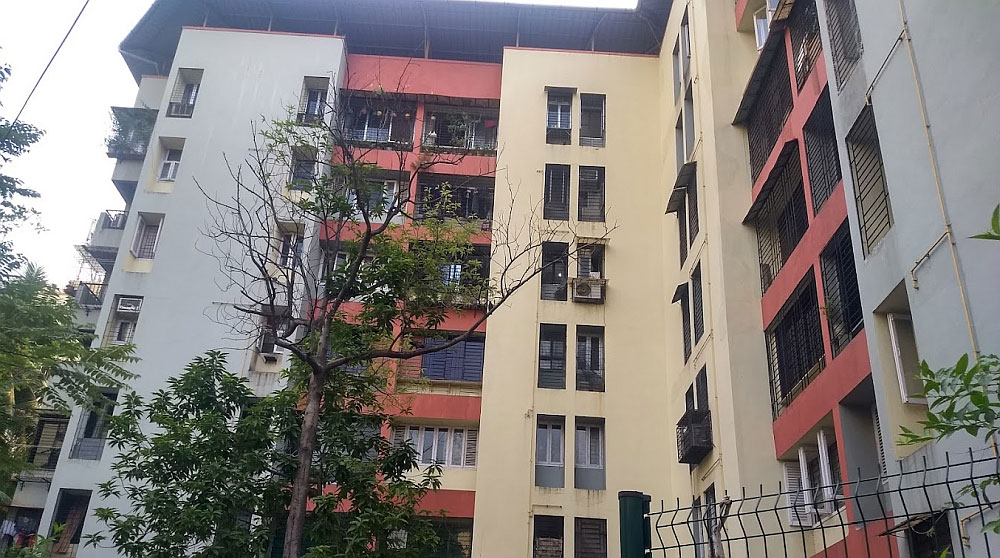
Disputes in a cooperative housing society (CHS/the Society) often arise when managing committees overstep their authority or when property-related issues between neighbours remain unresolved. Buyers and residents frequently face confusion about the role a Society can play in private property transactions or in structural problems affecting adjoining premises.
This week’s queries look at whether a society can interfere in a flat sale due to delayed payment and the legal questions surrounding terrace ownership, maintenance responsibilities and leakage affecting premises below.
Society Cannot Evict Buyer over Delay in Payment under Sale Agreement
Question: My spouse and I entered into an agreement to purchase a property in Borivali West from the second owner. In the agreement, a 60-day period was mentioned for making the final payment which I was to obtain through a bank home loan. However, during the process of the home loan, there was an unexpected delay and the bank could not complete the loan process within the stipulated time.
Now the 60-day period has ended and the secretary of the Society is asking us to leave the flat, stating that the agreement of sale has been terminated because payment has not been made to the owner within the timeline mentioned in the agreement.
My query is: What will the consequences be and what is the way out in this situation? The bank is now ready to restart the process and issue the loan disbursement shortly. I want to clear the dues as soon as possible, but the Society is creating trouble and the owner is ready to cooperate with me. Please let me know the due process to make the agreement legally valid and how to handle the Society.
Answer: An agreement to sell is between the flat-owner and the buyer. As long as your seller has no objection to completing the sale deed of the flat, despite the late payment, the Society’s secretary cannot ask you to leave. The Society has no role in asking you to vacate unless the owner of the flat asks the Society to do so. This is the right of the seller of the flat, not the right of the Society’s secretary.
As a precaution, ask your seller to give a written letter to the Society stating that, due to unavoidable circumstances, you have not been able to make the payment within the agreed time, and that the owner has no objection to accepting the delayed payment.
Under these circumstances, the secretary should not harass the flat-owner’s buyers (you and your spouse) to leave the flat. Whether the sale agreement becomes null and void is a matter for the court to decide if the owner files a complaint against the buyer, and not something the Society’s secretary can decide.
The seller should give a copy of this letter to the Society and provide you with an acknowledgement copy. In the letter, the seller may also state that if any further harassment is caused to the buyer by the Society’s secretary, both the seller and the buyer may jointly file a complaint with the police station for harassment. This letter from the seller to the secretary should stop the harassment.
Also clarify whether a registered sale deed has already been executed between you and the seller. If a registered sale deed has been executed, you can write to the secretary with a copy of the registered sale deed, stating that you will file a complaint against him for harassment once the loan disbursement is pending.
At all times, your seller should support you to prevent unnecessary harassment from the Society’s secretary. If the secretary still harasses you, ask him to call the police and treat you as a trespasser. If the seller of the flat supports you, no one can treat you as a trespasser.
Action against a Member Creating Nuisance and Damaging Society Property
Question: We own a road-facing commercial shop in Andheri, Mumbai. Above our premises, there is a privately owned terrace flat. We have been facing leakage issues for a couple of years and got some civil and waterproofing work done three years earlier at our expense on the flat-owner’s terrace. However, the flat-owner gave us permission to do the same with extreme difficulty and only after months of letter-writing to both the Society and the flat- owner. The leakage issue has reduced but has still not been entirely resolved.
We now want to put a tarpaulin on the railing and parapet wall of the terrace, without covering any usable space of his terrace. However, the owner is not giving us permission. I would like to understand:
1. If the Society is obligated to help us by insisting that the owner cooperate.
2. Whether the terrace is legally allowed to be owned by the flat resident or whether it belongs to the building.
3. The owner has a shed with polycarbonate sheets and metal framework on half of his terrace, which does not cover our premises. Is this legally allowed after the rains?
4. Is there any website where I can read the rules and regulations with respect to society bye-laws?
Answer: You have to obtain the approved plan of your Society's building to determine whether the terrace has used the building's floor space index (FSI). You should also check the sale deed for the person using the terrace to see whether the open terrace area is mentioned.
If the terrace has not been used for the building's FSI, it is not a saleable area and belongs to the Society. In that case, even if the terrace is mentioned in the sale deed of the person using it, the purchase would be illegal.
You should appoint a municipality-approved architect to verify whether the terrace has used the FSI of the building. This can be checked with the building proposal department of the BrihanMumbai Municipal Corporation (BMC) by obtaining the approved plan for the Society’s building.
If it is found that the terrace has not been used for FSI, the person above you is using it illegally. In such a case, you can file an encroachment case against that person by making the Society a party to the case. In this case, you should also state that the person above your shop is not allowing you to repair the leakage from the open terrace and that the Society is also not carrying out the repairs.
If the open terrace has been used to increase the building’s FSI, but it is not mentioned in the sale deed of the person residing above your shop, then also he would be considered an encroacher and similar action can be taken.
If the terrace has used the building’s FSI and the person above you has legally purchased the open terrace, then it becomes the responsibility of that flat-owner to make it leak-proof or allow you to repair it at your expense. Since he is not allowing you to carry out leak-proofing work, under bye-law no174(B)(iii), you can make a complaint against that flat-owner in a cooperative court and make the Society a party. In all such cases, you should engage a good lawyer to handle the matter.
NOTE
We will not be answering queries posted in the comments. Only questions sent through the Moneylife Foundation's Legal Helpline will be answered. If you want to seek guidance or ask questions to Mr Shanbhag, kindly send it through Moneylife Foundation's Free Legal Helpline. Here is the link: https://www.moneylife.in/lrc.html#ask-question Disclaimer: The guidance provided in these columns and on our Legal Helpline is on the sole basis of the facts provided by the reader/questioner and does not amount to formal legal advice in any form whatsoever.
(Shirish Shanbhag has an MSc in Organic Chemistry, a Diploma in Higher Education, and a Diploma in French and has completed his LL.B. with a first class in 2021. Before his retirement, he was a junior college teacher at Patkar College from July 1980 to May 2012, teaching theoretical and practical chemistry. After retirement in 2012, he began providing guidance and counselling on several issues, specifically cooperative housing society-related matters. He has over 30 years of hands-on experience in all matters related to housing societies and can provide out-of-the-box solutions for any practical issue.)