

Society Rules on Tenants, Misbehaving Members and Flat Documentation
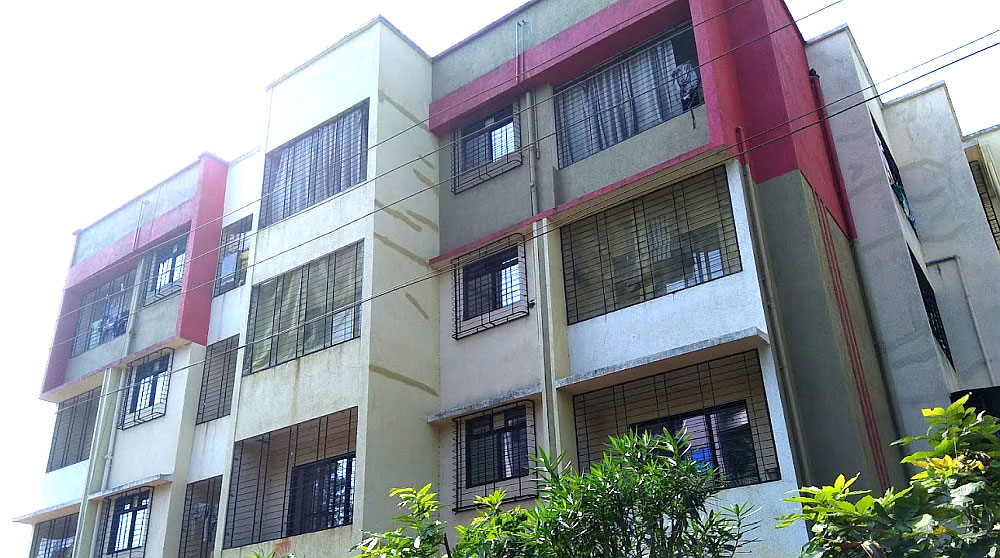
In a cooperative housing society (CHS/the Society) questions about differential charges for tenants, dealing with members who create a nuisance or damage the Society property, and procedural matters during property transactions are among the most common concerns raised by residents.
This week’s queries examine the legal position on tenant rights within Societies, the remedies available when a member’s conduct disrupts community living and the role a housing society may play in clarifying property records during a purchase.
Higher Parking Charges and Facility Restrictions for Tenants
Question: The Society members have passed a resolution at the annual general meeting (AGM) to make a bye-law charging people on rent ₹8,000 per month as parking charges, while members pay ₹500. Is this legal?
They have also restricted people on rent from using the swimming pool and gym. Can they do this legally, even if they pass a bye-law? Can they restrict access to common spaces? What steps can I take? I am a tenant and the flat's owner is also ready to take the necessary steps.
Answer: For giving a flat on rent, the Society can charge only 10% extra as non-occupancy charges (NOC), excluding municipal property tax. Parking charges are included in maintenance. Therefore, if members are charged ₹500, a person who is on rent can be charged ₹550 per month.
If the Society's swimming pool and gym are covered under maintenance, the Society cannot prevent a person residing on rent from using them. If the Society takes additional charges for using the swimming pool, under the bye-laws, they can charge only an additional 10% to a person on rent.
If you face any difficulties, the flat-owner (not the tenant) can make a complaint against the Society to the deputy registrar of (DR) cooperative societies under Bye-law No. 174(A)(xxii).
Action against a Member Creating Nuisance and Damaging Society Property
Question: We are a CIDCO-registered Society located in New Panvel. One of the members of our Society is creating issues with other members by using vulgar words, damaging the Society's property, taking a direct pipeline connection from the overhead tank and refusing to pay outstanding dues.
Our Society chairman informed him to stop creating such nuisance in the CHS and to pay penalty charges for breaking the door, as well as the other outstanding dues. However, they have neglected to pay the overdue and outstanding charges. Their entire family is opposed to the Society members and all family members, including the ladies, behave harshly toward other members.
We also visited the New Panvel CIDCO office located opposite Neel Clinic. However, the officer from the estate department on the first floor, to whom we explained our issue, informed us that once the Society is registered, CIDCO has no role and that the committee members must take action themselves. When we explained that we are the committee members and that the person is not listening to us, he suggested resolving the matter on our own and advised that if the person is using vulgar language, we should file a police complaint. Please suggest what action can be taken against him.
Answer: As suggested by the CIDCO officer, you may make a complaint against such a member to the local police station under Bye-law No. 174(E)(i). The police officer may try to avoid the matter or simply register a non-cognisable complaint (NC).
In your complaint to the police station, mention the illegal water connection, damage to the Society property, use of abusive language towards other member-residents and office-bearers, and non-payment of Society dues. Matters such as theft of water and damage to Society property require the police to register a first information report (FIR) and call the member (flat owner) for a hearing at the police station.
If the police station does not act on your written complaint to register an FIR, you may make a complaint to the assistant commissioner of police (ACP) against the police station for not registering the FIR against the erring member.
You may also make a complaint against such a member to the deputy registrar of cooperative societies of your area under Bye-law No. 174(A)(xxii), stating all his actions, such as non-payment of society dues, taking an illegal water connection, damaging Society property and misbehaving with other members.
Follow up on your complaints with the police station, DCP and DR by sending reminder complaints after 15 days and also filing an RTI application with the public information officer (PIO) to obtain information on the action taken on your complaint by the respective authorities.
Society Confirmation Letter for Correct Flat Details during Property Purchase
Question: I am buying a property in Vasai, Mumbai. About half of my financing will be provided by a bank and I am currently completing the documentation.
During the document verification, the bank noticed that in the previous agreement executed between the seller and the builder, the flat wing had been incorrectly mentioned on two pages. However, in the rest of the documents, such as the Index-II, property card and electricity bill, the wing number is correct.
The bank has requested a clarification letter from the Society confirming the correct wing number. The Society is asking for the format in which the letter should be issued and has also asked the seller to submit a written request on this subject.
Can you help with the format of such a letter? Neither the seller nor I are financially able to get this drafted by a professional. Any help in this regard would be very helpful.
Answer: It can be issued as a simple letter on the Society’s letterhead, signed by either the chairman or the secretary of the Society.
The contents of the letter may be as follows:

NOTE
We will not be answering queries posted in the comments. Only questions sent through the Moneylife Foundation's Legal Helpline will be answered. If you want to seek guidance or ask questions to Mr Shanbhag, kindly send it through Moneylife Foundation's Free Legal Helpline. Here is the link: https://www.moneylife.in/lrc.html#ask-question Disclaimer: The guidance provided in these columns and on our Legal Helpline is on the sole basis of the facts provided by the reader/questioner and does not amount to formal legal advice in any form whatsoever.
(Shirish Shanbhag has an MSc in Organic Chemistry, a Diploma in Higher Education, and a Diploma in French and has completed his LL.B. in first class in 2021. Before his retirement, he was a junior college teacher at Patkar College from July 1980 to May 2012, teaching theoretical and practical chemistry. Post-retirement in 2012, he started providing guidance and counselling to people on several issues, specifically focusing on cooperative housing society-related matters. He has over 30 years of hands-on experience in all matters about housing societies and can provide out-of-box solutions for any practical issue.)