

Steps against Mismanagement, Rights on Running Tuitions
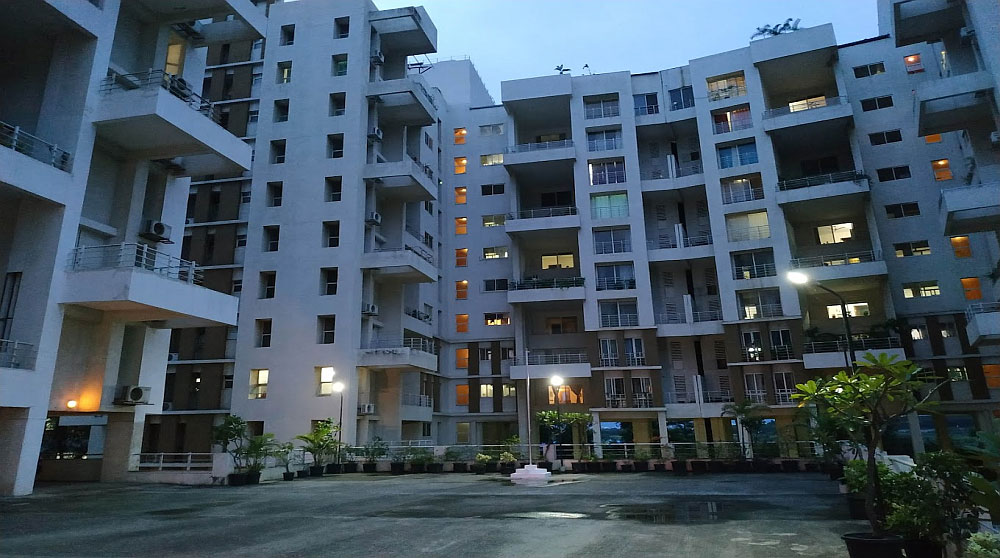
Life in a cooperative housing society (CHS/the Society) often brings up disputes that many residents find difficult to resolve on their own. From managing committee mismanagement to restrictions imposed on members’ day-to-day activities, issues often arise due to a mix of misunderstanding of the law, misuse of authority or lack of awareness of rights.
This week, we address two such common problems. The first deals with how residents can effectively tackle a mismanaged managing committee and the official channels available to hold them accountable. The second looks at whether a Society can legally stop you from conducting small-scale home tuition classes and what remedies are available if the Society imposes arbitrary restrictions or additional charges.
Both answers are rooted in the model bye-laws of cooperative housing societies, offering practical steps that members can take for redressal.
Steps To Take against a Mismanaged Managing Committee
Question: Our Society in Viman Nagar, Pune is being grossly mismanaged by the current managing committee (MC). They are completely non-transparent, have not conducted a single proper annual general meeting (AGM) in the past two years, do not communicate with members on any issue and do not reply to emails or queries. Please advise how we can remove the current MC, make them accountable, or get proper redressal. Our complaints to the local deputy registrar of cooperative societies have not yielded satisfactory results. We would also like to call a meeting of all owners with an observer from the Registrar's office.
Answer: The term mismanagement of a society is vague—you must provide evidence of how the MC is mismanaging the Society. For example, if the MC has spent the Society funds without proper authority (such as carrying out repair work of Rs5 lakh without calling a special general body meeting or inviting tenders), such instances must be documented.
Here are the steps you can take:
- Submit Specific Complaints: Make detailed complaints to the deputy registrar of cooperative societies, citing evidence for each case of mismanagement. File separate complaint letters for each issue; this makes it easier for the deputy registrar to process them.
- Follow Up: If you do not receive a reply within 15 days, send a reminder letter. In your reminder, state that if no reply is received within another 15 days (i.e., 30 days from the original complaint), you will escalate the matter to higher authorities.
- Escalation: The immediate superior of the deputy registrar is the district deputy registrar (DDR). File a complaint with the DDR, attaching copies of your original complaint, any replies received and your reminder letter.
- Lokshahi Din Complaint: You can also take your complaint to the Lokshahi Din grievance redressal forum, conducted by the Pune district collector on the first Monday of every month. File your complaint addressed to the collector, marked as Lokshahi Din Complaint. Submit three copies along with the prescribed covering letter and retain an acknowledged copy for your records. You will be given a hearing date, usually on the next or following month’s Lokshahi Din.
At the hearing, the collector listens to the complaint and directs the deputy registrar to resolve it before the next Lokshahi Din. If you do not receive a satisfactory response, you can attend the following month’s hearing with copies of your earlier complaint, acknowledgements, and any unsatisfactory replies. - Refer the Bye-laws: Buy a copy of the 2014 or 2019 Model Bye-laws of Co-operative Housing Societies, depending on which have been adopted by your Society. If referring to the 2014 bye-laws, the nos. 172 to 174 specifically deal with complaint redressal. For example, bye-law No. 174(A)(ix) clearly states that if the managing committee is not functioning properly, a complaint can be made to the deputy registrar.
Try the process outlined above once, you will see how much more effectively complaints get redressed.
Can a Society Stop You from Running Home Tuitions?
Question: I stay on the 5th floor of a residential building. The house belongs to my in-laws. I take home tuitions in small groups of three-four students at a time, with a total of 22 students. Recently, I received a notice from the secretary stating that I must stop tuitions at home from the next academic year. The secretary has cited bye-law 48(a) of the CHS law and listed the following issues:
- Unknown students entering the Society create security issues.
- Excessive use of lifts, leading to higher maintenance and electricity costs.
- Noise pollution.
- The AGM has decided to impose three times maintenance charges for lift usage.
I am unemployed, and taking tuitions for a small fee is my only livelihood. The house is primarily used for residential purposes by five family members and tuition is an addition to it. My queries are:- What is Bye-law 48(a)?
- Can the secretary or Society members stop me from giving tuitions to external students?
- If I assure them that the lift will not be used, can they still stop me from teaching external students?
- Can the society, with AGM approval, impose additional charges on me for taking tuitions?
Answer: For small tuition classes that serve as your livelihood, the Society cannot arbitrarily stop you from teaching. Bye-law No. 48(a) applies only when there is a proven nuisance, annoyance, or inconvenience caused to other members. Even if the AGM passes a resolution, the charges against you must be supported with evidence.
- Security Issues: Students can be asked to carry their school/college ID cards and register their entry with the watchman. In the absence of a watchman, you may maintain a logbook where each student records their name, date and time in/out.
- Lift Usage: The additional electricity cost due to student usage can be calculated. Ask the lift maintenance company for per-trip electricity consumption, add a reasonable margin (say 10%), and pay the Society accordingly. Students should use the lift in groups to minimise trips. You may also maintain a logbook of lift usage.
- Noise Pollution: The Society can request the local police to measure noise levels with a meter. If the readings are high, you should take steps to reduce noise.
- 3x Maintenance Charges: Since you are willing to bear the actual cost of extra lift usage, charging three times the maintenance is unjustified.
If the secretary prevents your students from entering, you can lodge a complaint with the local police under Bye-law No. 174(E)(ii). Professions such as advocates, chartered accountants, insurance agents, brokers, estate agents and tuition classes are generally allowed in residential flats, provided they do not cause nuisance or inconvenience to other members.
If the Society insists on additional charges or tries to stop your tuition, you may file separate complaints with the deputy registrar of cooperative societies, under Bye-law No. 174(A)(xxii).
NOTE
We will not be answering queries posted in the comments. Only questions sent through the Moneylife Foundation's Legal Helpline will be answered. If you want to seek guidance or ask questions to Mr Shanbhag, kindly send it through Moneylife Foundation's Free Legal Helpline. Here is the link: https://www.moneylife.in/lrc.html#ask-question Disclaimer: The guidance provided in these columns and on our Legal Helpline is on the sole basis of the facts provided by the reader/questioner and does not amount to formal legal advice in any form whatsoever.
(Shirish Shanbhag has an MSc in Organic Chemistry, a Diploma in Higher Education, and a Diploma in French and has completed his LL.B. in first class in 2021. Before his retirement, he was a junior college teacher at Patkar College from July 1980 to May 2012, teaching theoretical and practical chemistry. Post-retirement in 2012, he started providing guidance and counselling to people on several issues, specifically focusing on cooperative housing society-related matters. He has over 30 years of hands-on experience in all matters about housing societies and can provide out-of-box solutions for any practical issue.)