

Terrace Disputes and Internet-provider Restrictions
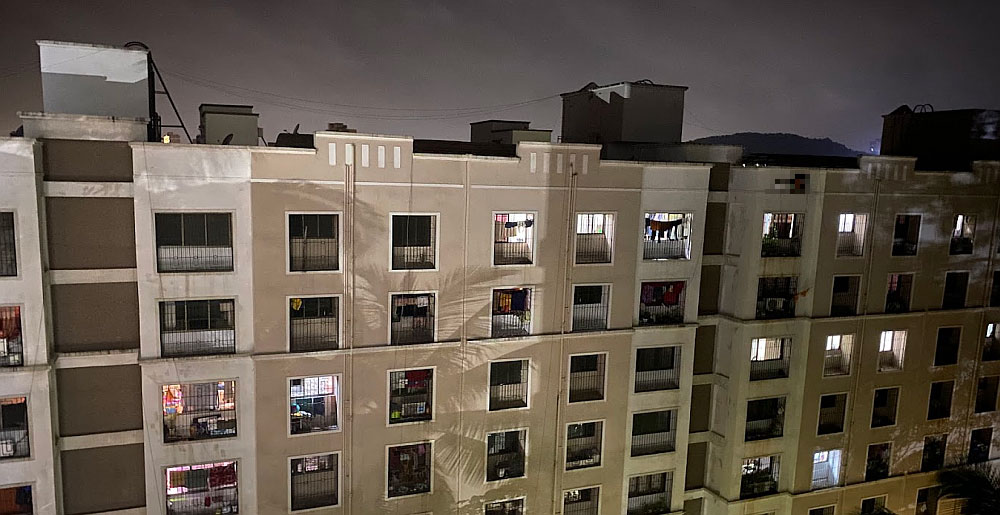
Disputes in a cooperative housing society (CHS/the Society) often arise at the intersection of property rights and collective decision-making. Questions about ownership of terraces, responsibility for structural maintenance and the use of common areas can quickly escalate when leakage, inconvenience or commercial interests are involved.
At the same time, managing committees are expected to act transparently and in the larger interest of members, whether in matters of structural repairs or in decisions affecting essential services such as internet connectivity. When residents feel their concerns are being ignored or delayed, understanding the correct legal and procedural remedies becomes important.
 This week’s queries examine two recurring issues: determining the legal status and maintenance responsibility of an open terrace above a commercial premises and the remedies available to members when a CHS refuses to permit alternative internet service-providers, despite significant support from other residents.
 Terrace Ownership, Leakage Responsibility and Legal Remedies
Question: We own a road-facing commercial shop in Andheri, Mumbai. Above our premises, there is a privately-owned terrace flat. We have been facing leakage issues for the past couple of years and got civil and waterproofing work done three years ago at our expense on the flat-owner’s terrace. However, the flat-owner gave us permission to do so only after months of letter-writing to both the Society and the flat-owner, with extreme difficulty. The leakage issue has reduced but has not been entirely resolved.
We now want to put a tarpaulin on the terrace's railing and parapet wall, without covering any usable space on his terrace. However, the owner is not giving us permission.
I want to understand:
- Whether the Society is obligated to help us by insisting that the owner cooperate.
- Whether the terrace can legally be owned by the flat resident or whether it belongs to the building.
- The owner has a shed with polycarbonate sheets and metal framework on half of his terrace, which does not cover our premises. Is this legally allowed after the rains?
- Is there any website where I can read the relevant rules and regulations with respect to the CHS bye-laws?
Answer: You have to obtain the approved plan of your Society’s building to verify the status of the terrace. You should also check whether the open terrace area is specifically mentioned in the sale deed of the person who is using it. In many cases, open terraces form part of the common areas of the building, unless they have been legally and specifically conveyed to a flat purchaser as per the approved plan and agreement. Therefore, you must first verify the building plan and documents.
You may appoint a municipality-approved architect to verify from the town planning department of the municipality or from the building proposal department of the BrihanMumbai Municipal Corporation (BMC), the approved building plan and the status of the terrace.
If the terrace forms part of the common area of the Society, then the Society is responsible for its structural maintenance and waterproofing. In that case, you may request the Society to carry out proper repairs.
If the terrace has been legally conveyed as an exclusive terrace to the flat-owner above you, then it becomes his responsibility to maintain it and ensure that no leakage affects the premises below. If he is not allowing you to carry out necessary repairs at your expense, you may file an appropriate civil case by making both the flat-owner and the Society parties to the case.
In all such cases, you should consult and engage a competent lawyer for proper legal action.
Society Refusing To Allow Alternative Internet Service-providers
Question: Our Society residents have been asking the managing committee to allow internet service-providers (ISPs) such as Reliance Jio or Airtel, but the managing committee is insisting on Hathway and a local cable service provider.
Our Society consists of 312 flats, and 102 flats signed a letter and submitted it to the managing committee earlier this year. The Society accepted the letter under pressure from the 100 flats, but after that they did not give us any acknowledgement receipt. It seems they are buying time. How can we proceed in this situation? We want the Society to acknowledge our letter and, if they do not respond, as is their usual practice, what can be done?
We are getting calls from the cable operator politely asking what the issue is. The office-bearers do not want to take action because of this factor and are telling us about hardships we may face if we continue to demand new internet service- providers. How can we tackle this intimidation issue and make these office bearers move ahead? All buildings adjacent to our Society have connections from other ISPs, but in our Society they are not allowing fibre cables to be laid.
Answer: For bringing Jio or Airtel internet and mobile connection providers to your building, in place of the existing Hathway and private network provider, I would suggest that you to do some additional research as described below.
First, visit neighbouring buildings with Jio connections and ask them about the terms and conditions for installing Jio services, such as who pays for the electricity used by Jio's network and what financial arrangements exist between Jio and the Society’s management. Also check how Jio is providing network quality and its tariff to flat-owners.
Do the same for Airtel, Hathway and the existing private network provider. Carry out this exercise for at least three neighbouring buildings for each provider. Then prepare a comparison chart and show how Jio or Airtel is better than the existing network provider. With this information, ask the managing committee (MC) to call a special general body meeting (SGM) to decide on changing the network-provider for your building.
If the managing committee does not call the SGM, you may make a complaint against the managing committee to the deputy registrar (DR) of cooperative societies under bye-law no. 174(A)(xxii). When making the complaint to the DR, you should be persuasive in seeking action. You may also file an RTI application with the information officer of the DR seeking information on the action taken on your complaint against the managing committee.
Then the MC may agree and you may get better internet service in your building.
NOTE
We will not be answering queries posted in the comments. Only questions sent through the Moneylife Foundation's Legal Helpline will be answered. If you want to seek guidance or ask questions to Mr Shanbhag, kindly send it through Moneylife Foundation's Free Legal Helpline. Here is the link: https://www.moneylife.in/lrc.html#ask-question Disclaimer: The guidance provided in these columns and on our Legal Helpline is on the sole basis of the facts provided by the reader/questioner and does not amount to formal legal advice in any form whatsoever.
(Shirish Shanbhag has an MSc in Organic Chemistry, a Diploma in Higher Education, and a Diploma in French and has completed his LL.B. in first class in 2021. Before his retirement, he was a junior college teacher at Patkar College from July 1980 to May 2012, teaching theoretical and practical chemistry. Post-retirement in 2012, he started providing guidance and counselling to people on several issues, specifically focusing on cooperative housing society-related matters. He has over 30 years of hands-on experience in all matters about housing societies and can provide out-of-box solutions for any practical issue.)