

Transfer Premium and Deletion of Deceased Owner's Name in Jointly Owned Flat
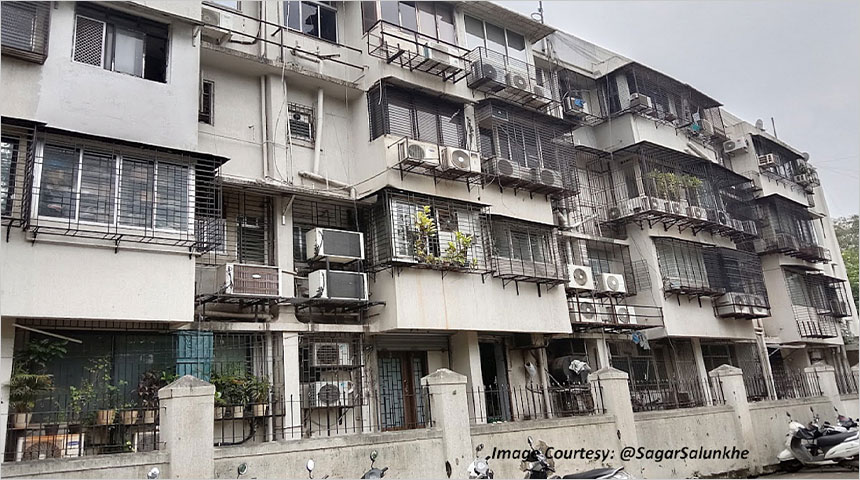
Among the various expenses that home-buyers have to bear are the transfer charges that cooperative housing societies (CHS) levy on the sale and transfer of shares to the flats in a building. A transfer premium, which ranges anywhere from Rs25,000 to even a percentage of the purchase consideration for the sale of the apartment, depending on the city or state, has to be paid to the Society. It applies to both residential and commercial premises, with a few conditions.
It is also important to note that while transfer charges by housing and service societies are legal, if it does not contravene the provisions, a builder cannot levy transfer charges on a flat-owner.
 This week, I will address a concern on the applicability of transfer premium charges to a builder who had retained a few commercial units in newly built commercial premises. I will also explain the process of transferring the share of a deceased flat-owner from a jointly owned flat to the surviving joint-owners.
 Applicability of Transfer Premium Charges for Newly Sold Units in Commercial Premises
Question: Ours is a premises society in Mumbai consisting of 63 commercial units. The occupation certificate (OC) was issued in February 2001, and the Society was formed in July 2013. At the time of the formation of the Society, the builder had retained 16 units for his use and joined the Society as a promoter member. He continues to pay normal Society charges for these units as any other member. In September 2014, he sold four of the units to a new member. Is the new member liable to pay a share transfer premium of Rs25,000 for each unit, just like other sale transactions?
Answer: At the time when the Society was formed, the builder was liable to pay monthly maintenance, even for his unsold flats.
If the builder has become a member of the premises cooperative society and if he has used the units like any other buyer of the premises, then he has to pay Rs25,000 transfer premium.
On the other hand, if the builder has retained the 16 units as unsold premises without putting them to any use, then no transfer premium of Rs25,000 is to be levied on the four units that he has recently sold.
Procedure for Removal of Deceased Joint Owner's Name in Flat
Question: I have a flat in Mumbai where my brother and mother are joint-holders. My mother expired a few years back. How do we remove her name from the Society records? Please guide me on the procedure.
Answer: There are two ways to remove your late mother's name from joint ownership in your jointly owned flat.
One option is to prepare and submit a release deed (RD). This deed has to be made on a Rs500 non-judicial stamp paper and signed by all your siblings (including your father, if alive), who have no objection to the flat being transferred in your and your brother's name. It should state that your siblings (and father) are releasing their right to your mother's share of the jointly bought flat. Your mother's death certificate (and your father's as well, if deceased) should be attached.
This RD should be witnessed by two adults with their signatures and should further be registered with the sub-registrar of assurances (SRA) office. When you register this RD, you, your siblings, your father (if alive) and the two witnesses should be present at the SRA office. Registration fees for this RD document are only Rs1,000. With the SRA-certified copy of RD and its index-2, Society will remove your mother's name, and you and your brother can become the joint-owners of that flat.
An alternate method would be to make a testamentary petition in a district court. If your flat is located in Mumbai, this petition can be filed in the testamentary division of Bombay High Court. With such a petition, you can get a succession certificate for your mother's share in the jointly-owned flat.
This method is comparatively much more expensive. However, if your siblings and/or father are not ready or willing to part with their share in the mother's part of your jointly-owned flat, then you have no option but to opt for a succession certificate. This is also the case if your Society's managing committee is unwilling to accept a release deed and insists on a succession certificate.
The court fee to make a petition for a succession certificate is about Rs75,000. Additionally, you will need another minimum Rs75,000 as your advocate's fee, who shall prepare the petition and argue it in your favour in the court.
NOTE
We will not be answering queries posted in the comments. Only questions sent through the Moneylife Foundation's Legal Helpline will be answered. If you want to seek guidance or ask questions to Mr Shanbhag, kindly send it through Moneylife Foundation's Free Legal Helpline. Here is the link: https://www.moneylife.in/lrc.html#ask-question Transferring Flat When Probate of Registered Will Is Pending
Question: Pending probate of a registered Will, can a share in a flat of a housing society in Mumbai be transferred to a person with the other siblings signing a release deed? The beneficiary of the Will is a class-2 legal heir, i.e., the wife of one of the siblings and the flat is to be transferred to a non-beneficiary of the Will.
Answer: If the testamentary petition for probate of the Will is pending, then the Society cannot accept the release deed from class-1 relatives to transfer the flat in their name.
If the class-2 relative being named in the Will by the testator (person making the Will) is not acceptable to any of the class-1 relatives, then all class-1 relatives, when they are called for hearing of the testamentary petition, should argue with valid reasons to satisfy the court suitably.
Disclaimer: The guidance provided in these columns and on our Legal Helpline is on the sole basis of the facts provided by the reader/questioner and does not amount to formal legal advice in any form whatsoever.
(Shirish Shanbhag has an MSc in Organic Chemistry, a Diploma in Higher Education, and a Diploma in French and has completed his LL.B. in first class in 2021. Before his retirement, he was a junior college teacher at Patkar College from July 1980 to May 2012, teaching theoretical and practical chemistry. Post-retirement in 2012, he started providing guidance and counselling to people on several issues, specifically focusing on cooperative housing society-related matters. He has over 30 years of hands-on experience in all matters about housing societies and can provide out-of-box solutions for any practical issue.)