

When Repairs, Society Dues and Memberships Become Disputes
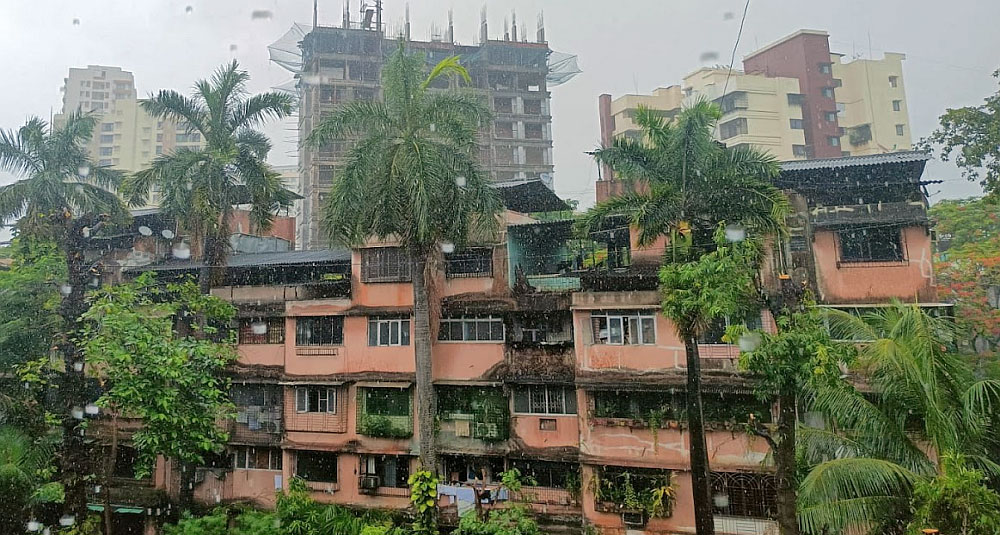
Cooperative housing societies often find themselves caught between two competing responsibilities: maintaining common areas and essential services, on the one hand, and responding fairly to individual members’ grievances on the other. When repairs are delayed, members from a cooperative housing society (CHS/the Society) may feel justified in taking matters into their own hands, but withholding the Society dues can create a separate dispute. At the same time, questions of membership and succession can become particularly contentious when long-standing records are called into question during the preparation of the CHS election voters’ list.
 The following cases highlight how such disputes can be approached without allowing one grievance to become the basis for another. They also underline the importance of following the proper statutory and CHS procedures when challenging maintenance demands, alleged irregularities in membership transfers or the eligibility of persons included in an election.
Withholding Society Dues over Repairs and Threat of Water Disconnection
Question: I stay in a cooperative housing society in Thane in an illegal building. We pay the municipal tax and water tax every year to the Thane Municipal Corporation. Our flat is on the top floor, beneath the terrace and we have been facing water seepage issues during the monsoon. We have complained to the Society’s managing committee on several occasions since 2019, yet our complaints have fallen on deaf ears. A new committee was formed in 2021 and our complaints met with the same result as with the previous committee. So, we decided to halt payment of maintenance charges (₹200/month) and carried out repairs amounting to ₹3,040 in June 2021.
We have not continued payment of maintenance charges to date. Recently, the managing committee sent us a notice to pay the balance maintenance amount (₹4,200) up to July 2026 within 15 days, failing which they would take strict action (e.g., cutting off the water line to our house or something like that). We are ready to pay the balance amount after deducting the repair work done by us, i.e. ₹4,200 - ₹3,040 = ₹1,160. The Society is not willing to accept this. They want the full remaining amount of ₹4,200.
Answer: You say that you stay in an illegal CHS building. Your problem with your Society is regarding the repair of the terrace roof, which you have carried out since yours is a terrace flat and water was leaking through the terrace slab. The Society has not carried out the terrace repairs. After writing a complaint letter to your Society, you carried out the repairs yourself.
Even if the Society has done an injustice to you, you should not withhold the CHS dues and deduct the expenditure that you have incurred from the Society’s dues for your flat without an established basis or approval. Therefore, I advise you to pay the Society’s dues in full up to date.
1.You may make a complaint to the deputy registrar of cooperative societies, Thane, regarding the non-calling of general body meetings within the prescribed period, if this has in fact occurred, under the applicable provisions of the Maharashtra Co-operative Societies Act and the Society’s bye-laws. The reference to bye-law no. 174(A)(xix) should be checked against the bye-laws applicable to your society.
2.To recover the repair charges, if the terrace repairs were the responsibility of the Society, you may seek an appropriate remedy against the CHS through the cooperative court at Thane, under the applicable provisions and bye-laws. The exact provision applicable to your claim should be verified.
3.The Society cannot, merely because of non-payment of dues, resort to arbitrary measures such as cutting off the water supply or stopping essential services. If any such action is actually taken, you may take up the matter before the appropriate authority or forum and seek appropriate relief.
For non-payment of dues, the Society has a statutory procedure for recovery, including the procedure under Section 101 of the Maharashtra Cooperative Societies Act, subject to applicable law and bye-laws. It should not resort to arbitrary action such as the disconnection of the water supply or the refusal to carry out its responsibilities towards common areas.
4.Regarding the alleged illegal construction of your Society building, you may make a complaint to the town planning department of Thane Municipal Corporation (TMC). The TMC authorities can inspect the building and determine what action, if any, is permissible under the applicable municipal and planning regulations. If the building was constructed by a builder, you may also provide the builder's details in your complaint.
Questionable Membership Transfers and the Society’s Voters’ List
Question: I live in a CHS which has been mismanaged for several decades. To cut a long story short, non-members have been appointed to the managing committee. They have even had flats transferred into their names without following the required formalities and have signed the share transfers in their names while they were not members of the Society. Their fathers or husbands, who were members of the Society, had passed away.
Now, an administrator has been appointed and has been in charge for about nine months. He asked all members to submit their share certificates for preparing the voters’ list. When I informed him about these alleged irregular transfers, he said that, as per MCS Act clause 32, he cannot give me copies of these certificates. Besides, he says he has no right to question transfers that occurred before he became the administrator. He is also proceeding with the election without complying with the required formalities. What should I do in this matter? Can I challenge the membership and inclusion of such persons on the voters’ list and which authority is appropriate to approach?
Answer: There should be a proper ground for making a complaint against the transfer of flats in the Society. If, after the death of a member, a flat has been transferred to the legal heir or nominee in accordance with the applicable provisions of the MCS Act and the Society’s bye-laws, such transfer cannot be treated as illegal merely because the transferee was not a member earlier. In a CHS, transfer to an heir or nominee is specifically recognised under Section 154B-7 of the MCS Act.
However, if a person has been admitted as a member or has had the share certificate transferred to his or her name without complying with the applicable succession, transfer, stamp-duty or Society requirements, you can challenge that particular transfer by giving the registrar the relevant documents and reasons for your objection. The fact that the transfer was made before the administrator took charge does not, by itself, make the transfer immune from examination.
You may, therefore, write to the deputy registrar of cooperative societies of your area, giving the names of the persons concerned, the flat numbers, the nature of the alleged irregularity and copies of whatever documents you have to support your complaint. You should not merely state that they were not members previously; you should specify why their admission or transfer is invalid.
Regarding the voters’ list, if you believe that persons who are not legally entitled to membership have been included as voters, obtain the voters’ list and submit a written objection to the appropriate election authority or registrar, giving the reasons and supporting documents against each disputed name. Elections of cooperative housing societies are conducted under the state cooperative election authority framework.
As regards the administrator’s refusal to provide you with copies of the share certificates, the position depends on exactly which records you have requested. A member has a statutory right to inspect specified society records, including the register of members and other prescribed records, under Section 154B-8 of the MCS Act. Therefore, you should make your request in writing, specifying the particular records you wish to inspect or obtain and the purpose for which you require them.
If the administrator proceeds with the election, despite a genuine dispute over the eligibility of persons on the voters’ list, make your objection immediately, before the relevant election process is completed, rather than waiting until after the election.
NOTE
We will not be answering queries posted in the comments. Only questions sent through the Moneylife Foundation's Legal Helpline will be answered. If you want to seek guidance or ask questions to Mr Shanbhag, kindly send it through Moneylife Foundation's Free Legal Helpline. Here is the link: https://www.moneylife.in/lrc.html#ask-questionDisclaimer: The guidance provided in these columns and on our Legal Helpline is on the sole basis of the facts provided by the reader/questioner and does not amount to formal legal advice in any form whatsoever.
(Shirish Shanbhag has an MSc in Organic Chemistry, a Diploma in Higher Education, and a Diploma in French and has completed his LL.B. in first class in 2021. Before his retirement, he was a junior college teacher at Patkar College from July 1980 to May 2012, teaching theoretical and practical chemistry. Post-retirement in 2012, he started providing guidance and counselling to people on several issues, specifically focusing on cooperative housing society-related matters. He has over 30 years of hands-on experience in all matters about housing societies and can provide out-of-box solutions for any practical issue.)