

When the CHS Delays, Denies or Disregards Rules
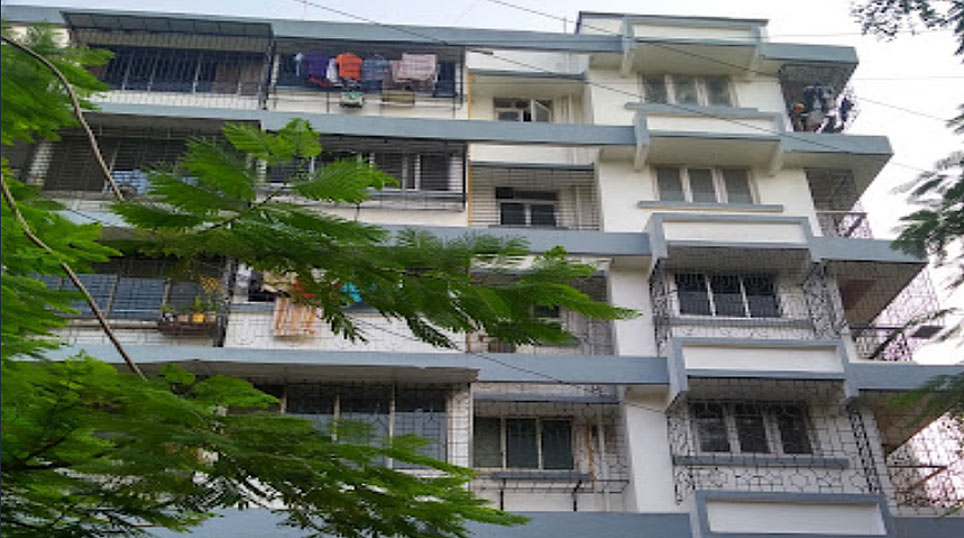
Navigating the rules and processes of a cooperative housing society (CHS/the Society) can often be confusing for home-owners. Whether it is transferring ownership after a family member's demise, dealing with delays from the managing committee or resolving disputes over basic services such as water supply, residents frequently encounter procedural hurdles or non-cooperative societies.

Fortunately, the Cooperative Societies Act and model bye-laws provide clear guidance and, when followed correctly, they empower residents to assert their rights and seek redress. In this week’s column, I will address a range of queries that touch on ownership transfer, legal remedies for service denial and the formalities involved in securing your share certificate.
Documents Required for Tenancy
Question: How do I legally respond to a secretary of a CHS in Mumbai who has issued the following unwarranted demands—based on managing committee (MC) resolutions—to members letting out their property on leave and licence, in a society registered under the MCS Act, 1960?
1. Submission of a physical rubber stamp and seal on the police verification form (attested by a police officer), even when the computer-generated online police intimation certificate has already been submitted.
2. Tenants must be from a family unit of five to six members (husband, wife, two children and parents).
3. Bachelors are not permitted as tenants.
4. The entire text of the lease agreement must be submitted to the Society; the rent and deposit amounts cannot be redacted.
5. Tenants must inform the society in writing when they vacate the flat.
Answer: You are only required to submit the following to the Society:
1. A copy of the duly filled-in leave and licence agreement. (You need to submit the entire copy of the agreement without any redaction.)
2. A copy of the online police verification of the licensee (tenant).
The Society may charge you non-occupancy charges which can be a maximum of 10% of the service charges for the flat, for the duration your tenant occupies the premises.
You are not obligated to meet any of the other demands listed. These conditions are arbitrary, discriminatory and have no legal basis under the MCS Act or Model Bye-laws. If the Society persists, you may escalate the matter to the deputy registrar of cooperative societies.
Transfer of Share Certificate, When Stamp Duty Was Paid Late
Question: We bought a flat but did not register it or pay stamp duty at the time. We later paid the stamp duty under the Amnesty Scheme. We have been paying the Society maintenance from the beginning. How do we now get the share certificate from the Society? What is the procedure?
Answer: Even though you paid the stamp duty later under the Amnesty Scheme, it is considered valid—just as if it were paid at the time of purchase. Now, using a photo copy of the sale deed with the stamp duty paid, you can apply for the share certificate.
To do this, pay the applicable charges—transfer charges of Rs25,000, membership entrance fee of Rs100 and membership fee of Rs500—by crossed cheque in favour of the Society. (If you have already paid these charges, you do not need to pay them again.) Next, fill in the required membership and transfer forms. Once submitted, the society should transfer the share certificate in your name.
Allocation of Parking Spots in CHS
Question: When entering into an agreement with purchasers, builders often allot car parking slots. After the CHS is registered under the norms of the government of Maharashtra and an elected managing committee is in place:
1. Can the builder interfere with any vacant car parking slots after the Society's registration?
2. Is there any law or court judgment in Maharashtra that confirms that car parking in a housing society must be governed by the managing committee?
Answer: All car parking spaces, even before the registration of the housing society, legally belong to the Society once it is formed. A builder cannot sell parking spaces to flat purchasers. Even if a flat buyer has paid for parking, the space does not become their individual property; it remains the property of the Society.
The allotment and regulation of parking spaces are governed by the Society’s managing committee as per Bye-laws Nos. 78 to 84 of the Model Bye-laws applicable to CHS in Maharashtra.
Here are the rules for parking as per the model bye-laws
a. The Society shall, in the general body meeting, frame and adopt parking rules to regulate the parking slots, in accordance with the Act and Rules thereunder.
b. The allotment of parking space shall be made by the managing committee on the basis of 'first come, first served', for available parking slots. However, the Member shall have no right to sell or transfer the parking slot allotted by the Society.
NOTE
We will not be answering queries posted in the comments. Only questions sent through the Moneylife Foundation's Legal Helpline will be answered. If you want to seek guidance or ask questions to Mr Shanbhag, kindly send it through Moneylife Foundation's Free Legal Helpline. Here is the link: https://www.moneylife.in/lrc.html#ask-question Disclaimer: The guidance provided in these columns and on our Legal Helpline is on the sole basis of the facts provided by the reader/questioner and does not amount to formal legal advice in any form whatsoever.
(Shirish Shanbhag has an MSc in Organic Chemistry, a Diploma in Higher Education, and a Diploma in French and has completed his LL.B. with a first-class degree in 2021. Before his retirement, he was a junior college teacher at Patkar College from July 1980 to May 2012, teaching theoretical and practical chemistry. Post-retirement in 2012, he started providing guidance and counselling to people on several issues, specifically focusing on cooperative housing society-related matters. He has over 30 years of hands-on experience in all matters about housing societies and can provide out-of-the-box solutions for any practical issue.)