
Event- A Practical Handbook for Housing Societies
Event Report- Most Housing Society Disputes Are Avoidable: Moneylife Foundation Launches CHS Practical Handbook
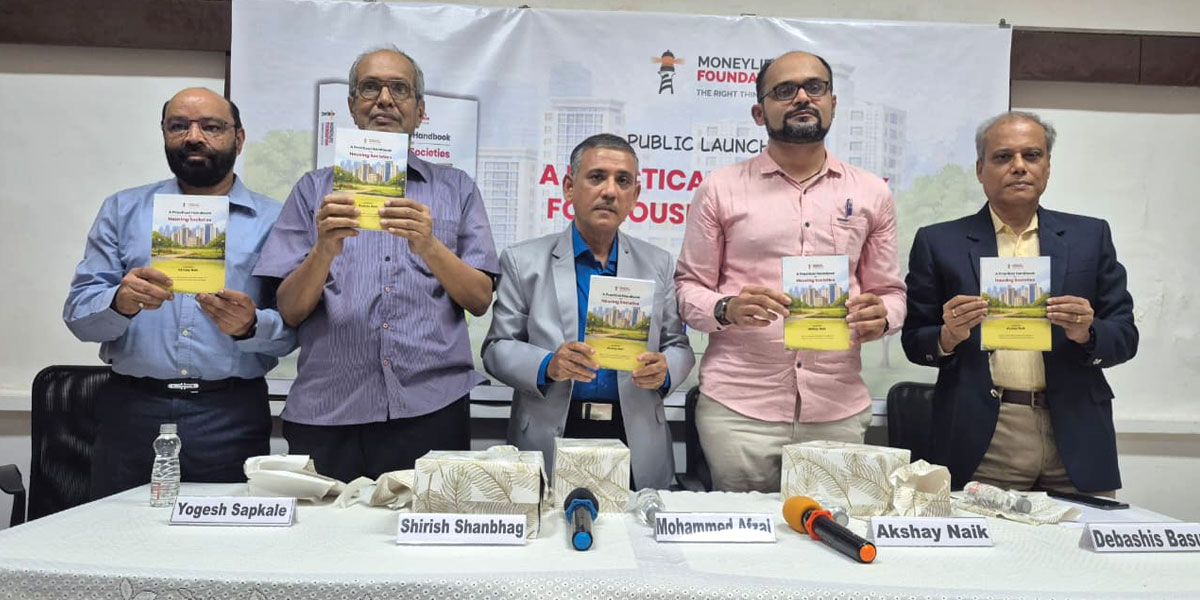
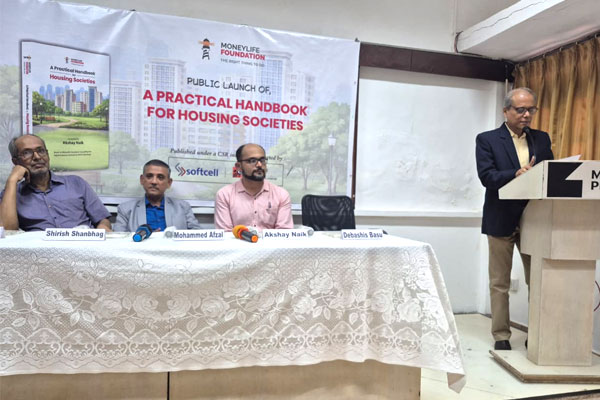
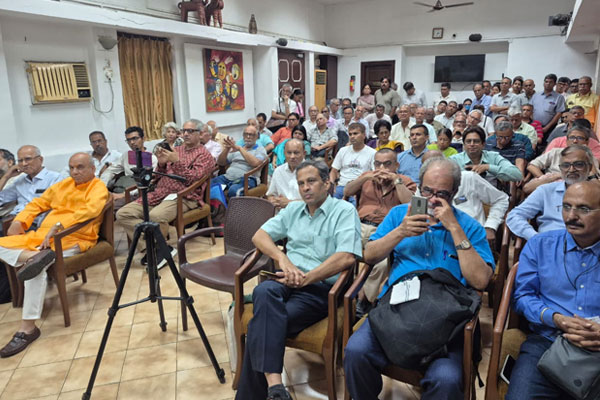
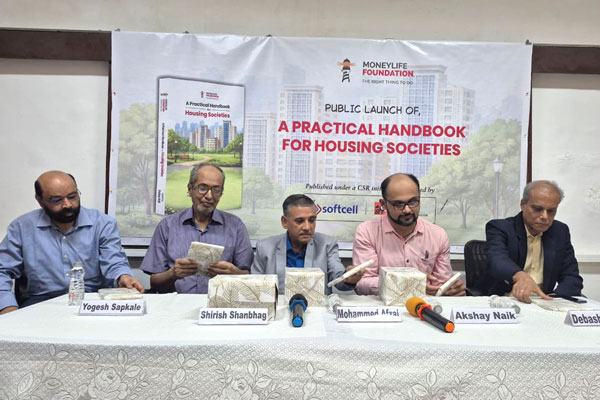
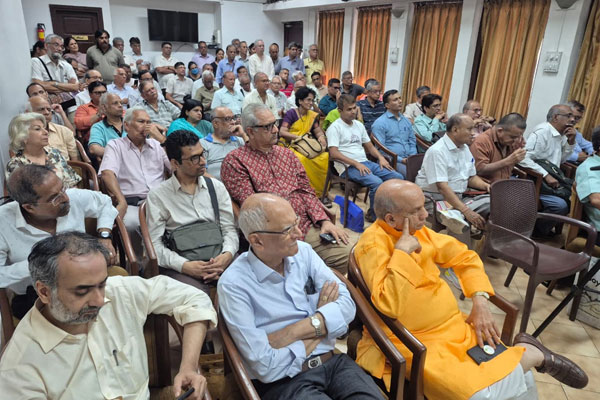
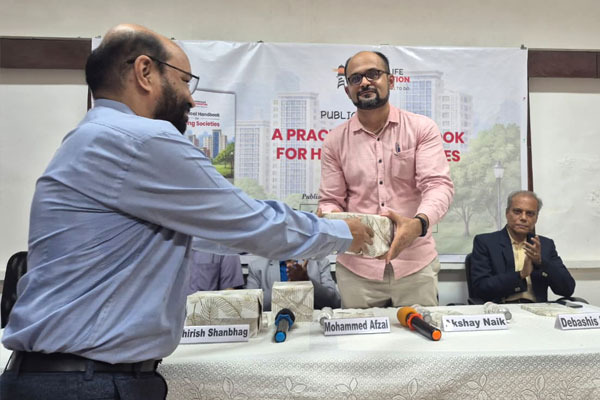
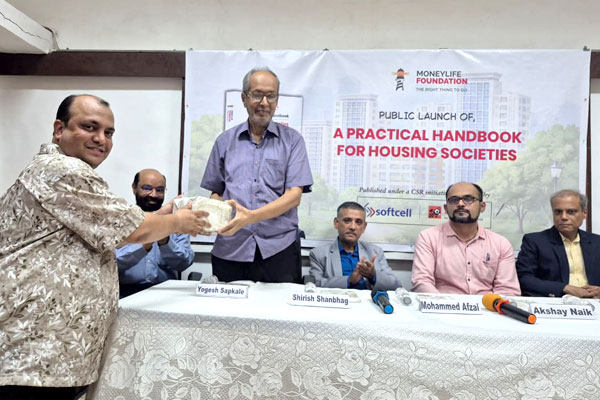
Confusion over rules, recurring disputes and weak governance continue to plague cooperative housing societies (CHS), often turning routine matters into prolonged conflicts. Addressing this gap, Moneylife Foundation on 26 March 2026 unveiled A Practical Handbook for Housing Societies at a well-attended event that brought together residents, managing committee members and activists.
The handbook, compiled by Akshay Naik, project director at Moneylife Foundation, is based on years of practical experience from the Foundation’s free counselling sessions, helplines and its long-running weekly column on housing society issues. It aims to provide clear, accessible guidance on everyday challenges ranging from governance and membership to financial disputes and redevelopment.
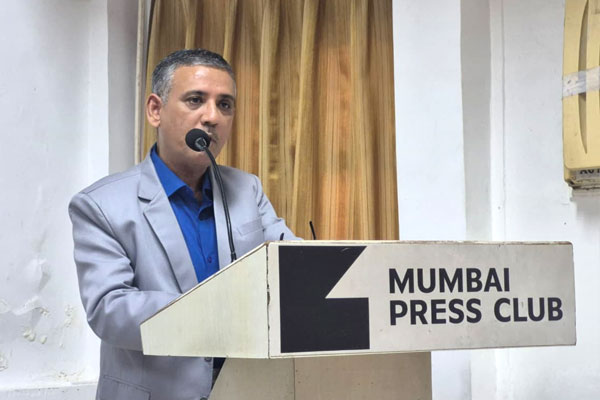
Introducing the handbook, Debashis Basu, founder-trustee of Moneylife Foundation, says the publication emerged from a consistent pattern observed across thousands of cases handled by the Foundation. “We realised that the same issues were repeating across societies — confusion about rules, lack of process and poor governance. This handbook is an attempt to bring that accumulated knowledge together in a structured and practical way.”
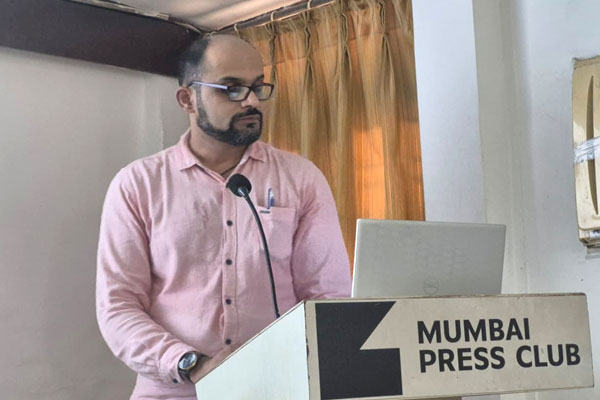
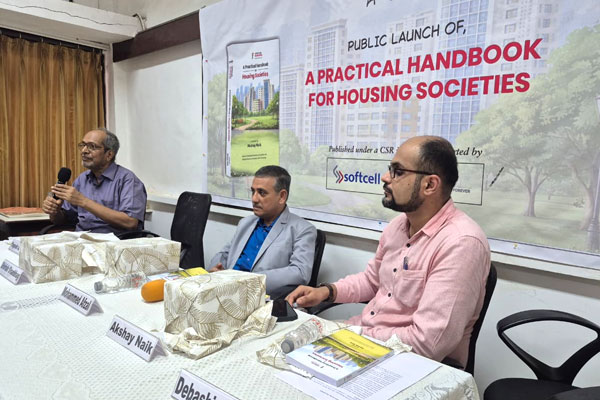
In his presentation, Mr Naik emphasised that most disputes in housing societies do not arise from unclear law, but from non-compliance with processes. “When governance is weak, even routine matters escalate into disputes,” he says, pointing to common failures such as lack of transparency, poor documentation and unclear roles within managing committees.
He highlighted that the handbook is not intended as a legal textbook but as a practical guide written in simple language. “It explains both what the law says and how it applies in real-life situations,” he says, adding that the goal is to help residents and committees make informed decisions and avoid unnecessary conflict.
The handbook covers a wide range of issues, including governance, membership, maintenance, disputes, legal remedies and redevelopment. Drawing on real case studies, the presentation illustrated how seemingly simple matters — such as the resignation of committee members, the nomination of heirs, or the calculation of maintenance charges — can turn into prolonged disputes when procedures are not followed correctly.
One of the key areas discussed was the widespread confusion between nominees and legal heirs. “A nominee is not the legal owner but only a trustee holding the property until succession is established,” Mr Naik explained, noting that this misunderstanding frequently leads to family disputes.
Maintenance-related conflicts were another major focus. The presentation highlighted recurring issues such as arbitrary charging, imposition of penalties, disputes over interest on delayed payments and confusion around goods and services tax (GST). It also underscored the importance of proper communication, noting that failure to issue bills or notices can weaken a society’s position in disputes.
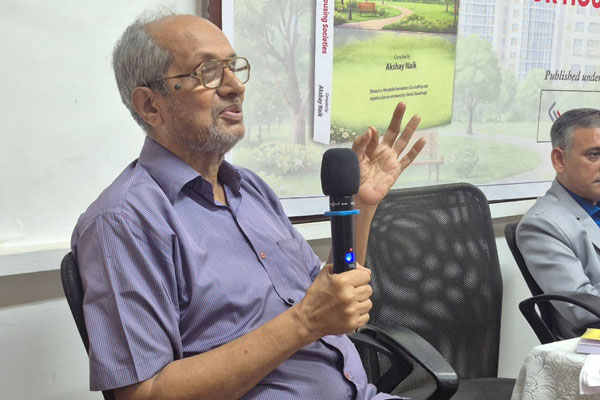
Addressing the gathering, Shirish Shanbhag, with over three decades of experience in CHS matters, spoke about the legal implications of maintenance defaults and the enforcement actions taken by societies. Referring to a recent Bombay High Court ruling, he emphasised that payment of maintenance is a legal obligation and cannot be withheld even if there are disputes with the society. At the same time, he cautioned that Societies must act within the legal framework while enforcing recovery.
Mohammed Afzal, a long-time social activist with extensive experience in civic and governance issues, highlighted the need for greater awareness and accountability in housing societies. Drawing from his work with public bodies and citizen groups, he pointed to practical challenges in areas such as infrastructure maintenance and compliance, noting that a lack of oversight often leads to safety and governance concerns.
A recurring theme across the discussion was that many disputes originate from everyday issues — such as parking, use of common areas, alterations within flats and tenant-related concerns — which escalate due to lack of clarity or inconsistent application of rules. The handbook attempts to address these issues by providing clear guidance grounded in real situations.
The session also explained the importance of approaching the correct forum when disputes escalate beyond the societal level. Depending on the nature of the issue, members may need to approach the deputy registrar, the cooperative court, the consumer commission, or the civil courts. “Understanding where to go is critical — approaching the wrong forum often leads to delays and frustration,” Mr Naik says.
Redevelopment, described as one of the most complex and high-stakes decisions for housing societies, was also discussed. The handbook outlines key considerations, such as the selection of developers, negotiation of agreements, and protection of members’ rights, emphasising that such decisions have long-term financial and legal consequences.
The event concluded with an interactive question-and-answer session where participants raised concerns about handling of defaulters, transfer procedures and committee accountability. Many queries reflected the same gaps in understanding that the handbook seeks to address.
Summing up, the speakers emphasised that most housing society disputes are avoidable. Each participant at the event received a complimentary copy of the handbook, with additional copies made available at the printing cost. The publication is part of Moneylife Foundation’s ongoing efforts to improve awareness, transparency and governance practices in cooperative housing societies.
Digital version of the Handbook is available for access and download to members of Moneylife Foundation: https://www.mlfoundation.in/memorandum/a-practical-handbook-for-housing-societies/577.html
Image Gallery