
Event- Pathbreakers: An evening with the people who shaped modern India
Event Report- “The Ability To Touch Lives beyond Your Life Defines Success”: Ramesh Damani at Pathbreakers Book Launch
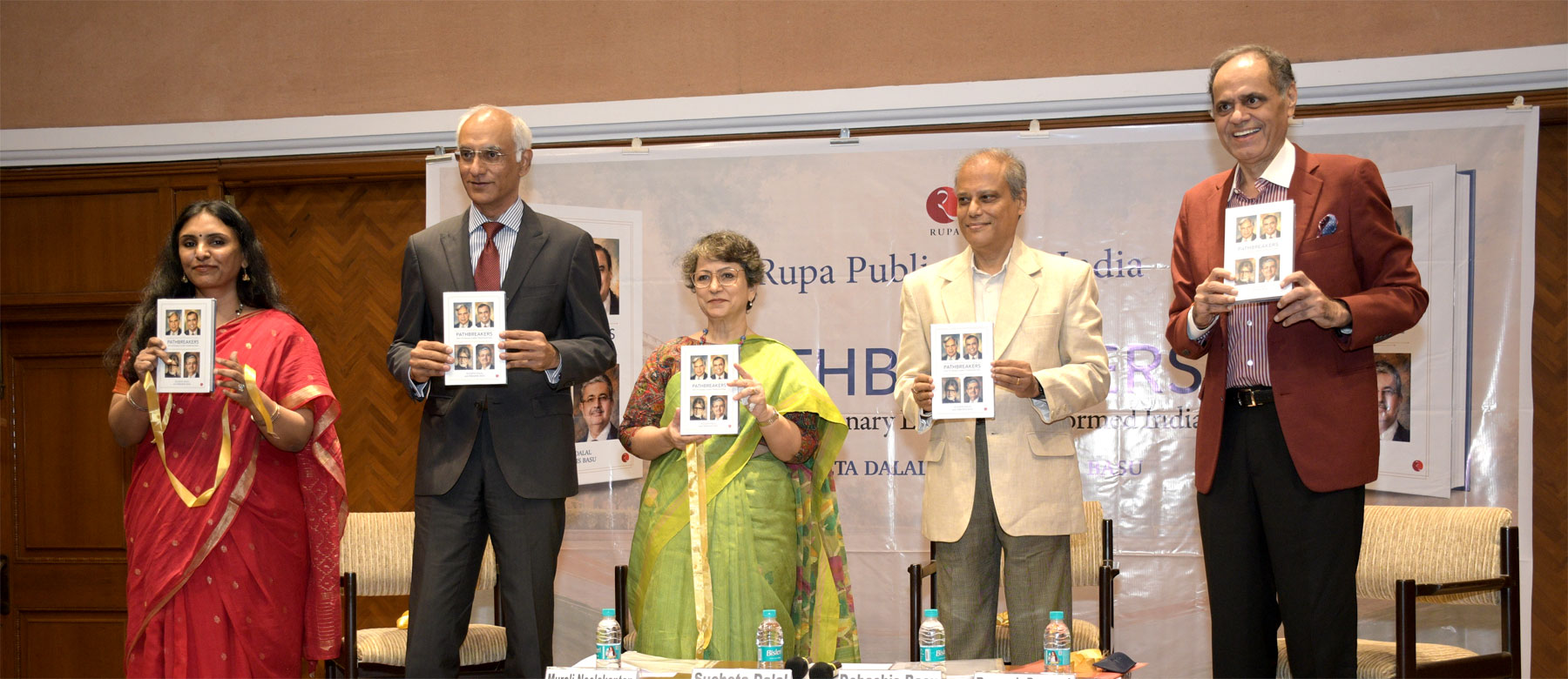
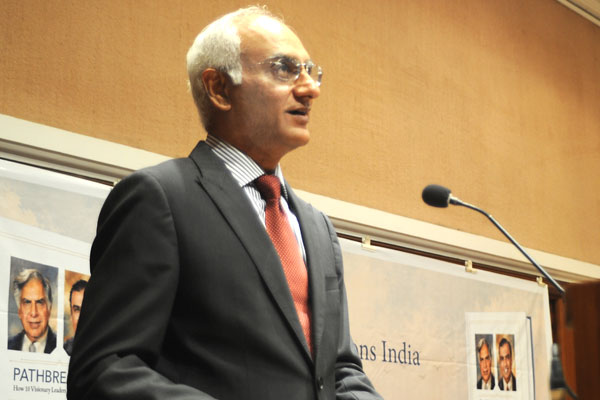
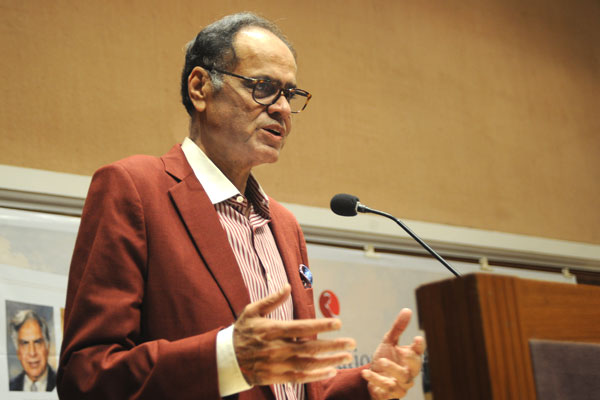
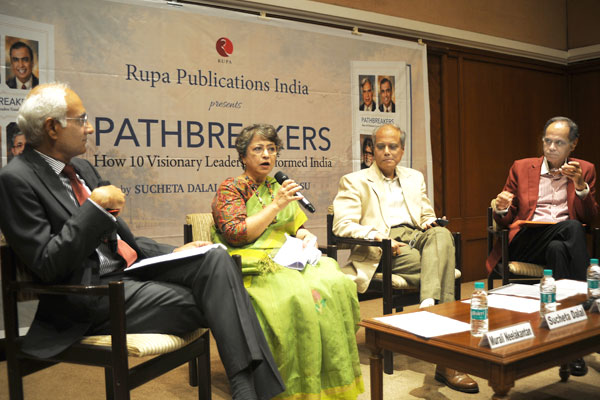
“The ability to touch lives beyond your life is what defines success.” This was how veteran investor and market commentator Ramesh Damani summed up the idea of success during a discussion marking the launch of the revised and updated edition of Pathbreakers: How 10 Visionary Leaders Transformed India, by Moneylife founders & editors, Sucheta Dalal and Debashis Basu.
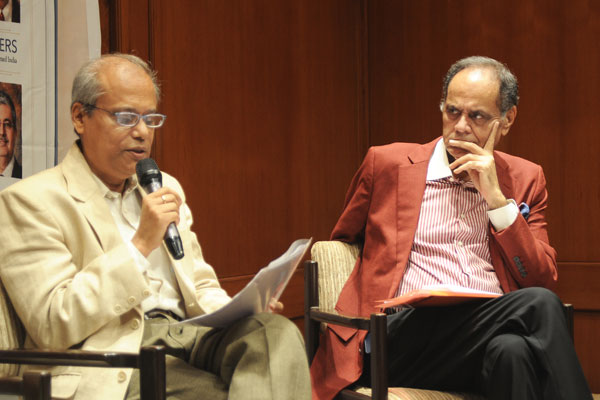
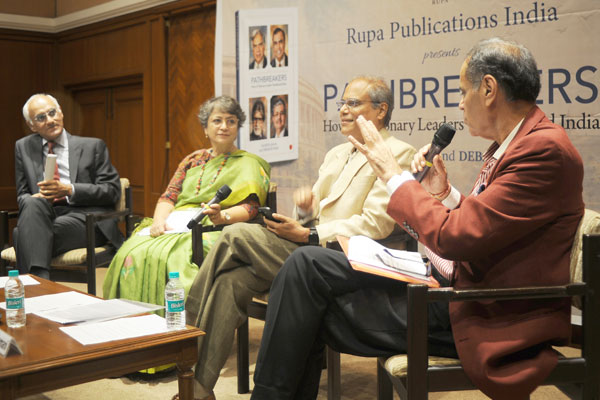
The conversation, held in Mumbai, brought together Mr Damani, advocate Murali Neelakantan, a dual-qualified lawyer with decades of experience in intellectual property and corporate law and the two authors to explore what makes individuals pathbreakers, how they recognise opportunities, manage risks and build institutions that outlast them. The discussion also examined the changing face of Indian enterprise, the lessons that younger entrepreneurs and investors can draw from the journeys documented in the book, and the place of ethics in defining success.
The new edition revisits the original Pathbreakers project undertaken by Sucheta Dalal and Debashis Basu more than two decades ago. It brings together seven new, in-person conversations with Mukesh Ambani, KV Kamath, Deepak Parekh, Uday Kotak, Sanjeev Bikhchandani, Satish Magar and filmmaker Rajkumar Hirani, alongside revisited interviews with Ratan Tata, Amitabh Bachchan and RH Patil.
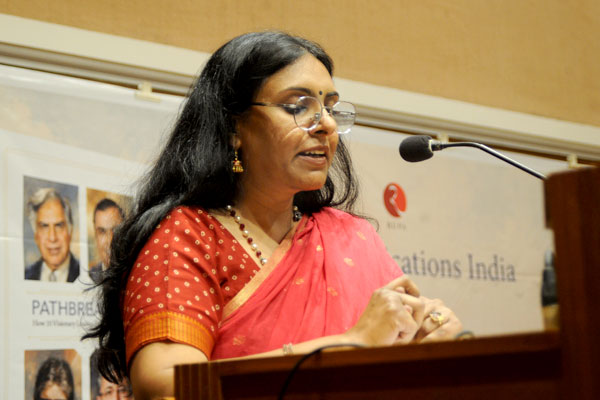
Introducing the book, Kausalya Saptharishi, senior commissioning editor at Rupa Publications, recounted how the project began with an unexpected source of inspiration. After watching the web series Scam 1992, she was struck by the courage and rigour of Sucheta Dalal’s journalism and wrote to her with ideas for a possible book. The discussions eventually led to the decision to revisit and update the earlier Pathbreakers.
Ms Saptharishi said the new edition was not simply an exercise in updating old passages. It offered an opportunity to look back at how India, its institutions and its business leaders had evolved over the intervening years. The book, she said, sought to go beyond the public image of accomplished individuals and understand the human struggles, resilience and convictions behind their achievements.
Adv Neelakantan, who introduced the discussion, observed that one quality common to the individuals featured in the book was their ability to remain relevant over long periods. He also praised the authors for their journalistic rigour and integrity, saying the book was not a vanity publication. Even readers who believed they knew these prominent personalities through years of media coverage, he said, would find fresh insights in the interviews.
Asked what distinguished the people featured in the book, Mr Basu identified five common characteristics. They recognise opportunities that others may overlook; maintain strong focus; have a clear vision of where they want to go; attract talented people who can help them achieve their objectives; and develop the ability to solve problems and overcome obstacles.
But possessing these qualities does not automatically guarantee success. Asked how he defined success, Mr Damani said there were several ways of looking at it, but the example that had influenced him most was that of Singapore’s former prime minister Lee Kuan Yew. Referring to the transformation of Singapore into an orderly and prosperous society, he said the lasting legacy one leaves behind was a more meaningful measure of success than personal wealth.
Sucheta Dalal offered another measure: the ability to remain relevant over time. The discussion used Amitabh Bachchan's career to illustrate this point. Despite enormous success, Mr Bachchan faced professional setbacks, financial difficulties and the failure of his company ABCL. His subsequent reinvention through television and films demonstrated the importance of adapting to changing circumstances and overcoming adversity.
The authors also reflected on how some of the personalities had changed since their earlier interviews. Mukesh Ambani, for instance, had been relatively reserved and hesitant when speaking to the media during the earlier interaction. The more recent conversation revealed a much more confident and articulate individual, reflecting the transformation in both his public persona and the scale of his business.
Risk emerged as a recurring theme. The speakers observed that the public often sees the wealth created by successful entrepreneurs but does not necessarily see the risks they have avoided. Many of the people featured in the book, they said, were acutely conscious of the downside of business decisions and took care not to expose themselves to risks that could threaten what they had built.
The experience of Uday Kotak was discussed in this context. The lessons of the 1992 securities scam influenced his approach to managing the balance sheet and risk. The discussion also referred to the difficult period for non-banking financial companies around the turn of the century and the importance of conserving resources during a downturn. The global financial crisis of 2008 offered another reminder that risk management is a continuing process, rather than a one-time decision.
The speakers also considered the role of timing and luck in entrepreneurial success. Mr Damani recalled returning to India in 1989, just before a period of major change that included the fall of the Berlin Wall, economic liberalisation and the growth of the technology sector. The opportunities available to his generation, he said, were very different from those available to earlier generations.
Yet, timing alone was not enough. The ability to spot opportunities, build the right team, remain focused and take calculated risks continued to distinguish successful entrepreneurs. Sanjeev Bikhchandani's recognition of an opportunity in online recruitment was cited as an example of identifying a need that others had not fully recognised.
A key distinction that emerged during the discussion was between building a successful company and creating an institution that changes an entire sector.
The work of RH Patil in establishing the National Stock Exchange (NSE) illustrated the challenges involved in building new market infrastructure. The authors recalled the resistance and practical difficulties encountered in the early years, including opposition from established interests and scepticism about the new exchange. The eventual transformation of India's securities markets demonstrated the impact that determined institution-builders can have.
The contribution of Deepak Parekh and HDFC was another example. The discussion highlighted how HDFC's influence extended beyond the housing finance business, helping create and support institutions across India's financial sector. The lasting significance of such work, the speakers suggested, lies in the infrastructure and institutions that continue to serve people long after their founders have moved on.
Satish Magar's development of Magarpatta City was also discussed as an example of a different approach to entrepreneurship and institution-building. The project was not merely about creating a township, but about bringing landowners together and giving them a stake in the enterprise.
The speakers also suggested that the people who might have featured in a list of pathbreakers could extend well beyond the 10 selected for the book. Dr Yusuf Hamied of Cipla was among the names suggested during the conversation. The authors acknowledged that they had attempted to interview Dr Hamied but had not been able to do so. They also expressed regret at not including FC Kohli, whom they described as a significant figure in the development of India's software industry, and BK Syngal, whose contribution to the growth of the country's IT and telecommunications sectors was discussed.
The discussion turned to what younger entrepreneurs could learn from the people featured in the book. The advice centred on recognising opportunities, maintaining focus, being willing to make course corrections and not being afraid to pursue a different path.
Mr Damani was optimistic about India's entrepreneurial prospects, describing the present period as an important opportunity for those looking to build businesses. He pointed to the growth of companies across sectors and argued that many businesses that appear expensive or unremarkable today could become substantial wealth creators over the next five to ten years. The challenge for investors, he said, was to identify those opportunities and assess whether the potential returns justified the risks.
The conversation also included a rapid-fire round in which the authors discussed people they would like to invite to dinner, books that had influenced their thinking and their preferences between breaking news and long-form journalism. The lighter exchange offered a glimpse of the speakers' personal interests after an evening of serious discussion about business, leadership and institutions.
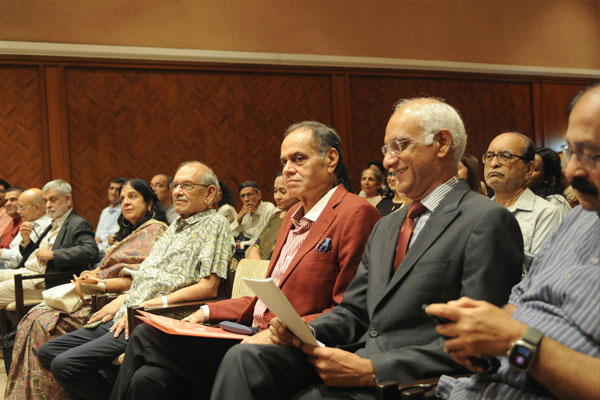
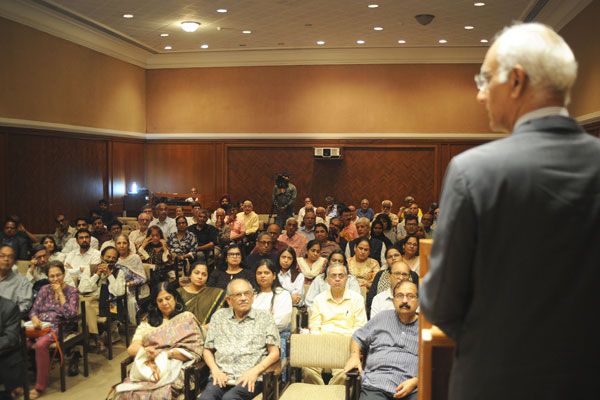
The audience interaction brought several important issues into the discussion. One question challenged the speakers to consider whether today's new-age entrepreneurs would stand the test of time or whether some would prove to be one-trick ponies. It also asked which contemporary business leaders might feature in a future edition of Pathbreakers.
The response pointed to the growing number of promising Indian businesses across sectors, including pharmaceuticals and technology. The authors noted that it was too early to judge the long-term prospects of many young companies, as businesses evolve and adapt over time.
Another audience member asked whether regulators in India could ever become genuinely independent of the government. Complete independence, the authors suggested, was difficult to achieve, and even the independence of the judiciary continued to be debated. However, individual officers and institutional leaders had periodically made a significant difference.
The discussion cited examples of people who had helped move institutions forward, including officials associated with securities regulation, telecommunications and public administration. India's progress, Ms Dalal observed, often came through incremental change rather than sweeping transformation. Even improvements of 5% or 10%, she argued, could move institutions forward.
A retail investor asked Mr Damani how individuals could participate in good companies when valuations were already high and institutional investors had taken positions. Mr Damani argued that investors needed to look beyond current valuations and consider a company's prospects over the next five to ten years. There could be significant wealth-creation opportunities in the market, he said, but identifying them required research and an assessment of the risk-reward proposition. There were no easy shortcuts.
The final exchange touched on the relationship between ethics and success. An audience member asked whether ethical conduct was given sufficient importance in the way society measures achievement, or whether integrity was often treated as an impediment to success.
The response acknowledged that ethical decisions could involve sacrifices and that individuals sometimes had to give up opportunities to remain true to their principles. It also pointed to a contradiction in how society views success: people who insist on ethical conduct may sometimes be dismissed as losers, while those who achieve great wealth and influence are often admired without equal scrutiny of the means by which they succeeded.
The question brought the discussion back to the central idea of Pathbreakers: what makes an individual successful, and what is the lasting value of the choices made along the way?
The evening concluded with the authors thanking Mr Damani, Adv Neelakantan, Rupa Publications and the audience for their participation.
Pathbreakers: How 10 Visionary Leaders Transformed India, by Sucheta Dalal and Debashis Basu, is published by Rupa Publications.
The book is available on Amazon India: https://amzn.in/d/060iBh0r
Image Gallery