
Event- Tukaram Mundhe Effect: Taking on Unsafe Food & Drugs
Event Report- ‘Profit is Private, Punishment is Public’: Tukaram Mundhe on Why Food Adulteration Pays—Moneylife Foundation Event
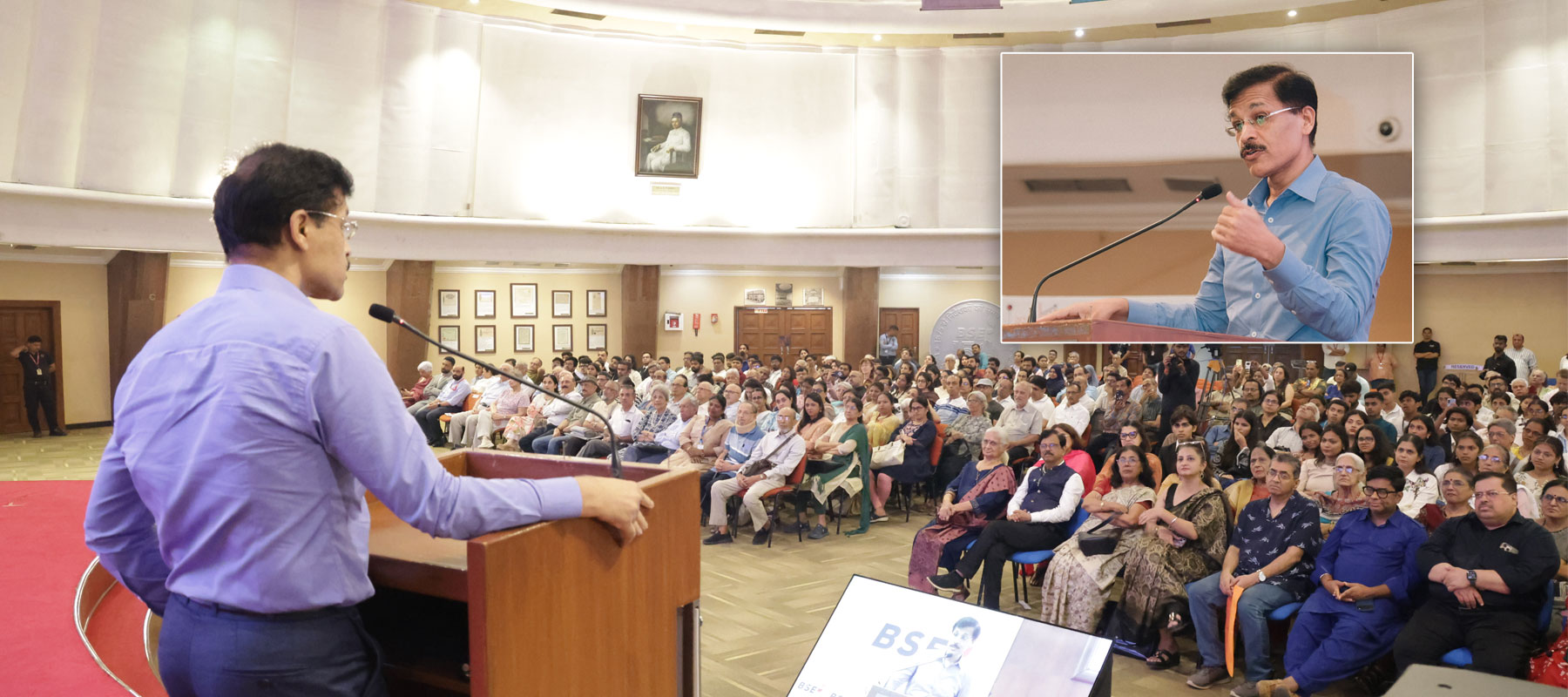
“Profit is private, punishment is public.” This, according to Tukaram Mundhe, commissioner of Maharashtra’s food and drug administration (FDA), captures one of the central problems with food adulteration in India: the financial gains from selling substandard products are immediate, while the consequences for those responsible may come years later, if they come at all.
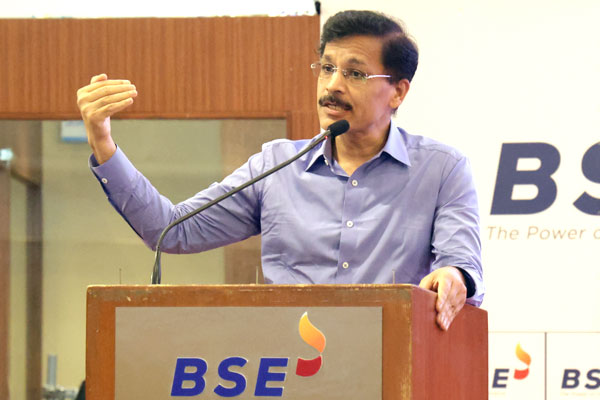
Speaking at a Moneylife Foundation event on food safety and public health at the BSE (Bombay stock Exchange) International Convention Hall in Mumbai on 24 October 2026, Mr Mundhe argued that the regulatory system must change the economic incentives that allow businesses to profit from non-compliance. If a manufacturer can sell a substandard product at a lower price, make a profit and calculate that any penalty is unlikely to be imposed quickly, the incentive to cut corners remains strong. The task of the regulator, he said, is to reverse this equation by making the consequences of violations prompt and effective.
His address went beyond the familiar account of raids, inspections and seizures. Mr Mundhe spoke about the scale of foodborne illness, the risks of chemical contamination, weaknesses in the food supply chain, the functioning of FDA and the need for consumers to take a more active role in demanding safe food. He also explained the changes he said he had introduced in Maharashtra, including sector-specific compliance orders, a digital complaints mechanism and a more systematic approach to inspections and laboratory testing.
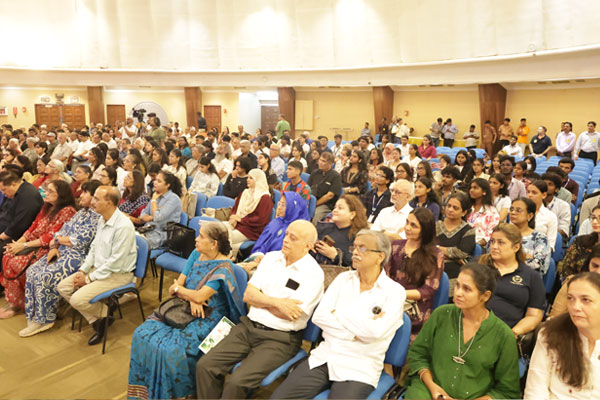
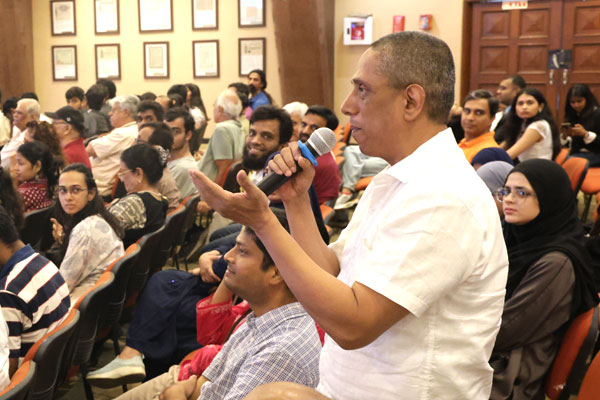
The event was organised by Moneylife Foundation in association with partner organisations such as Public Concern for Governance Trust (PCGT), Silver Innings Foundation, Indian Dietetics Association’s (IDA) Mumbai Chapter, International Association of Dieticians for Metabolic Health and Nutrition (IADMN). Introducing Mr Mundhe, Sucheta Dalal, founder-trustee of Moneylife Foundation, highlighted the importance of food safety and the need for public institutions to be accountable to citizens. The talk by Mr Mundhe was followed by an extended question-and-answer session, during which dietitians, people working with farmers and other members of the audience raised questions about food labels, testing facilities, regulatory standards, consumer awareness and the safety of everyday food products.
Mr Mundhe began by challenging the assumption that someone, somewhere, is already ensuring that the food people eat is safe. Consumers generally trust that milk has been handled correctly, that food has been stored at the appropriate temperature, that ingredients meet prescribed standards and that inspections have taken place. But this confidence, he cautioned, may be misplaced. The assurance people believe they have is thin and making it meaningful will require sustained effort by institutions, businesses, consumers and society.
He described three broad ways in which people may end up consuming food that does not meet their expectations. In some cases, the product label, claims or declared ingredients may not accurately represent what is actually in the food. In others, the product may be compromised during production or handling without the consumer knowing it. A third problem arises when products are designed and marketed in ways that encourage people to consume more than they need, even when the label and ingredients are technically correct. In each case, consumers may believe they are making an informed choice when they do not have the full picture.
To illustrate the weaknesses in the system, Mr Mundhe took the example of milk. Before milk reaches a household, it may pass through a farmer, a collection centre, a processing facility, a transport vehicle, a distributor and a retailer. At each stage, questions arise: Was the milk kept at the right temperature? Were the tanks and containers clean? Was the milk diluted? Were the required checks conducted? Were antibiotics administered to the animal and were the necessary withdrawal periods observed before the milk entered the food chain?
These are not merely questions about one product. Every food item passes through several stages between production and consumption, he said. A lapse at one point can affect the safety or quality of the final product. In the case of milk, for instance, supplies from numerous farmers may be mixed together, meaning that contamination or adulteration affecting one part of the supply can compromise a much larger quantity.
The risks are also not always visible. A food product that looks normal and causes no immediate illness may still pose a long-term health risk. Mr Mundhe referred to World Health Organization (WHO) estimates on the burden of foodborne disease and highlighted the role of chemical hazards, arguing that food safety cannot be understood only in terms of visible spoilage or microbial contamination. Chemical contamination may have consequences that emerge much later and are therefore less likely to attract immediate public attention.
Citing figures during his presentation, he said a WHO report estimated that 866mn (million) people worldwide were affected by foodborne diseases annually, with around 1.5mn deaths. He also referred to Indian data on samples that did not conform to prescribed standards and estimates of the number of people affected by foodborne illnesses in the country. He cautioned that non-conformity covers different categories, including unsafe, substandard and misbranded products; it does not mean that every sample failing a standard is necessarily unsafe in the same way.
The economic consequences are substantial too. Mr Mundhe cited an estimate of around US$15b (billion) in annual losses associated with foodborne diseases and warned that the burden could rise further without effective intervention. Food safety, he argued, should not be viewed merely as a regulatory obligation. Preventing foodborne illness has implications for public health, productivity and the wider economy.
He then identified several misconceptions that can make consumers less cautious. A low price is not a certificate of safety, he said. Nor does a familiar or large brand automatically guarantee that every product will comply with the required standards. The absence of immediate illness does not prove that a food product is safe: the effects of exposure to some contaminants may emerge only after years.
These misconceptions also feed the economic calculation behind adulteration. A business that produces a substandard item may be able to sell it at a substantially lower price, attract consumers and make a profit. Even if it is caught, prosecution may take years, and the eventual penalty may be uncertain. As Mr Mundhe put it, “Profit is private, punishment is public.” He argued that the regulator must make penalties sufficiently prompt and effective to remove the financial advantage of non-compliance.
Mr Mundhe said India’s food-safety framework had developed significantly with the Food Safety and Standards Act, 2006, which brought together several earlier laws and shifted the focus beyond the prevention of adulteration towards food safety and standards. He described the regulations as a substantial framework that could be improved further as new products, technologies and risks emerge. The challenge, in his view, is not simply the absence of rules, but whether the rules are understood, applied consistently and enforced in a way that deters violations.
Explaining his approach in Maharashtra, Mr Mundhe said he had sought to make compliance requirements clearer for individual sectors. Businesses often struggle to identify which provisions and regulations apply to their operations, while officers may also interpret requirements differently. To address this, he said, FDA had begun issuing sector-specific compliance orders covering different categories of food businesses and products.
These orders set out the requirements applicable to a sector, the consequences of non-compliance, the action expected from inspecting officers and the consequences for officers who fail to discharge their responsibilities. The intention, he said, is to make the process more transparent and reduce the scope for arbitrary enforcement.
He cited the example of restrictions on foods high in fat, sugar and salt within 50 metres of school premises. He said such measures were based on the powers available under the food-safety framework and the broader constitutional responsibility of the State to protect life and improve nutrition. The orders, he explained, were intended to tell businesses precisely what they must comply with, rather than leave them to navigate multiple regulations without clear guidance.
Mr Mundhe also described changes in the way inspections and laboratory testing were being managed. According to figures he presented, FDA had carried out around 22,000 inspections over a four-month period. More than 1,000 food-business licences had been suspended, while over 10,000 improvement notices had been issued. He said the scale of the action was significant in comparison with previous levels of enforcement, despite no corresponding increase in manpower.
He also said the department had collected around 35,000 samples and tested approximately 32,000 during the period. The improvement, he argued, was not the result of any magic formula but of asking basic management questions: How many samples were being tested by each laboratory; how staff time was being used' and whether similar samples could be tested in batches to improve efficiency. Changes to laboratory workflows and working arrangements, he said, had helped increase both the volume and speed of testing.
He also spoke about the importance of correctly classifying violations. In one example involving a product presented as a milk-based food, he said the presence of non-milk ingredients could not automatically be treated as a minor quality defect if the product’s definition required it to be made from milk. The classification matters because the legal consequences can differ significantly between a substandard product and one considered unsafe. If a violation is incorrectly classified, the penalty may be too small to deter the business from repeating it.
The broader objective, he said, is to make FDA’s work more transparent and accountable. He referred to appeals against suspension orders and improvement notices, and said businesses had the opportunity to challenge decisions through the prescribed process. He also described how compliance orders and inspection observations were being made accessible to the businesses concerned, so that they could see the basis for regulatory action.
Another part of the strategy is making it easier for consumers to report suspected violations. Mr Mundhe said that when he took charge, the existing toll-free complaint mechanism was not functioning consistently and there was no effective digital channel. The department subsequently launched an online complaints portal which, he said, had received more than 50,000 complaints or entries in its first few months. He explained that a digital system could make it easier to lodge a complaint, track its progress and hold the responsible officials accountable for responding.
For Mr Mundhe, however, enforcement is only one of three pillars. He described the FDA’s approach as 'Empowerment, Enabling and Enforcement'. Empowerment means helping consumers understand food safety and giving them practical ways to raise concerns. Enabling means making it easier for businesses to understand and meet their obligations. Enforcement remains necessary when businesses do not comply.
The three elements, he argued, must work together. A regulator cannot inspect every product at every stage and a system that depends entirely on the personal intervention of one commissioner cannot be sustainable. What is needed is an ecosystem in which businesses understand their responsibilities, officials enforce the rules consistently and citizens are willing to question what they buy and consume.
This message returned repeatedly in the question-and-answer session. A dietitian asked how professionals could respond to the growing number of products marketed as 'diabetic-friendly', 'gut-friendly' or 'zero sugar', particularly when consumers may not understand what the claims mean or how to interpret the ingredients list. Mr Mundhe said awareness could not be left to regulators alone. Professional associations, community organisations and individuals had a role in helping people make informed decisions. He said FDA wanted to work with different groups to take awareness efforts to consumers in a more systematic way.
Another participant, Ruchit Garg, Founder & CEO of Harvesting, a company focused on enabling financial inclusion for farmers, raised the problem of access to affordable and reliable laboratories for frequent testing. Mr Mundhe said laboratories existed in the public and private sectors, and described plans to improve testing capacity and turnaround times. He referred to a digitisation project intended to make the process more transparent and efficient, and said the aim was to reduce delays in receiving test results. He argued that the issue was not simply a question of funding but also of how existing resources and systems were used.
A question was also raised about collaboration between regulators and organisations working on hygiene and health-awareness campaigns. Mr Mundhe said responsibilities could be divided between FDA and local authorities depending on the nature of the issue. The discussion underlined the need for organisations working on public health to coordinate their efforts rather than assume that enforcement agencies could address every problem by themselves.
Food labelling was another major concern. A participant asked how consumers could identify ingredients represented by technical codes such as E150 and whether a list of products containing a particular additive could be made available through the Food Safety and Standards Authority of India (FSSAI). Mr Mundhe said the label was, in effect, a promise made by the manufacturer and that the licensing details on it provided a means of establishing accountability. But he acknowledged the need for stronger regulation and better public understanding of how to read labels.
He also criticised the gap between standards followed by some businesses in overseas markets and those applied to products sold in India. In his view, the fact that a practice may be legally permissible because a particular regulation does not exist does not necessarily make it ethically acceptable. He called for more effective rules on labelling and clearer information to help consumers understand what they are buying.
Mr Mundhe said he was preparing recommendations for introducing food-safety education into the curriculum. The objective, he explained, was to help people understand food processing, ingredients, labels and nutritional information from an early age, so that they could make better decisions as consumers. He said he intended to recommend the initiative to the state government and at the national level.
The audience also asked whether Indian food-safety standards should be brought closer to the stricter standards applied in some other countries. Mr Mundhe explained that standards were considered through scientific and expert committees, but the final decision on whether and when to adopt a recommendation rested with the government. He cited front-of-pack labelling as an example of an issue that had been under consideration for years but had not progressed as some advocates wanted, amid competing pressures from industry and other interests.
He challenged civil society to make food standards a more prominent public issue. While acknowledging the work of NGOs and individuals, he argued that sustained public demand was needed to push governments to act. Consumers, he said, should treat food safety as an issue affecting their own families, rather than something that concerns only specialists or campaigners.
A separate question concerned whether restaurants or raw food products could be certified as safe, so that consumers—particularly older people and families with children—could make informed choices. Mr Mundhe cautioned against treating certification as a permanent guarantee. The raw materials used by a restaurant can change, as can the conditions in which food is prepared and stored. A licence permits a business to operate; it does not mean that every item served there will always be safe. Inspections, sampling and continuing compliance are, therefore, necessary. He urged consumers to note the licence number displayed by a food business and report concerns to the authorities.
The discussion then moved to everyday food habits. Mr Mundhe spoke about the need for greater awareness of storage, expiry dates and the assumption that refrigeration automatically keeps every product safe. He referred to educational material already available on food safety and said FDA intended to do more to spread awareness. He also encouraged people to reduce their dependence on processed foods and to be more conscious of what they eat, how often they eat out and what they feed their children.
He suggested a simple traffic-light approach to food choices: favour natural foods, limit foods that should be consumed only occasionally and avoid products that are particularly unhealthy. He urged consumers not to be persuaded by attractive packaging or colourful appearances alone, and said food products should be judged by their ingredients and compliance with standards.
Analogue paneer became one of the most pointed subjects towards the end of the address. Mr Mundhe argued that paneer, by definition, is a milk product, whereas non-dairy substitutes should not be presented in a way that leads consumers to believe they are buying the same thing. He said people who chose paneer because they were vegetarian could end up consuming products with a different nutritional profile from what they expected.
He said he had already made suggestions on the issue and encouraged others to submit their views to FSSAI. Rather than allowing a proliferation of proprietary products without clear standards, he argued, the objective should be to establish standards that products must meet. His position was that substitutes should be named clearly so consumers could understand what they were buying. The issue, he said, ultimately came back to transparency, standardisation and the consumer’s right to make an informed choice.
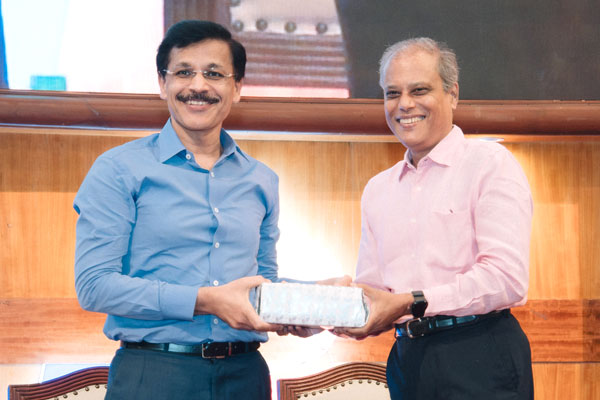
The event ended with a vote of thanks to Mr Mundhe, delivered by Mr Sailesh Mishra, founder-trustee of Silver Innings Foundation. But the questions raised during the discussion pointed to a challenge that extends well beyond any one enforcement drive or individual officer. The food supply chain is complex, the risks are not always visible, and the regulatory system cannot be present at every point between production and consumption.
The public interest in the subject was evident as the session drew to a close. Mr Mundhe was surrounded by attendees eager to speak to him, and the crowd grew to the point that he had to be escorted out.
Mr Mundhe’s argument was that the answer lies in making the system work as a whole: clear standards, efficient testing, transparent inspections, consequences that deter violations, businesses that comply, and consumers who are willing to ask questions. His appeal to the public was straightforward: “Ask, read, report.” Food safety, he suggested, cannot remain the responsibility of the regulator alone. It must be a shared responsibility, involving regulators, food businesses and consumers alike.
A video recording of the session can be viewed on Moneylife Foundation’s YouTube Channel:
Image Gallery