

Fraud Alert: AI Is Turning Anyone into a Hacker — Five Eyes Alliance Warns
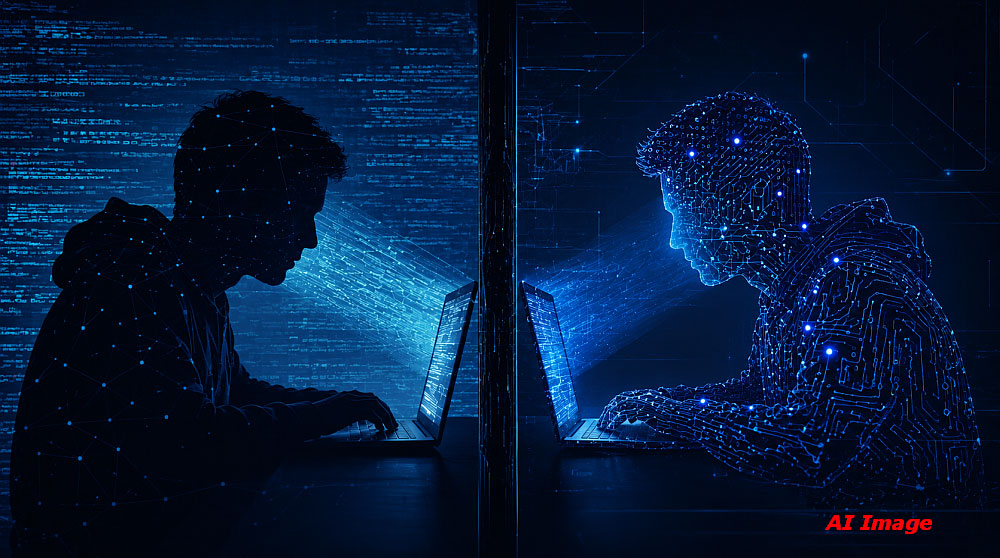
Artificial intelligence (AI) is no longer just helping people write emails, summarise documents or generate images. The same technology is also making life much easier for cybercriminals. The biggest concern is not that AI has suddenly created new types of cybercrime. Rather, it is dramatically lowering the expertise required to carry out sophisticated attacks.
It has become serious enough for cybersecurity and intelligence agencies across the Five Eyes alliance — Australia, Canada, New Zealand, the UK, and the US — to issue a joint warning about it.
Their basic point is: things that used to take years to shift are now shifting in months and days. Yes, AI helps defenders too. But it also lets criminals automate their attacks, find weak spots faster and strike before anyone has a chance to patch things up.
Disappearing Gap between ‘Knowing How’ and ‘Actually Doing It’
Here is the real shift. For a long time, hacking required real expertise — you had to understand the systems well enough to find the cracks and write the code to slip through them. That kept the pool of capable attackers pretty small.
Then came the era of ready-made hacking tools floating around online and suddenly, anyone could download something built by a genuinely skilled hacker and cause damage without understanding any of it. People started calling them ‘script kiddies’. Attacks went up. A lot.
AI is just pouring fuel on that fire.
It can write code, spot flaws in software, whip up a phishing campaign, do the reconnaissance work, sift through stolen data — all with barely any prompting. Sure, the genuinely skilled attackers still have an edge. But someone with almost no technical background can now do things that used to take years to learn.
Cybercrime, in other words, just got a lot more accessible. That is the uncomfortable headline here.
Everything Is Moving Faster Now
Speed is really where the danger lives.
There used to be a window — a company finds a flaw, builds a patch, rolls it out and criminals only start exploiting it once that window closes. AI is shrinking that window down to almost nothing. Attackers can now take a freshly disclosed vulnerability, get AI to help write exploit code around it, and launch attacks at scale almost immediately. If your organisation is slow to update its software, that delay is a lot more costly than it used to be.
Same story with phishing. What once took a scammer days to put together — a convincing email, correct grammar, the right tone — can now be generated in minutes. Fake customer support messages, fraudulent bank alerts, and social media posts that look completely real. All of it, fast.
The Scams Are Getting Genuinely Convincing
You have probably already noticed this.
Cybercriminals are cloning voices now — a ‘family member’ calling in a panic, a ‘colleague’ needing an urgent favour, a company boss asking for a wire transfer. Deepfake videos are putting words in the mouths of public figures and business leaders. Emails that used to have some telltale sign of being fake, like awkward phrasing and weird formatting, are looking more and more like the real thing.
And instead of blasting the same message to 10,000 people, cybercriminals are now personalising it, courtesy AI tools. They can easily pull details from your social media, from old data breaches and build something specifically for you. That personal touch is exactly what makes people fall for it.
AI Is Not the Villain Here — It Is Just a Tool with No Loyalty
Worth pausing on this: Just like the two biggest inventions, fire and the wheel, AI itself is not good or bad. The same ability to spot a software vulnerability can be used by a developer to fix it before anyone exploits it, or by an attacker to exploit it first. There is no clean way to teach a system how to find security flaws for good reasons without also teaching it how someone could misuse that knowledge.
According to the Five Eyes alliance, while AI will help us improve cyber defence over time, it also accelerates the speed, scale, and sophistication of cyber threats. “Frontier AI models are anticipated to exceed current industry expectations, fundamentally transforming both offensive and defensive cyber capabilities. The timeline is not years, it is months.”
That is the double-edged sword nobody quite knows what to do with. The honest answer, according to most security people, is not to try to lock AI down completely. It is to ensure that the people defending systems use it at least as aggressively as those attacking them.
This Isn't Just an ‘IT Department’ Problem
A lot of people still assume cybercrime is something that happens to banks, governments, big companies — not regular people. That assumption has not aged well.
You are a target now because you have a digital identity worth stealing. Banking logins, UPI, mobile wallets, social media, all the personal details scattered across your online life — that digital footprint or trail is valuable to someone, even if it does not feel that way to you. And because AI reduces the skill and effort required to target individuals, a well-crafted phishing email, a cloned voice asking for emergency cash, or a fake investment pitch can catch almost anyone off guard if they are not paying attention.
So this is no longer really an IT department's job to handle alone. If you use a smartphone, shop online, or check email, you are part of this now, whether you asked to be or not.
So, What Do You Actually Do about It?
The good news — and it is genuinely good news — is that the basics of staying safe online have not changed. What has changed is how much it matters that you actually follow them.
1.Update your device software and apps. I know it is annoying. Do it anyway. A lot of those updates are patching exactly the holes criminals are racing to exploit and putting it off just gives them more time.
2.Turn on two-factor or multi-factor authentication everywhere you can — email, banking, social media, cloud storage. Even if someone gets your password, that second step can stop them cold.
3.Be suspicious of messages that sound too polished. That used to be a red flag for something being fake — clunky grammar, weird phrasing. Not anymore. AI writes cleanly now. If a message is asking for money, passwords, or an OTP, verify it through a different channel before you do anything.
4.Don't trust a voice or video just because it sounds right. If someone claiming to be a relative or your boss calls asking urgently for money or sensitive info, hang up and call them back on a number you already know is theirs.
5.Think twice about what you post. The more of your life is public, like travel plans, financial details, ID copies — the easier it is for someone to build a scam that is tailored just for you. Clever cybercriminals can use the same travel plan to trap your near and dear ones using your name!
6.Use actually unique passwords. Not the same one with a number tacked on the end. A password manager makes this painless.
7.Only install apps from official app stores. Random APK files sent over WhatsApp or Telegram are basically an invitation for trouble.
8.Watch for the emotional pressure, not just the message itself. AI might make the wording more convincing, but the underlying trick has not changed — urgency, fear, excitement, greed. If something is pushing you to decide right now, that is exactly the moment to slow down.
9.Back up your data regularly. It won't stop an attack, but it takes a lot of the sting out of one.
10.Keep paying attention. These scams evolve constantly. Staying a little informed matters just as much as any antivirus software you install.
It Still Comes Down to People
The Five Eyes agencies are mostly talking to organisations here — patch faster, tighten access controls, reduce your exposure, plan for the incident you know is eventually coming. But underneath all of that is a message for the rest of us, too: good cybersecurity really is just getting the basics right, consistently.
AI is going to do a lot of genuinely good things — in healthcare, education, business and beyond. But criminals are picking it up with just as much enthusiasm as everyone else and that is just the reality now.
AI did not invent cybercrime. It just made the sophisticated version of it faster, cheaper and available to a lot more people than before.
For most of us, the answer is not to be afraid of AI. It is to stop assuming trust online and start expecting to verify it.
Every unexpected message, every urgent ask, every deal that looks a little too good — all of it deserves a few seconds of pause before you act. In a world where AI can fake almost anything convincingly, that pause might be the one thing it still can't fake for you.
Stay Alert, Stay Safe!